The littoral rainforests that fringe Australia’s east coast – from the Queensland border down through northern New South Wales – operate under a set of constraints that most first-time visitors underestimate. These aren’t the grand, accessible rainforests of the inland ranges. They’re compressed between the ocean and rising terrain, perpetually damp, often difficult to move through, and shaped by forces that change dramatically with the season and the tide.
I’ve spent enough time in these environments to know that the experience depends almost entirely on understanding what you’re actually walking into. The littoral zone isn’t a scenic detour. It’s a distinct ecosystem with its own rhythms, hazards, and rewards – and those rewards only materialize if you’re prepared for the reality of the place rather than the postcard version of it.
The Physical Reality of Littoral Terrain
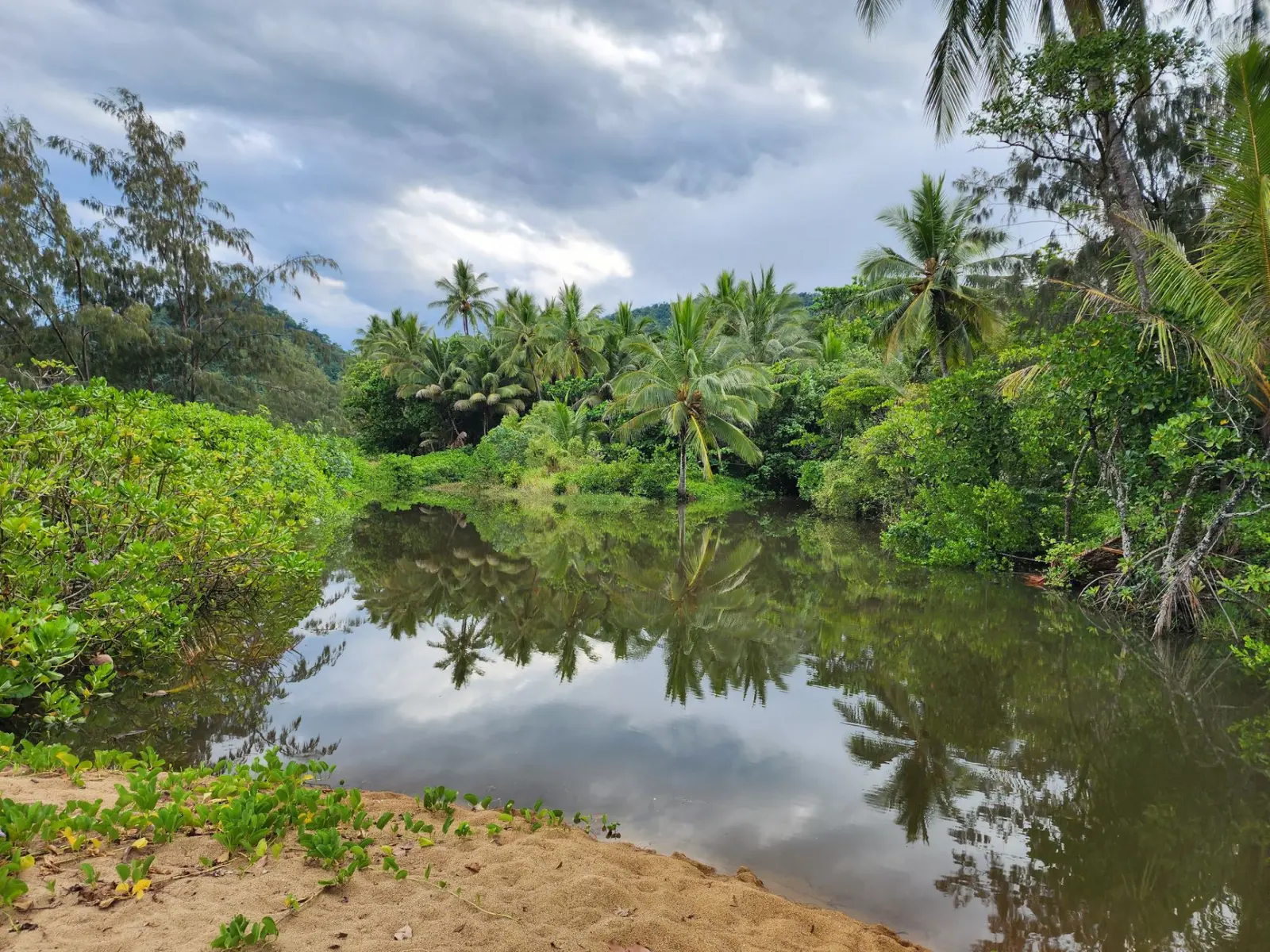
Littoral rainforest occupies a narrow band where freshwater meets salt spray, where the soil is often waterlogged or sandy, and where vegetation grows dense and low rather than tall and open. Walking through it is nothing like moving through the cool, spacious understory of a mountain rainforest. The canopy is lower. The air is heavier with salt and moisture. The ground beneath your feet is unreliable – soft, root-tangled, sometimes boggy even in dry periods because drainage is poor and the water table sits high.
What this means in practical terms: your pace slows considerably. A walk that might take 45 minutes on a maintained trail in an inland forest can take twice that in littoral vegetation, not because of distance but because of terrain. You’re stepping over exposed roots, pushing through low branches, and constantly adjusting your footing. If you’re moving with children or anyone with limited mobility, the difficulty multiplies. The trails that do exist are often narrow, poorly drained, and marked more by local knowledge than by official signage.
The substrate changes constantly. You might start on firm sand, move into soft leaf litter, then find yourself on a section where water sits just below the surface. Footwear matters more than people realize. Waterproof boots with good grip are worth the weight. Sneakers or lightweight trail shoes will leave your feet wet and cold within the first 20 minutes, and wet feet in a humid environment lead to blisters and discomfort that compounds over a full day of walking.
Seasonal and Tidal Patterns
The littoral zone responds to both weather and tide in ways that inland forests don’t. High tides can flood lower sections of the forest, cutting off access or making walking impossible. I’ve arrived at a trailhead during what should have been a straightforward walk only to find the path submerged because the tide was higher than expected or a storm surge had pushed water further inland than usual. Checking tide times isn’t optional – it’s essential planning.
Rainfall also behaves differently here. The coast receives its own weather systems, and these forests are designed to shed water quickly. What looks like a minor rain inland becomes a torrent in littoral terrain, with water running off hard-packed sand and saturated soil. Trails become streams within minutes. Drainage lines that are barely visible in dry conditions become impassable gullies after rain.
Summer brings heat and humidity that can be oppressive, especially in the closed-in spaces of dense vegetation where there’s minimal air movement. Winter is cooler but often wetter, with longer periods of cloud cover and drizzle. Spring and autumn tend to offer the most stable conditions, though “stable” is relative in these ecosystems. Wind is another factor – the coast gets wind that inland forests are sheltered from, and this affects both comfort and safety, particularly around dead branches or unstable trees.
What Grows Here and Why It Matters
The vegetation of littoral rainforest is specialized. You’ll see she-oak, pandanus, native hibiscus, and various palms adapted to salt spray and poor soil. The trees tend to be shorter and more gnarled than their inland cousins, shaped by exposure and wind. Vines are common, and they’re often thorny or sharp-edged. The ground layer is thick with ferns, sedges, and low shrubs that can be difficult to navigate around.
This matters because it affects both movement and safety. The plants here aren’t hostile in the way that some tropical vegetation is, but they demand respect. Thorns are common. Exposed roots create tripping hazards. Low branches can catch you in the face if you’re not watching carefully. The density of growth means that getting lost is easier than it sounds, and retracing your steps can be disorienting when the landscape looks similar in all directions.
Fauna presence is worth noting. Snakes are present but encounters are rare if you’re making reasonable noise and staying on established paths. Saltwater crocodiles exist in some northern sections, particularly around estuaries and tidal creeks, and this is a genuine constraint that requires local knowledge to navigate safely. Mosquitoes and sandflies can be intense, particularly near dawn and dusk or after rain. Insect repellent isn’t a luxury – it’s a necessity.
Access and Logistics
Getting to littoral rainforest often requires driving to small coastal towns or regional access points. Public transport to these areas is limited or nonexistent. Once you’re there, parking is frequently basic – gravel lots or roadside pull-ins rather than developed facilities. Facilities in general are minimal. Toilets may be absent or basic. Water is rarely available on the trails themselves, so you need to carry what you’ll need for the full duration of your visit.
The trails themselves are often unmarked or marked only with occasional tape or blazes that are easy to miss. GPS or detailed local knowledge is valuable. Guidebooks and online resources vary widely in accuracy – some describe trails that no longer exist or have become impassable. Talking to locals or recent visitors often yields more useful information than published sources.
Many of the most interesting littoral forests are on private land or require permits or permission to access. Some sections are protected and have restricted access during certain seasons. Understanding what’s publicly accessible and what isn’t requires research before you arrive, not after.
Why People Come and What They Find
Despite the difficulties, these forests draw visitors because they’re genuinely distinctive. The meeting point of rainforest and ocean creates a landscape that exists nowhere else in Australia. The biodiversity is high, with plant and animal species found nowhere else. The sense of being in a place that hasn’t been heavily modified is real, even if it’s increasingly fragile.
People come to see specific things – particular bird species, rare plants, the geological formations where the forest meets the rocks. They come for solitude, for the sound of the ocean mixed with the sounds of the forest, for the particular quality of light that filters through salt-laden air. These experiences are real, but they require patience and tolerance for discomfort.
The littoral rainforests of Australia’s east coast reward preparation and realistic expectations. They’re not hostile places, but they’re unforgiving of carelessness. They demand that you move slowly, pay attention to your footing and your surroundings, and accept that some days the conditions simply won’t cooperate. When conditions align and you’re ready for the physical and logistical demands, they offer something that’s becoming increasingly rare – a genuinely wild, undeveloped coastal ecosystem where the forest still shapes the experience rather than the other way around.