
Spend enough time walking through a rainforest, and you start noticing patterns in leaf shape that seem almost deliberate. Many of the broadleaf plants have leaves that taper to a sharp point at the tip – what botanists call a drip tip. At first, it looks like a design choice, something aesthetic. But after years of observing how these forests function in heavy rain, how water pools on leaves, and how fungi and algae thrive in standing moisture, the drip tip makes practical sense. It’s not ornamental. It’s a response to the relentless challenge of living in a place where water is abundant but staying dry is nearly impossible.
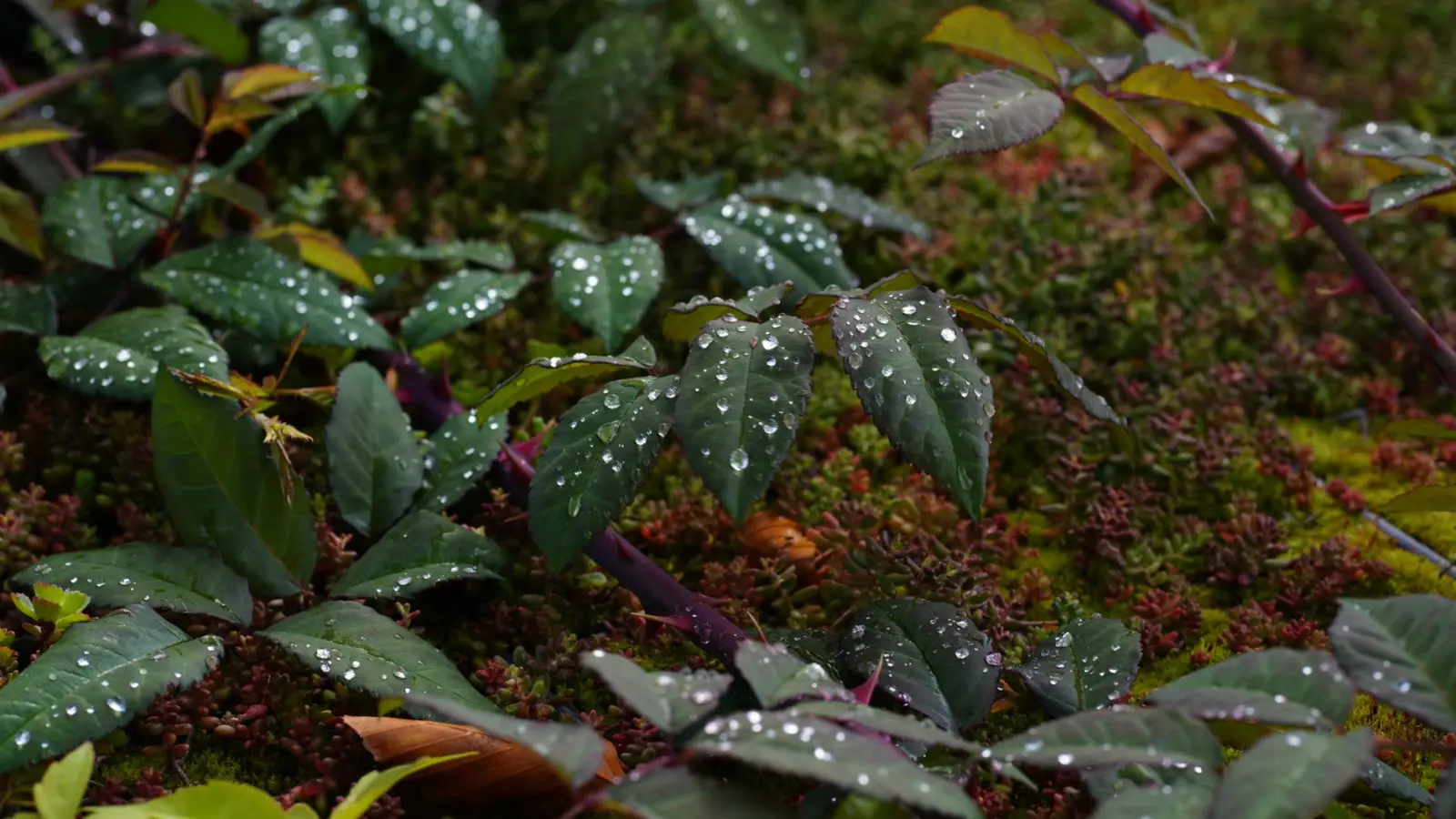
The most straightforward explanation for drip tips involves water shedding. In a rainforest, rain doesn’t fall gently. It comes in heavy bursts, and it comes often. A leaf without a pointed tip tends to hold water in its center or along its edges. That standing water creates problems. Fungi, algae, and moss colonize wet surfaces quickly in warm, humid conditions. A leaf that stays wet becomes a liability – it can’t photosynthesize as efficiently, it becomes heavy with growth that isn’t the plant itself, and it becomes vulnerable to rot. A drip tip channels water away from the leaf surface. The pointed end acts as a drainage point, and gravity does the rest. Water that would otherwise pool runs off the tip and away from the leaf blade.
The Fungal Pressure Factor
What I’ve observed repeatedly in tropical field work is that fungal and microbial growth on leaves is not a minor nuisance – it’s a constant selective pressure. In the understory of a rainforest, where light is already limited and humidity hovers near saturation, any reduction in photosynthetic surface matters. A leaf covered in fungal growth loses efficiency. Over evolutionary time, plants that shed water quickly would have had a competitive advantage. Those that kept water sitting on their leaves would have accumulated more pathogenic growth and would have struggled in the shade competition. The drip tip, in this context, is a fungicide alternative. It’s a way to keep the leaf surface dry enough to resist colonization.
This isn’t universal across all rainforest plants, though. Some leaves don’t have drip tips, and they survive just fine. The presence or absence of a drip tip often correlates with other leaf characteristics and the plant’s overall strategy. Thick, waxy leaves with antimicrobial compounds may not need drip tips because they resist fungal growth through chemical defense. Smaller leaves or leaves with very high turnover rates might not accumulate enough pathogenic load to make the drip tip worthwhile. Plants in the canopy, where light is abundant and leaves dry faster, face less pressure to develop drip tips than understory plants. The adaptation isn’t a universal solution – it’s one strategy among several.
Water Management Beyond Shedding
There’s another layer to this. Drip tips also influence how water moves around the plant. In a rainforest, water is never scarce, but the *timing* of water availability matters. A leaf that sheds water quickly prevents waterlogging of the plant’s vascular system. If water pools on a leaf and then drips slowly, it can saturate the petiole and stem, potentially creating conditions for rot or disrupting nutrient transport. A sharp drip tip ensures that when rain stops, the leaf dries relatively quickly. This rapid drying cycle is important for maintaining the plant’s physiological balance in an environment where moisture is otherwise constant.
I’ve also noticed that drip tips tend to be more pronounced on plants in the wettest, shadiest parts of the forest – the understory and lower canopy layers where fungal pressure is highest and light is most limited. In drier tropical forests or in the upper canopy, drip tips are less common. This spatial variation suggests that the adaptation is indeed a response to specific environmental conditions rather than a random feature. Plants in wetter niches have stronger selective pressure to develop them.
The Structural Trade-Off
Developing a drip tip isn’t free. A pointed leaf tip is structurally weaker than a rounded or blunt tip. It’s more prone to damage from wind, insects, or mechanical stress. The plant invests energy in growing a structure that extends beyond the main photosynthetic surface. In an environment where light is limited, every square millimeter of leaf matters. A drip tip represents a small sacrifice of photosynthetic area in exchange for the benefit of faster water shedding and reduced fungal load. Whether that trade-off is worth it depends on the specific conditions the plant faces.
Some plants hedge their bets. They develop drip tips on their lower leaves, where fungal pressure is highest and light is already limited, but have more rounded or blunt tips on their upper leaves, where light penetration is better and water dries faster anyway. This variation within a single plant suggests that drip tips are not a fixed genetic feature but a plastic response that can be tuned to local conditions.
The reality of rainforest ecology is that every feature of a plant’s structure reflects a balance between competing pressures. Drip tips are one of the more visible examples of how plants solve the problem of living in a place where water is everywhere but staying dry is essential. It’s a simple mechanical solution to a complex environmental problem, and it works well enough that it has evolved independently in many unrelated plant families across tropical regions worldwide.