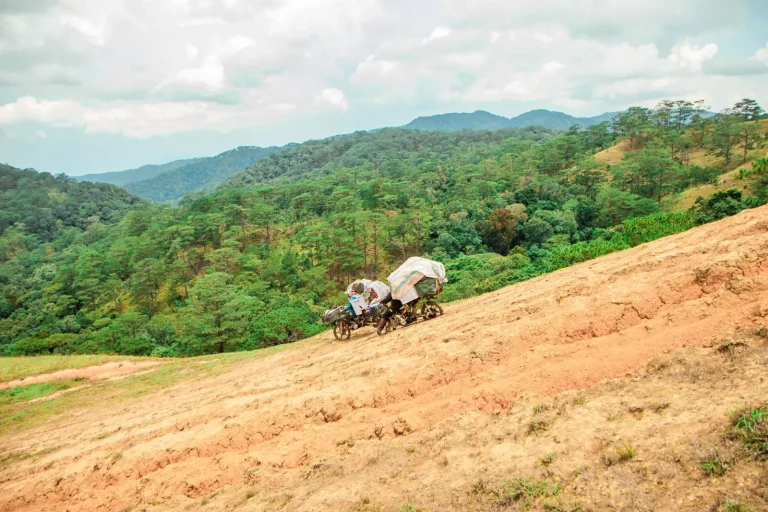
Spending time moving through rainforest valleys versus the open country beyond them reveals something immediate: the temperature difference is real and consistent. You notice it in how your body responds, in the way moisture hangs differently, in how the air feels when you step from the valley floor back up to exposed ridges. This isn’t subtle variation. The valleys are genuinely cooler, and the reasons run deeper than simple shade.
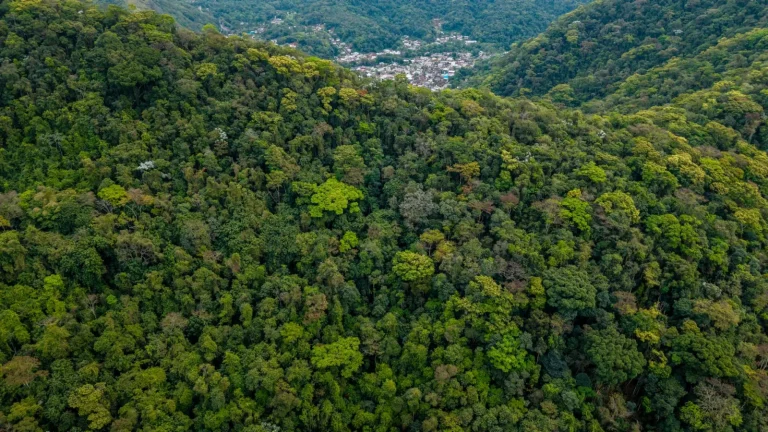
The first thing to understand is that a rainforest valley doesn’t just happen to be cooler because trees grow there. The cooling is structural – it’s built into how the ecosystem functions as a whole. The dense canopy overhead doesn’t merely block sunlight; it creates a multi-layered barrier that fundamentally changes how energy moves through the space. Sunlight that would normally reach the ground and heat it directly gets intercepted at multiple levels. Some is absorbed by leaves high in the canopy, some is reflected back, and only a fraction penetrates to the valley floor. The result is that the ground itself stays considerably cooler than it would in open terrain.
Moisture Cycling and Evaporative Cooling
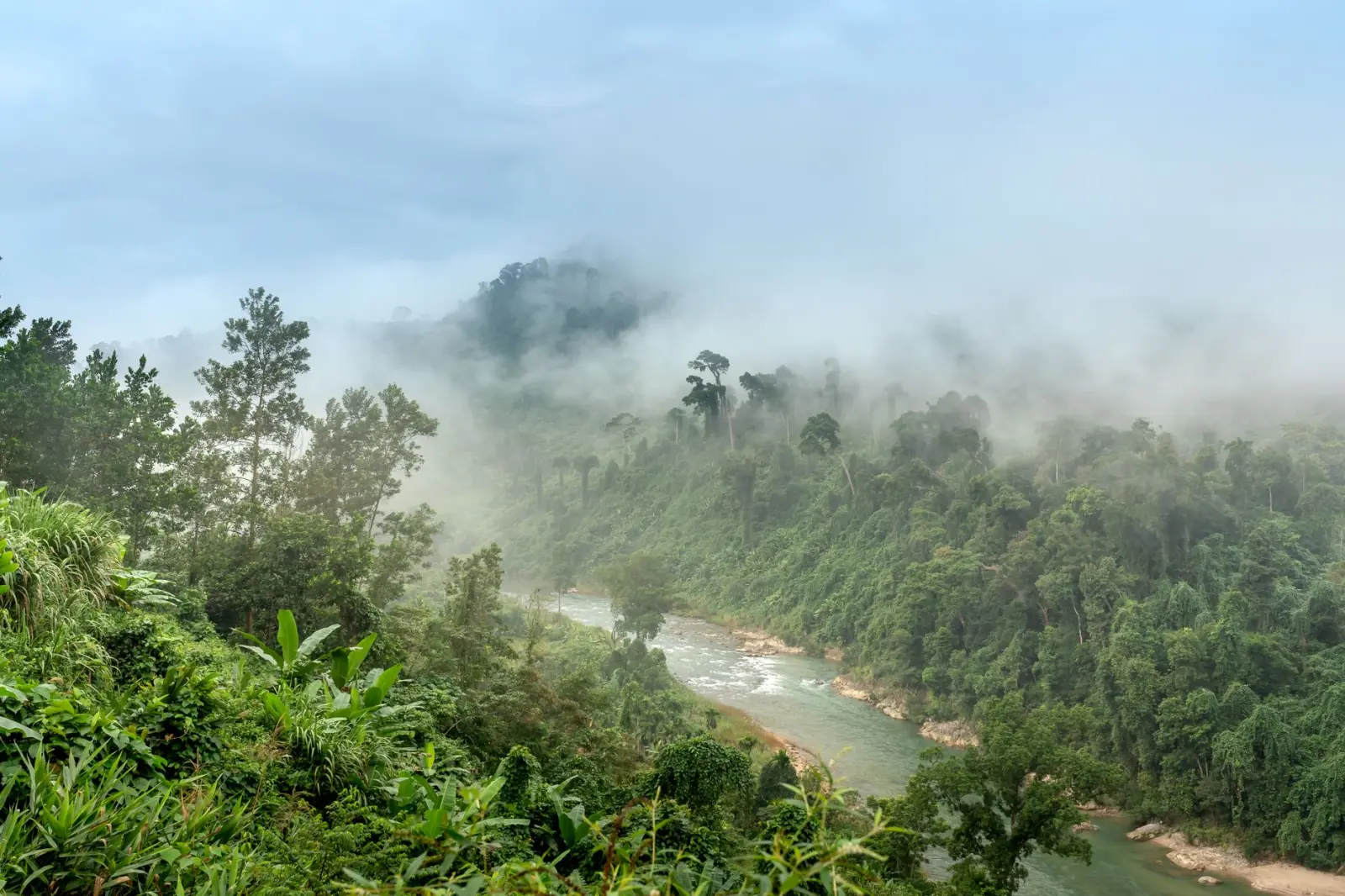
But canopy shade alone doesn’t explain the full picture. What really drives the temperature difference is the water cycle operating inside the valley. A rainforest valley is essentially a closed moisture system. Trees pull water from the soil through their roots and release it through their leaves – a process called transpiration. In a dense valley system, this moisture doesn’t escape into the atmosphere and disappear. Instead, it gets trapped within the canopy layers and the valley itself. The air becomes saturated with water vapor.
When air is saturated with moisture, evaporation slows dramatically. This is crucial. In open country, whatever moisture exists on soil or vegetation surfaces evaporates quickly into the drier air above, and that evaporation pulls heat energy away from the landscape. But in a valley where the air is already humid, evaporation can’t happen as efficiently. This means the cooling effect that normally comes from evaporation is muted. However, the reverse is also true: the saturated air itself becomes a thermal buffer. Humid air doesn’t heat up or cool down as rapidly as dry air. It holds temperature more steadily. Combined with the reduced solar input from the canopy, this creates a genuinely cooler microclimate.
I’ve measured this effect many times moving between valley floors and ridge tops. The ridge, exposed to direct sun and with lower humidity, heats up noticeably by mid-morning. The valley, even at the same elevation on a map, remains several degrees cooler well into the afternoon. The difference becomes even more pronounced during the hottest part of the day, when the contrast is often 5 to 8 degrees Celsius or more.
Topography and Air Movement
Valley geography itself plays a role that’s often overlooked. The shape of the land affects how air moves and settles. In a valley, cooler air tends to sink and pool at lower elevations. Warmer air rises and escapes upward. This creates a gentle circulation pattern that works in favor of the valley staying cooler. On exposed ridges and slopes, air moves more freely, and there’s no such pooling effect. Heat doesn’t accumulate in the same way because the air is constantly being replaced by warmer air from surrounding areas.
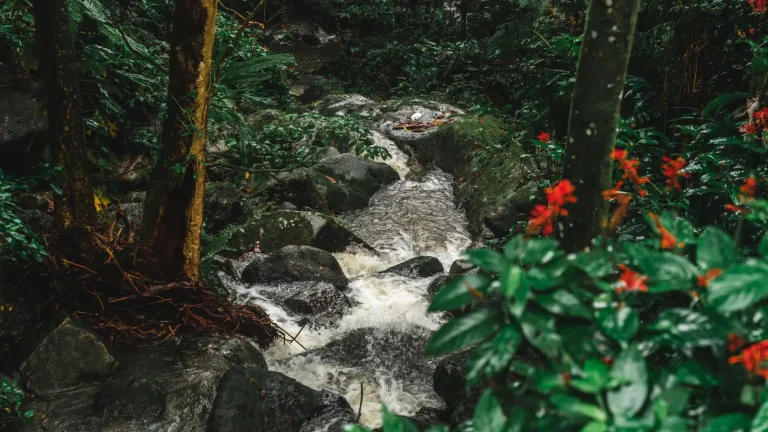
Additionally, valleys often have water courses running through them – streams, small rivers, or seepage areas where groundwater reaches the surface. This water has a significant cooling effect. Water retains temperature changes slowly and acts as a thermal moderator. Even a small stream moving through a valley contributes to the overall cooling by absorbing heat during the day and releasing it slowly at night. In a rainforest valley where the canopy keeps direct sun off the water, this moderating effect is maximized.
Soil and Organic Matter
The ground itself in a rainforest valley operates differently than exposed soil elsewhere. The forest floor is thick with organic matter – fallen leaves, decomposing wood, rich humus. This layer acts as insulation. It doesn’t heat up as much during the day because it’s shaded and moist, and it doesn’t radiate heat back into the air as efficiently as bare or compacted soil would. The moisture content of this organic layer is key. Wet soil and organic matter have high heat capacity, meaning they absorb a lot of energy before their temperature rises significantly. Dry soil heats up quickly and cools quickly. Wet soil does neither.
In valleys, the organic layer stays consistently moist because of the moisture cycling I mentioned earlier and because water drains downslope toward the valley floor. This perpetual moisture keeps the soil cooler and more stable in temperature. When you’re working in a rainforest valley, you notice this. The ground underfoot stays cool and damp. Step out onto exposed slopes or cleared areas, and the soil is warmer and drier.
The Cumulative Effect
What makes rainforest valleys genuinely cooler isn’t any single mechanism but the interaction of all these factors working together. The canopy reduces incoming solar radiation. The high humidity prevents efficient evaporative cooling and acts as a thermal buffer. The valley shape encourages cooler air to settle and pool. Water features moderate temperature swings. The soil and organic matter stay moist and resist heating. Each of these things contributes a small amount to the overall cooling effect, but together they create a measurable, persistent temperature difference.
This has practical implications for anyone moving through tropical rainforest. The valleys are genuinely more comfortable to work in during hot periods. The cooler temperature means lower heat stress on your body. The higher humidity, while it can feel oppressive, actually reduces the rate at which you lose water through perspiration – though it makes evaporative cooling less effective, so you still need to manage heat carefully. The difference between working in a valley and working on an exposed ridge at the same elevation can be significant over a full day.
Understanding why these valleys stay cooler also explains why clearing them or removing the canopy has such dramatic effects on local temperature. Once you open up a valley – remove the forest, expose the soil – it heats up rapidly. The cooling mechanisms all collapse at once. The air dries out, the organic layer dries out, the water features warm up, and the valley becomes substantially hotter than it was. This is observable within weeks of clearing. It’s not gradual. The system that maintained the cool microclimate is dismantled, and the landscape responds immediately.