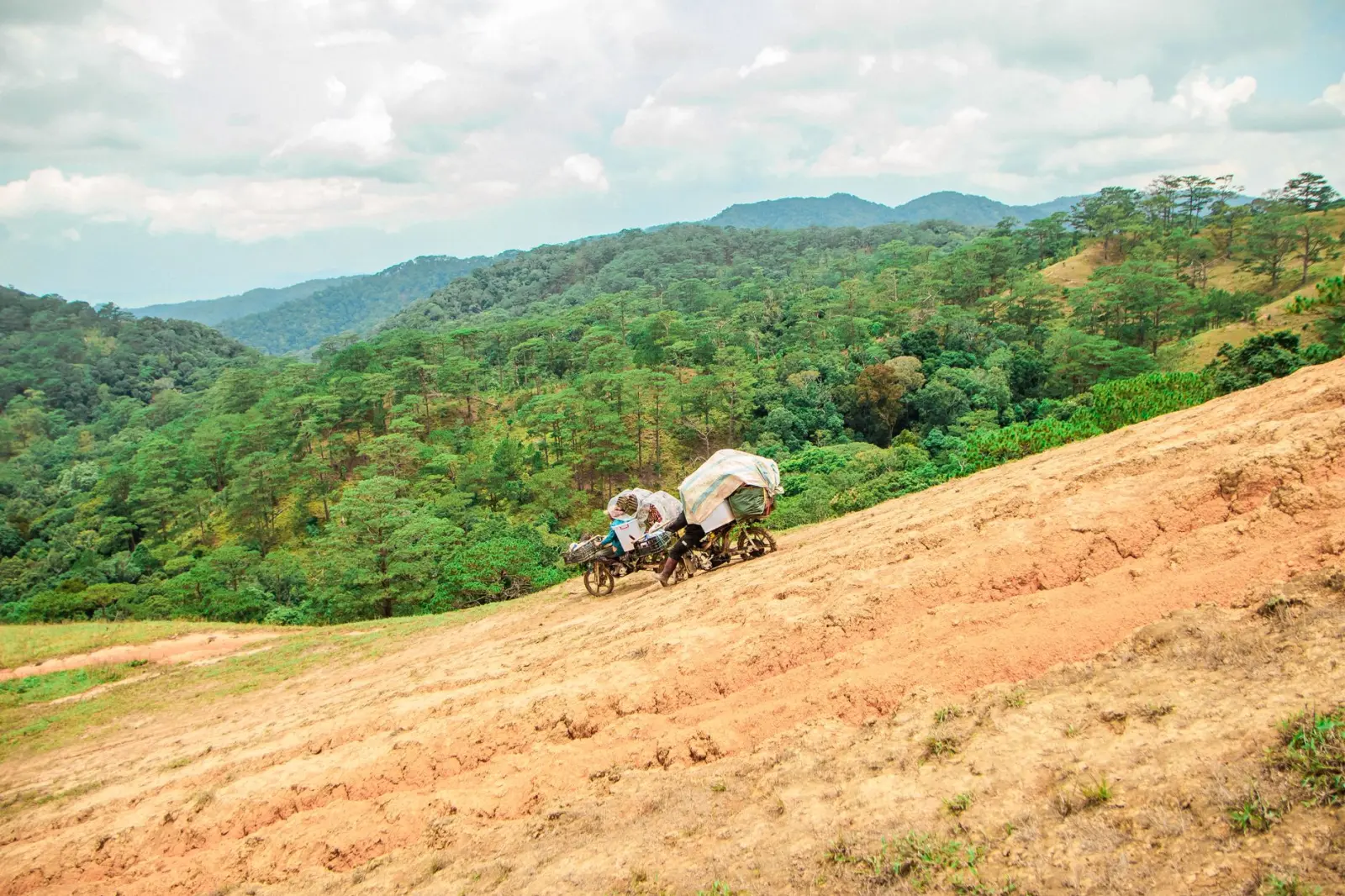
Spend enough time walking through steep rainforest terrain, and you begin to notice patterns in how plants position themselves. It’s not random. On a 40-degree slope where soil shifts constantly and water runs downhill faster than it can settle, plants have evolved specific solutions to the problem of staying rooted. These aren’t elegant or particularly visible at first glance – they’re functional, often rough-looking, and absolutely necessary for survival on ground that wants to move.
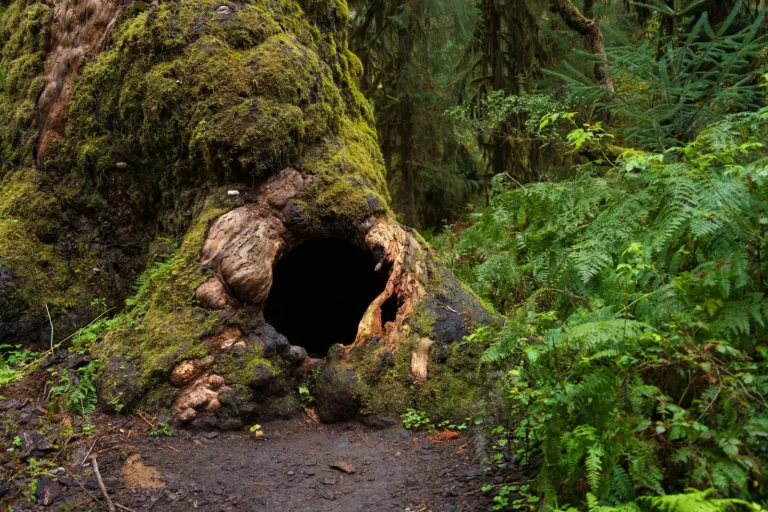
The most obvious adaptation is the root system itself. On flat ground, trees can afford to develop deep taproots or evenly distributed lateral roots. On a steep slope, this strategy fails almost immediately. The soil simply doesn’t have the depth or stability to support it. Instead, rainforest plants on slopes develop what are called buttress roots and prop roots – massive, wing-like structures that extend from the base of the trunk down the slope and upslope. These roots aren’t primarily for nutrient absorption. They’re anchors. They act like guy-wires on a tent, distributing the weight of the plant across a wider footprint and gripping into the soil at multiple points. I’ve seen trees on 50-degree slopes with buttress roots extending 10 meters or more from the trunk, creating almost a web of contact points with the ground.
What’s interesting is that these roots don’t go deep. They spread laterally instead, often remaining in the top meter or so of soil where they can grip better and respond faster to soil movement. Deep roots on a slope are a liability – they’re more likely to snap or create a pivot point that destabilizes the entire plant. The shallow, spreading strategy is more forgiving. When a section of soil shifts, the plant can flex rather than break.
Dealing with Constant Water Movement
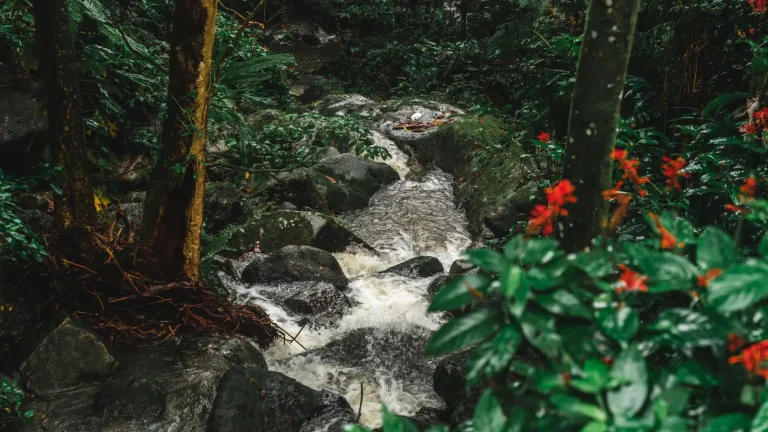
Water is the real problem on steep slopes. During heavy rain – and rainforests get heavy rain – water doesn’t percolate down into the soil the way it does on level ground. It flows downslope, fast, taking soil with it. Plants have adapted to this by developing root systems that can tolerate partial exposure. Many rainforest species have roots that actively grow along the surface or just beneath it, following the contours of the slope. These roots are tougher than you’d expect, with thicker bark and more flexible wood. They need to be – they’re constantly being abraded by water movement and shifting soil.
Some plants actually thrive in this environment by developing aerial roots that dangle from branches and eventually make contact with soil lower on the slope. Figs are notorious for this. They’ll send roots down 20 or 30 meters to find more stable ground, essentially creating a rope-like support system. It’s an expensive strategy – the plant has to invest significant energy in growing roots that don’t immediately contribute to nutrient uptake – but on a slope where the ground beneath the canopy is unreliable, it’s worth the cost.
Leaf and Crown Architecture
The shape and arrangement of leaves also matters more than most people realize. On flat ground, plants can afford to have large, spreading canopies that catch wind and rain evenly. On a slope, this creates problems. Wind hits the canopy unevenly, creating torque that tries to tip the plant downslope. Heavy rain accumulates on one side of the crown. Plants on slopes tend to have smaller, more compact canopies and leaves that are oriented vertically or at angles rather than horizontally. This reduces wind resistance and allows water to run off more quickly rather than accumulating.
I’ve noticed that many steep-slope rainforest plants also have smaller individual leaves than their lowland relatives, even within the same species. The smaller surface area means less water weight to support and less wind load. It’s a trade-off – smaller leaves mean less photosynthetic capacity – but on a slope where stability is the primary concern, the trade-off makes sense. The plant sacrifices some growth rate for survival.
Branch architecture changes too. On level ground, trees can afford to have branches that extend outward symmetrically. On a slope, branches tend to be shorter, more densely packed, and angled slightly upslope. This keeps the center of gravity closer to the trunk and reduces the moment arm that wind and gravity can work against. The crown becomes almost pyramidal, narrower at the top and wider at the base – the opposite of what you often see in lowland rainforest trees.
Soil Stabilization and Mycorrhizal Networks
The relationship between plants and fungi becomes critical on steep slopes. Mycorrhizal fungi form networks around plant roots, and on slopes these networks appear to play a role in soil stabilization. The fungal hyphae physically bind soil particles together, and the network can span across multiple plants. I’ve observed that disturbed slopes where the mycorrhizal network has been broken – by erosion or landslide – take much longer to revegetate, even when pioneer species arrive. The fungi are as important as the roots themselves.
Plants on slopes also tend to grow more slowly than their lowland counterparts. This isn’t just because conditions are harsher, though they are. It’s a strategy. Slower growth means less new tissue to support, less demand for water during dry periods, and a more stable structure. A tree that takes 50 years to reach reproductive maturity on a slope might take 20 years on flat ground. The extended timeline allows the root system to develop more thoroughly and the plant to establish itself more firmly before it has to invest energy in reproduction.
Competition for space on slopes is also different. There’s less crowding because slopes are inherently less productive – fewer nutrients, more water stress, more instability. This means individual plants can spread out more, which actually helps with stability. A plant surrounded by bare slope has better wind exposure and less structural competition than one hemmed in by neighbors. The openness is an advantage.
Over years of moving through steep rainforest, what strikes me most is how specialized these adaptations are. A plant that’s perfectly adapted to a 45-degree slope often struggles on flat ground, where its buttress roots take up space without providing any benefit and its compact crown doesn’t capture enough light. These aren’t general-purpose adaptations. They’re solutions to a specific problem: staying alive on ground that’s actively trying to move. The plants that succeed on slopes have committed entirely to that strategy, and it shows in every aspect of their structure.