

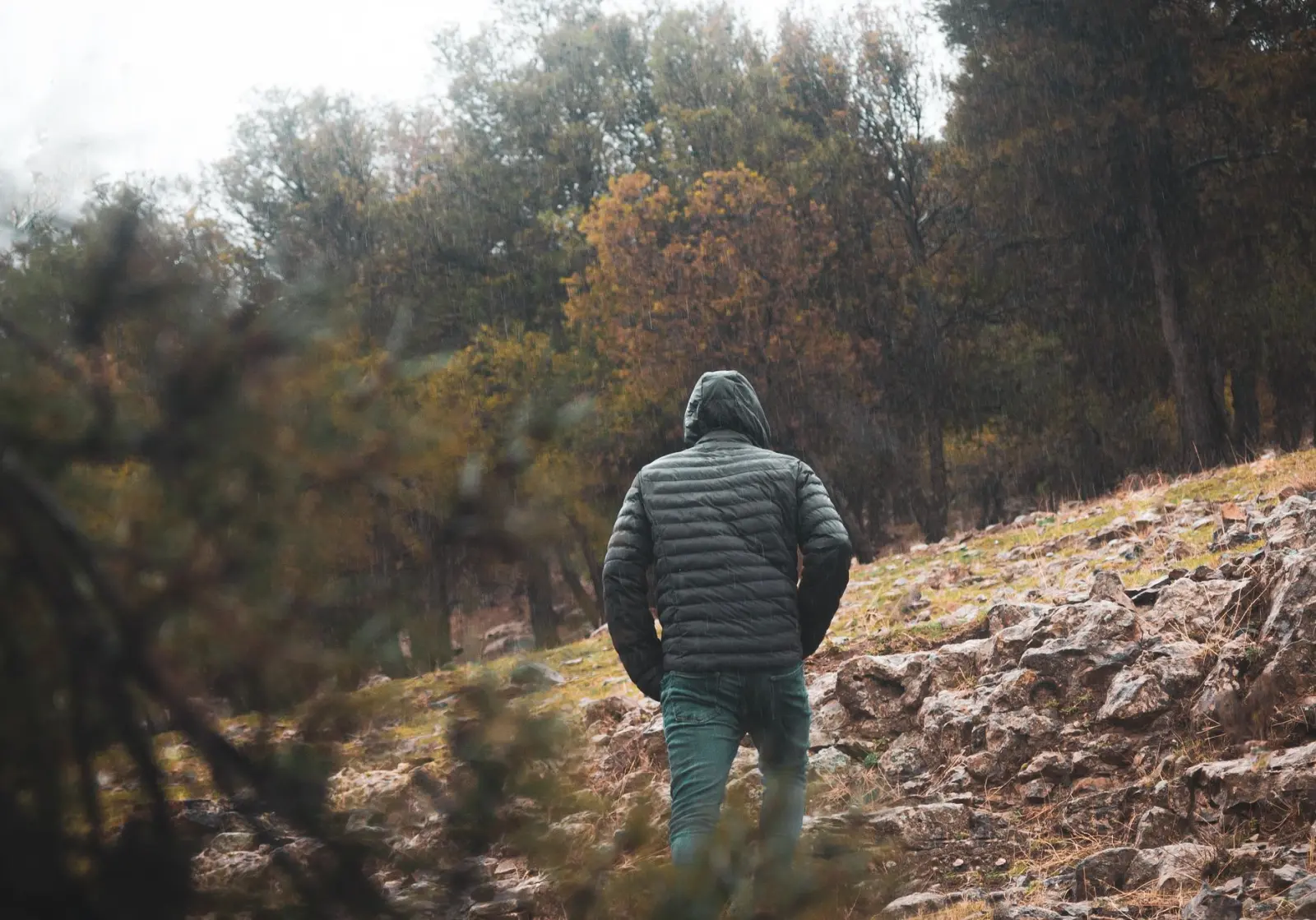
The forest around Browns Falls has a particular character that doesn’t announce itself until you’re actually moving through it. Most people show up expecting a straightforward walk through accessible woodland, and some of that exists, but the reality is more complicated. The terrain shifts without warning. The canopy density changes. Water crossings that are trivial in one season become serious obstacles in another. After spending considerable time in these woods, I’ve learned that success here depends less on ambition and more on reading what’s actually in front of you.
The immediate area around the falls themselves is well-trodden and relatively forgiving. The main approach trails are maintained enough that you won’t lose the path, and the ground is packed down from regular foot traffic. But move away from the obvious routes, and the forest becomes a different proposition. The undergrowth thickens. Fallen trees create natural barriers that force you to choose between climbing over, going around, or backtracking. The soil composition changes too – in some sections it’s stable and well-draining, in others it’s boggy and will suck at your boots with every step.
Seasonal Variation and What It Means
The forest behaves differently depending on when you visit, and these aren’t minor variations. Spring brings water. The snowmelt from higher elevations feeds into every creek and stream, and what might be a dry gully in late summer becomes a flowing channel that requires careful crossing. I’ve seen people caught off guard by this, attempting to ford streams that were manageable just a few weeks earlier but are now chest-deep and moving fast. The risk isn’t just getting wet – it’s losing your footing on a slippery bottom and being swept downstream into deadfall.
Summer drying brings its own set of conditions. The forest floor becomes firmer, which sounds like an advantage until you realize that harder ground means less grip for your boots, especially on slopes. The undergrowth also becomes drier and more brittle, which means it breaks underfoot more easily and creates more noise. If you’re moving quietly to observe wildlife, summer is actually the worst time for it. Autumn is when the forest floor becomes most treacherous – wet leaves covering roots and rocks, creating a constant risk of turning an ankle. Winter, if there’s snow, can be deceptive. A light dusting looks manageable, but the forest canopy is dense enough that melt patterns are uneven. You might have solid ground in one spot and thigh-deep snow twenty meters away.
Navigation Without Obvious Markers
The forest doesn’t have extensive blazing or signage once you move beyond the main falls area. This isn’t necessarily a problem, but it requires a shift in how you navigate. Relying on a GPS unit is common, and it works, but the canopy coverage can be intermittent enough that your signal drops periodically. I’ve watched people become genuinely anxious when their GPS loses connection, even though they were never actually lost. The forest around Browns Falls isn’t so vast that you can wander indefinitely – there are natural boundaries, water features, and the sound of the falls themselves that provide reference points if you pay attention.
Compass work is more reliable here than electronics, but it requires you to actually know how to use one. The magnetic declination in this region is modest, but if you’re not accounting for it, you’ll develop a consistent error in your direction. More practically, learning to read the forest itself – the direction water flows, the way sunlight hits the canopy, the prevailing wind patterns – gives you a better sense of orientation than any single tool. Moss growth is unreliable as a directional indicator, despite what popular wisdom suggests. Aspect and slope angle are more consistent guides.
Water Crossings and Their Real Constraints
There are several streams that cut through the forest, and how you handle them depends on conditions and your own capability. The main creek near the falls is wide and relatively shallow in most seasons, but it moves fast. Crossing it barefoot or in sandals is tempting and sometimes feasible, but the rocks are slick and your feet will lose sensation in cold water faster than you expect. I’ve seen people make poor decisions about crossing because they underestimated how numb their feet would become. The consequence isn’t always dramatic – sometimes it’s just that you can’t feel the ground properly and you slip – but it can be serious if you’re crossing alone and the current is strong.
The smaller tributaries are often more problematic than the main creek because people underestimate them. A stream that’s only knee-deep can still be dangerous if the current is swift or the bottom is unstable. Fallen trees sometimes span these crossings, which is convenient until you realize that using a log as a bridge requires balance and that a slip means falling into moving water. Testing the bottom with a stick before committing your full weight is basic practice, but it’s something people often skip when they’re tired or in a hurry.
Fatigue and Pacing Reality
The forest around Browns Falls doesn’t cover enormous distances, but the terrain is uneven enough that time estimates are often wrong. A route that looks like it should take two hours on a map can easily take three or four if you’re moving carefully and accounting for obstacles. Fatigue changes everything. When people are tired, their decision-making deteriorates. They take risks they wouldn’t normally consider. They move faster instead of slower, which is exactly backward. I’ve seen tired hikers attempt scrambles they’d avoid if they were fresh, and I’ve watched people push past the point where they should have turned back.
The forest doesn’t have a clear “summit” or obvious turnaround point, which means you have to make your own decisions about how far to go. This is harder than it sounds. There’s always another ridge to explore, another stream to follow. The temptation to keep moving is real, especially when the forest is beautiful and you’re feeling good. The problem is that the return journey is always harder than the outbound leg, and if you’ve gone too far, you’ll be doing that harder journey in deteriorating light or worsening weather.
Carrying enough water is more important than most people realize. The forest has water, yes, but it’s not always accessible or safe to drink without treatment. A stream might be flowing, but it’s also downhill from everything upstream, and giardia is a persistent problem in these forests. Carrying a filter or purification tablets adds weight, but running out of water partway through the day is worse. I’ve watched people ration water in the afternoon because they didn’t bring enough, and that decision affects everything that follows – your pace, your mood, your judgment.
Wildlife Encounters and Realistic Expectations
The forest supports deer, various bird species, and occasionally larger animals. Most encounters are brief and uneventful – you see something, it sees you, and one of you moves away. The forest is rarely silent, though. There’s constant small movement, rustling, bird calls. If you’re hoping for a quiet, peaceful forest experience, you’ll get it, but you won’t get solitude in the sense of being the only thing alive. The forest is busy.
Larger predators are present but rarely encountered. The risk of a serious wildlife incident is low, but it’s not zero. Making noise as you move reduces the chance of surprising something, which is the situation most likely to cause defensive behavior. A startled animal is more dangerous than one that sees you coming and has time to move away. This is one of the few situations where the conventional wisdom – make noise, travel in groups – actually reflects reality.
The forest around Browns Falls rewards patience and attention. It’s not a place that reveals itself quickly or rewards rushing. The people who have the best experiences here are the ones who move slowly, pay attention to what’s around them, and make conservative decisions about distance and timing. It’s a forest that works best when you work with it rather than against it.



