Most rainforest walks marketed as having mountain views don’t actually deliver them. The canopy closes in, the mist rolls thick, and what you get is a dense green tunnel with occasional glimpses of sky. After years of walking these trails across Central America, Southeast Asia, and parts of South America, I’ve learned that the promise of combined rainforest and mountain scenery requires specific conditions: elevation gain, trail positioning, and timing that most casual hikers don’t factor in.
The fundamental issue is that rainforests are designed by nature to obscure. They’re dense, wet ecosystems where visibility beyond 50 meters is often optimistic. When you add elevation and mountain terrain, the canopy doesn’t suddenly thin out – it just shifts. What changes is your position relative to the surrounding landscape. You need to be high enough that you’re looking across or down at other peaks, not just looking up through trees.
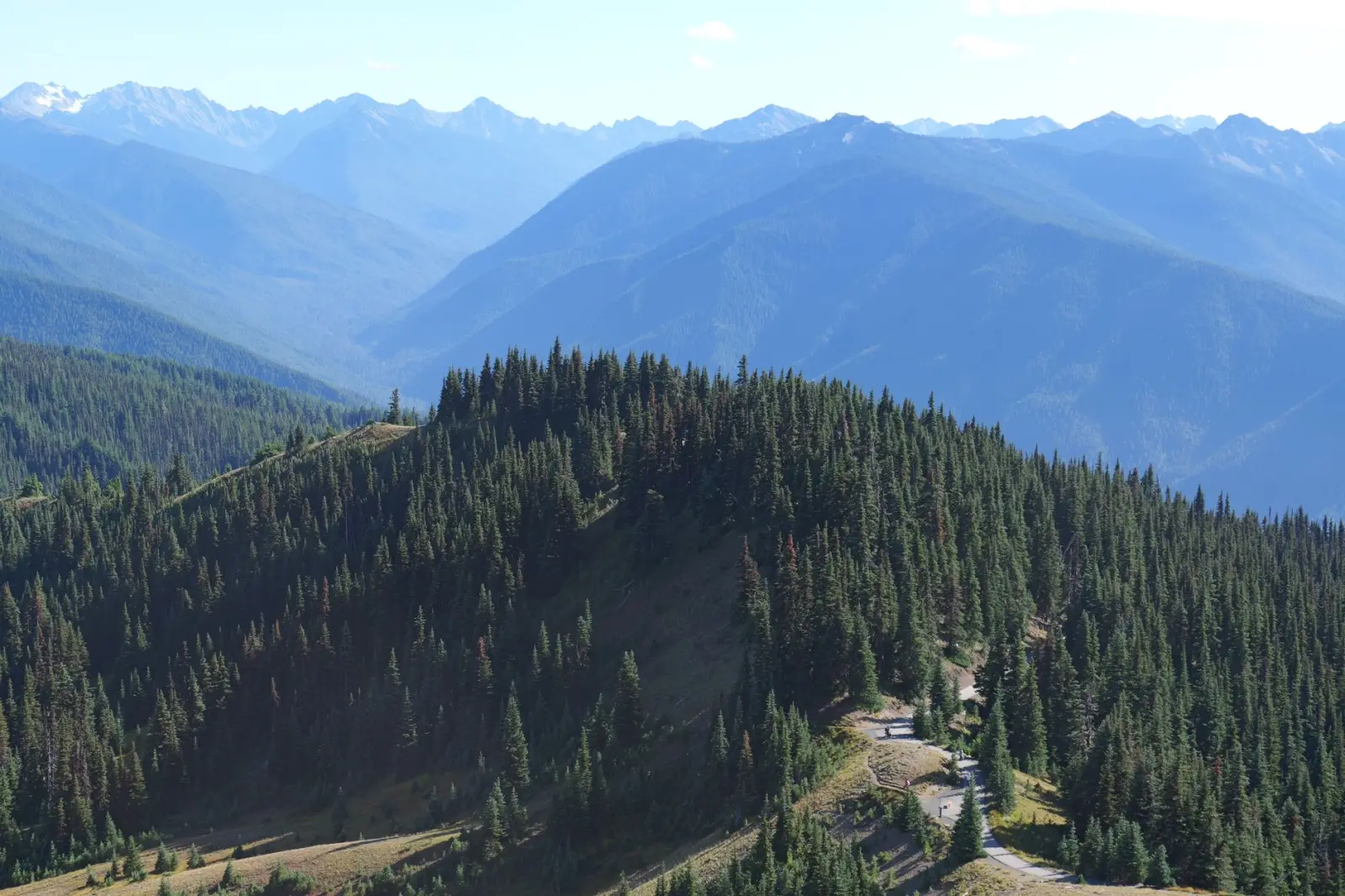
The trails that work best tend to follow ridgelines or traverse steep slopes where the forest opens laterally rather than vertically. A walk that climbs straight up a mountainside through rainforest will keep you enclosed the entire time. But a trail that runs along a ridge, especially one that’s been maintained to prevent regrowth, gives you sight lines across valleys and to distant peaks. The difference is subtle in description but profound in experience.
Elevation and Canopy Behavior
There’s a pattern I’ve noticed across multiple continents. Rainforests at lower elevations tend to have denser, more aggressive canopy coverage. As you climb, the forest changes. The trees become shorter, more gnarled, and the understory thins. This transition typically begins somewhere between 1,500 and 2,000 meters, depending on latitude and local climate. Above 2,500 meters, you’re often in cloud forest, which is a different ecosystem entirely – more open, more moss-covered, and paradoxically more likely to have clear views because the trees themselves are smaller.
The best rainforest walks with mountain views tend to operate in that middle band, usually between 1,200 and 2,200 meters. You’re high enough to have perspective on the surrounding terrain, but still within true rainforest conditions. The air is thick, the vegetation is lush, but the canopy is fractionally more open. On clear days, you can see across multiple ridges. On cloudy days – which is most days – you see nothing but the immediate forest.
This is where timing becomes critical. Morning light, before clouds build up, is when views materialize. I’ve done the same trail three times on different days and seen completely different landscapes. Once at dawn with clear skies, the mountains spread out in layers. Twice in afternoon, just dense green and mist. The trail itself doesn’t change. The forest doesn’t change. Your elevation doesn’t change. But the atmospheric conditions make the difference between a memorable view and a forgettable walk through trees.
Trail Selection and Positioning
When evaluating a rainforest trail, the key detail isn’t the elevation gain or the distance. It’s whether the trail stays on or near ridgelines, and whether it’s been maintained to prevent side vegetation from encroaching. Many rainforest trails are cut through the middle of slopes, which means you’re always surrounded. The forest is on all sides, above and below. These trails are beautiful for their own reasons – the biodiversity, the sound, the texture – but they won’t give you mountain views.
Trails that run along ridges or traverse steep mountainsides at an angle are different. They’re often harder to maintain because water runoff is more aggressive and vegetation wants to reclaim the path. But when they’re maintained, they offer something: lateral visibility. You can see across the valley. You can see other mountains. You can orient yourself in the landscape rather than just moving through it.
The Cloud Forest Reserve near Monteverde in Costa Rica operates this way. The trails that deliver views are the ones that run along the ridge system, not the ones that descend into the valleys. The Inca Trail in Peru, despite being heavily trafficked, works because it’s positioned along mountain slopes with views across the Sacred Valley. In Ecuador, certain sections of trails in the Podocarpus National Park offer mountain views because they traverse the western slope of the Andes at an angle rather than climbing straight up.
Weather Patterns and Seasonal Timing
Rainforests near mountains are affected by predictable weather patterns that most hikers ignore. In Central America and northern South America, the dry season (December to March) is when you’re most likely to see mountains. But “dry” is relative. It means less rain, not clear skies. Morning fog and afternoon clouds still form regularly. The advantage is that they clear faster and don’t last all day.
In Southeast Asia, the timing is different. The northeast monsoon (November to February) brings clearer skies to areas like northern Thailand and Laos. The southwest monsoon (May to September) brings rain and persistent cloud cover. If you’re planning a rainforest walk with mountain views in Southeast Asia, the window is narrow and specific.
What I’ve observed is that the first two to three hours after sunrise are consistently the best window for views, regardless of season. The ground is still releasing heat from the night, and the air hasn’t fully warmed. As the day progresses, convection builds clouds. By midday, views are often gone. This means starting early isn’t optional – it’s the difference between seeing mountains and not seeing them. A 9 a.m. start on a rainforest mountain walk is often already too late.
Physical Reality and Fatigue
Rainforest walks gain elevation differently than alpine trails. The terrain is often steep, the footing is uneven, and the air is humid. A trail that climbs 800 meters through rainforest feels longer and more demanding than 800 meters on an open mountain. Your legs work harder, your lungs work harder because the air is denser, and your attention is split between watching the trail and looking for views that may not materialize.
This matters for planning. If you want to reach a viewpoint and still have energy to appreciate it, you need to account for the fact that rainforest hiking is slower than it looks on a map. A trail listed as 4 kilometers often takes twice as long as it would on open terrain. The elevation gain is real, but the time cost is higher. I’ve seen people reach a viewpoint exhausted, spend five minutes looking at the view, and head back down. The physical toll of rainforest hiking is genuine and shouldn’t be underestimated.
Acclimatization also matters more than people expect. If you’re coming from sea level to a rainforest trail at 1,800 meters, your body needs a day or two to adjust. Doing the walk on arrival day means you’ll be slower, more tired, and less likely to push to the best viewpoint. The views won’t change, but your ability to reach them and appreciate them will be significantly compromised.
What Actually Delivers
After multiple walks across different rainforest regions, the trails that genuinely combine rainforest atmosphere with mountain views share specific characteristics. They’re positioned on ridges or steep slopes, not in valleys. They’re at elevations between 1,500 and 2,200 meters. They’re done early in the morning, ideally between 6 and 9 a.m. They’re walked during the drier season for their region. And they’re approached with realistic expectations about timing and effort.
The Monteverde Cloud Forest trails in Costa Rica deliver this consistently. The Manu Wildlife Center trails in Peru’s cloud forest offer genuine mountain vistas across the Andean foothills. In Ecuador, sections of the Quilotoa Loop present rainforest with views of volcanic peaks. In Guatemala, certain trails in the Petén region offer mountain views across the Maya Biosphere Reserve. These aren’t the most famous trails, and they’re not always the most accessible, but they consistently deliver what they promise.
The common thread isn’t location or elevation alone. It’s positioning, timing, and realistic understanding of what rainforest actually is. A rainforest walk with mountain views isn’t a rainforest walk that happens to have mountains nearby. It’s a carefully positioned trail walked at the right time of day in the right season, where the combination of forest and elevation creates genuine visual perspective. That specificity is why they’re rare and why they matter when you find them.