The rainforest on Lamington Plateau sits in a particular pocket of southeastern Queensland where the landscape hasn’t fundamentally changed in structure for thousands of years. Walking through it teaches you things that maps and trail descriptions don’t quite capture. The forest here is dense in a way that affects how you move, how long things take, and what your body experiences over the course of a day.
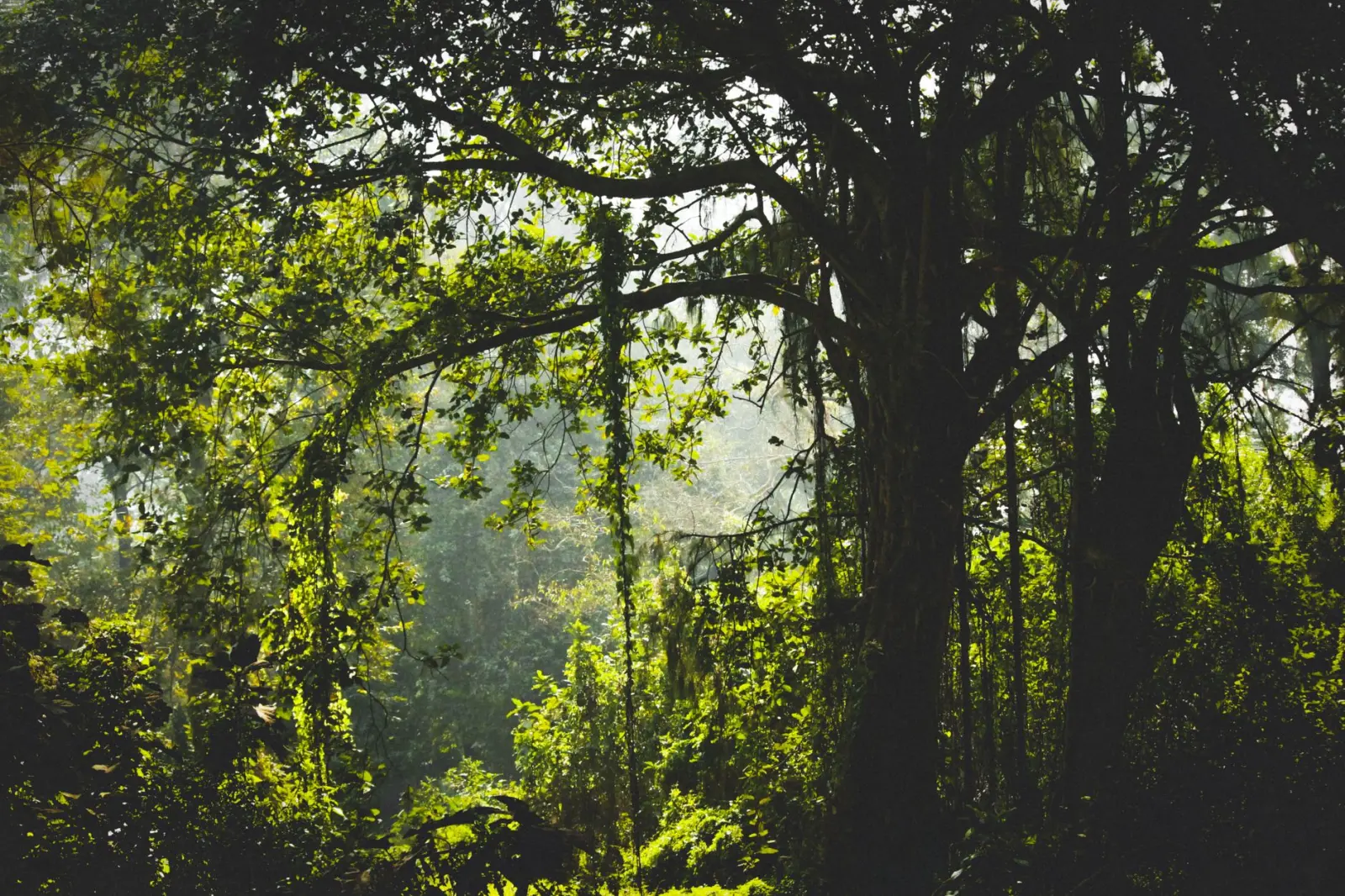
What strikes most people first is the canopy density. Light doesn’t penetrate evenly. You’ll walk through sections where the understory is relatively open – ferns, fallen logs, clear ground – and then abruptly enter areas where the vegetation layers are so thick that midday feels like dusk. This isn’t dramatic or photogenic in the way people expect. It’s simply the texture of old growth. The trees here aren’t necessarily the tallest you’ll see, but they’re established in a way that creates a stable, layered ecosystem. The oldest trees on the plateau are well over 300 years old, and that age shows in the structural complexity around them.
Moisture and the Walking Experience
The plateau sits at elevation – between 600 and 1100 meters depending on where you are – and moisture accumulates here consistently. Even on days when the lowlands are dry, the forest retains dampness. This affects everything from footing to how your body regulates temperature. The ground is rarely muddy in the way people imagine tropical mud. Instead, it’s a combination of compacted leaf litter, root systems, and soil that’s held together by constant organic activity. Your feet don’t sink, but they don’t grip quite the way they would on drier terrain either.
The humidity creates a specific kind of fatigue that’s worth understanding before you spend six or eight hours in the forest. It’s not the oppressive heat of lowland tropical areas. Instead, there’s a steady moisture in the air that your body has to work with continuously. Sweat doesn’t evaporate efficiently. Your breathing feels slightly heavier. If you’re accustomed to dry-climate hiking, this requires a recalibration of pace and expectations. People often underestimate how much water they’ll need, partly because the temperature feels moderate, but the moisture load on your system is significant.
The Trail Network and Navigation Reality
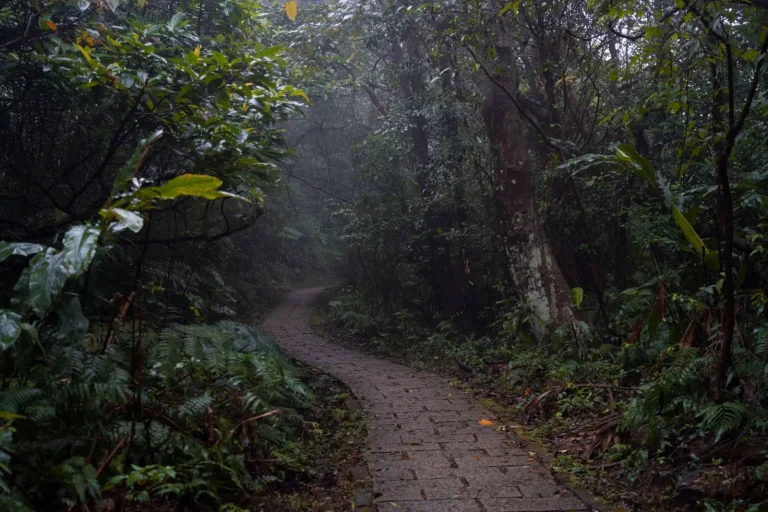
Lamington has a well-maintained network of walking tracks, but “well-maintained” on a rainforest plateau means something specific. The trails are cleared and marked, but they’re also narrow in many sections and routed through terrain where the forest is actively growing. In wet periods, water runs across the tracks rather than away from them. During dry spells, the leaf litter becomes slippery in ways that seem counterintuitive. The plateau’s geology – volcanic basalt in many areas – creates rock surfaces that hold moisture and become genuinely treacherous when wet.
Navigation itself is straightforward on the main trails. The marking is consistent, and it’s difficult to become genuinely lost if you stay on established routes. What’s more common is misjudging distance and time. A three-kilometer walk on the plateau often takes longer than you’d predict based on lowland experience. The terrain undulates constantly. You’re rarely walking on flat ground for more than a few minutes. This isn’t dramatic elevation gain – often just 100 to 200 meters over a section – but it accumulates. Your legs feel the work more than your lungs do, which can be misleading about your actual effort level.
Seasonal Variation and Timing
The forest changes noticeably through the year, though not in ways that make certain seasons impossible. Winter months (June through August) bring cooler temperatures and lower humidity, which makes walking more comfortable but also means the canopy is less active. You’ll see fewer birds, less obvious insect life. The light quality changes too – it becomes slightly clearer, less filtered. Spring and early summer bring the opposite: the forest is visibly more active, moisture levels peak, and the biological activity is constant.
The practical difference is that winter walking requires less water and allows longer days without fatigue building as quickly. Summer walking is slower and requires more attention to hydration and pacing. Neither season is inherently better. It depends on what your body tolerates and what kind of experience you’re seeking. Many people assume rainforest walking is a summer activity, but the plateau actually becomes more accessible in the cooler months simply because the physical demand is lower.
Rain is a constant possibility year-round, though the plateau receives more rainfall in summer and autumn. The forest drains water efficiently in most places, but trails can become slick within minutes of heavy rain. The canopy provides some shelter, but not complete protection. If you’re planning a specific walk, checking weather patterns is useful, but understanding that rain doesn’t necessarily stop the forest from being walkable is equally important. Many of the best days on the plateau happen immediately after rain, when the air is clearest and the forest is visibly active.
What the Landscape Actually Demands
Walking in old-growth rainforest requires a different kind of attention than open-country hiking. Your focus is more immediate and local. You’re watching for root systems, uneven ground, and the occasional rock that’s become slippery with moss. Your peripheral vision matters less because the landscape doesn’t open up. This concentration can be tiring in a way that’s separate from physical exertion. By midday on a full walk, many people report mental fatigue that’s as real as leg fatigue.
The forest is also genuinely quiet in a way that takes adjustment. There’s ambient sound – water, wind in the canopy, insect noise – but no distant views, no sense of openness. This affects how people experience time. Hours can pass without the usual visual markers that help you track progress. Some people find this meditative. Others find it slightly disorienting. Neither response is wrong. It’s simply how the landscape works.
The ancient quality of the forest is most apparent in the structural complexity. The trees aren’t just tall; they’re rooted in a system that’s been developing for centuries. You see evidence of this in the fallen logs that are themselves ecosystems, in the way the understory is layered, in the sheer density of life at every level. This isn’t something you can photograph effectively or describe in a way that captures the actual experience of moving through it. You have to walk it to understand why the plateau has remained relatively unchanged and why people keep returning to it.