After years of tracking species movement across fragmented rainforest landscapes, a pattern emerges that doesn’t always match what the textbooks suggest. When a continuous forest becomes isolated patches separated by cleared land, cattle pasture, or agricultural fields, the response isn’t uniform. Some species vanish within months. Others persist in surprisingly small remnants. Still others move through the landscape in ways that suggest they’re reading the fragmentation differently than we expect.
The core issue is simple in theory but complex in practice: fragmentation breaks the forest into islands. Each island has fewer resources, less genetic diversity, smaller breeding populations, and reduced ability to recolonize if a local population crashes. But the actual mechanics of how species respond depend heavily on what they are, what they need, and how the fragments are arranged.
The Immediate Losers
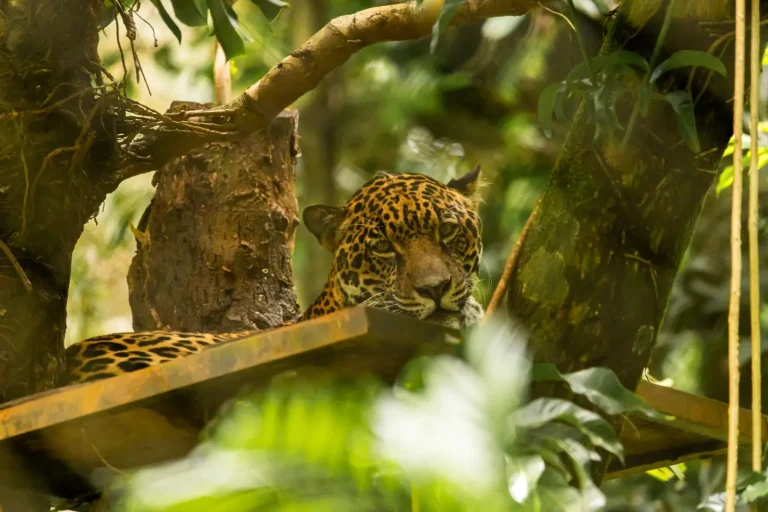
Large carnivores and wide-ranging specialists tend to disappear first. A jaguar or harpy eagle needs territory that spans tens of thousands of hectares. When the forest becomes a patchwork, these animals either leave or die. I’ve documented cases where apex predators vanished from fragmented areas within two to three years of isolation, even when the remaining forest patches were technically large enough to support them on paper. The problem isn’t always the patch size itself – it’s the inability to move between patches without crossing open ground where they’re exposed and vulnerable.
Frugivorous birds and mammals that depend on seasonal fruiting patterns also struggle early. In a continuous forest, they can track fruit availability across the landscape. In fragments, if a key fruiting tree species isn’t present or flowers poorly in a given year, there’s nowhere else to go. I’ve observed populations of toucans and woolly monkeys decline sharply not because the forest was cleared, but because the remaining patches lacked the diversity of fruit sources they relied on seasonally.
Persistence in Unexpected Places
Small generalists and edge-tolerant species often thrive in fragmented landscapes. Rodents, certain bat species, and common bird species that can eat a variety of foods expand their range when competitors disappear. This isn’t necessarily good news for overall biodiversity, but it’s a real pattern. I’ve seen secondary forest and forest edges become dominated by species that would never have been common in intact rainforest. The fragmentation creates a new ecosystem, not a diminished version of the old one.
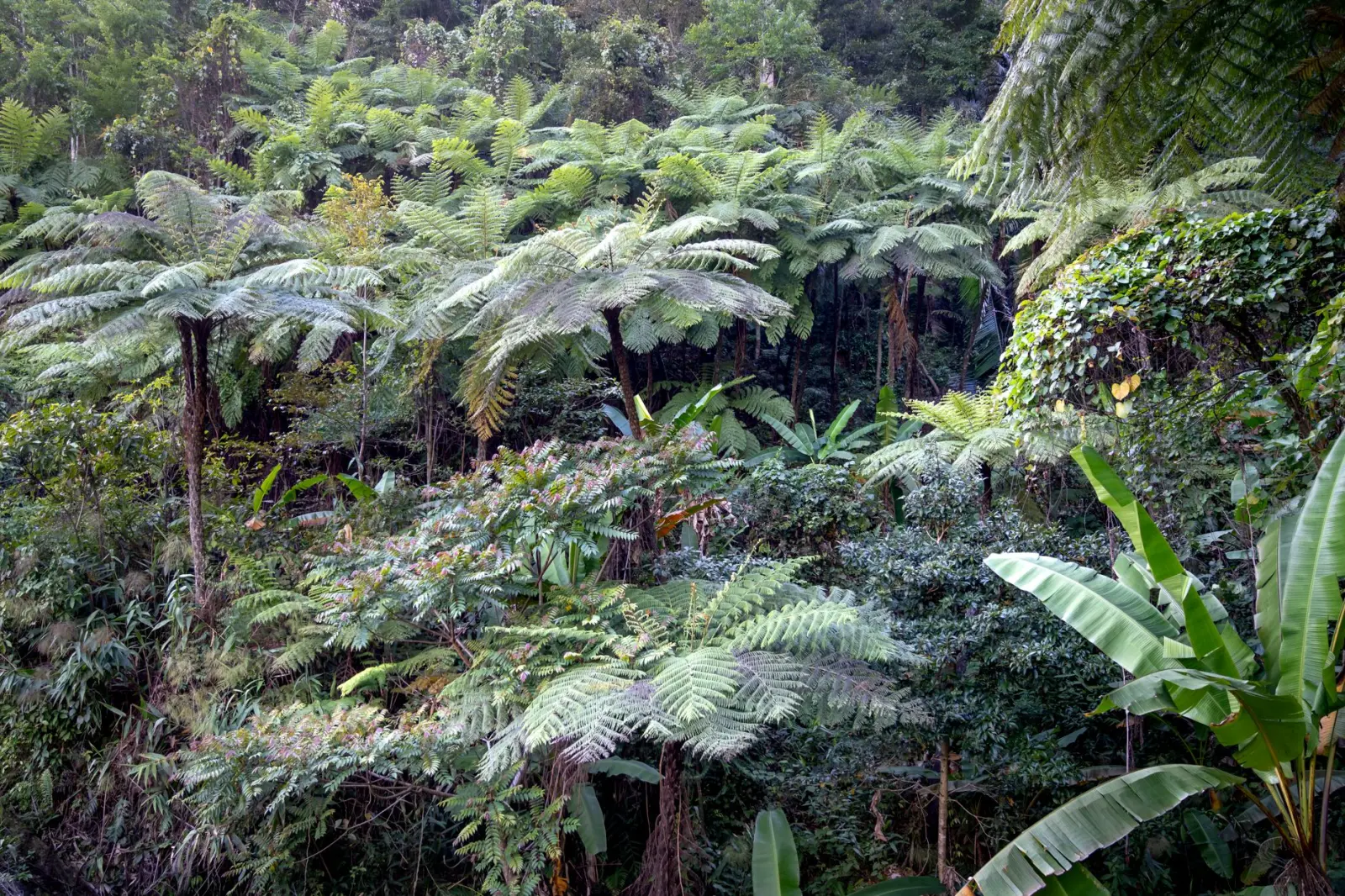
Some species persist in fragments that seem far too small based on ecological theory. Small populations of poison dart frogs, certain insect groups, and understory birds have survived in patches of just a few hectares for decades. This happens partly because their resource needs are modest and partly because they’re not dependent on long-distance movement. But it also happens because we often underestimate how much habitat is present in a small patch. A hectare of dense rainforest contains extraordinary complexity – multiple canopy layers, dense leaf litter, fallen logs, and microhabitats that support far more species than simple area calculations suggest.
Genetic Bottlenecks and Invisible Decline
The most deceptive aspect of fragmentation is that populations can look stable for years while their genetic diversity collapses. I’ve examined populations of tree species and frogs in isolated fragments that appeared demographically healthy – trees were reproducing, frogs were calling – but genetic analysis revealed severe inbreeding depression. The population was functionally alive but genetically doomed. Without gene flow from other patches, recessive deleterious alleles accumulate, and reproductive success declines even as the population appears to persist.
This matters because it means a species can seem fine for a decade and then crash suddenly. The decline isn’t caused by a new threat. It’s the delayed consequence of isolation. I’ve seen this in small primate populations and in understory plant species. The population reaches a point where inbreeding effects become severe enough that survival and reproduction drop below replacement rates. By then, it’s often too late to restore connectivity.
Movement Behavior and Corridor Use
Species respond to fragmentation differently depending on their movement ecology. Some animals will cross open areas if they must. Others will not. Certain bat species will fly across cleared land to reach other forest patches. Many ground-dwelling mammals and birds will not. I’ve observed species that are identical in habitat preference but completely different in their willingness to traverse non-forest. This variation exists within species too – some individuals are bold dispersers, others are sedentary.
Corridors of connected vegetation can make a significant difference, but not always in the way conservation planning assumes. A narrow strip of secondary forest connecting two patches might allow some species to move between them while providing little benefit to others. I’ve documented cases where a corridor was used regularly by one species but completely avoided by another living in the same patches. The corridor’s value depends on whether it provides the specific conditions that species needs – the right canopy structure, the right understory density, the right food sources along the route.
Distance between patches matters, but it’s not a simple threshold. A gap of 100 meters might be impassable for one species and trivial for another. I’ve tracked small birds that refused to cross a 50-meter clearing but would readily cross a 200-meter gap if there were scattered trees. The visibility, the presence of perching spots, and the perceived predation risk all influence whether an animal will attempt the crossing.
Microhabitat Loss Within Fragments
Fragmentation doesn’t just reduce the total area of forest. It increases the proportion of edge habitat. Edge environments are warmer, drier, and more exposed than forest interior. Species that require stable, humid, dark conditions – many amphibians, certain arthropods, and shade-dependent plants – suffer disproportionately. I’ve sampled forest fragments where the interior habitat had essentially vanished because the entire patch was within a few meters of the edge.
The edge effect can penetrate surprisingly far into a fragment. In small patches, edge conditions can extend 50 to 100 meters inward, meaning a 5-hectare fragment might have almost no true forest interior. This explains why some species vanish from fragments that are theoretically large enough to support them. They’re not gone because the patch is too small in absolute terms. They’re gone because the habitat they need – forest interior conditions – no longer exists there.
Fragmentation also disrupts ecological processes that depend on landscape-scale dynamics. Seed dispersal, pollination networks, predator-prey interactions, and nutrient cycling all change when the forest becomes fragmented. A tree species that relied on a now-absent frugivore for seed dispersal might persist but fail to regenerate. A plant that depended on a specific pollinator might flower but produce no seeds. These invisible changes in ecological function can precede visible population declines by years or decades.
What I’ve learned from working in fragmented rainforests is that the response to habitat loss isn’t a simple function of patch size or species body size. It emerges from the interaction between the species’ ecology, the specific configuration of the landscape, and the particular characteristics of the remaining habitat. Some fragments persist as functioning ecosystems for decades. Others collapse within years despite appearing intact. The difference often lies in factors that aren’t obvious from the outside – the presence of key species, the maintenance of ecological processes, and the degree of connectivity to other populations. Understanding fragmentation requires looking beyond the maps and into the actual biology of the species and the microhabitats they depend on.