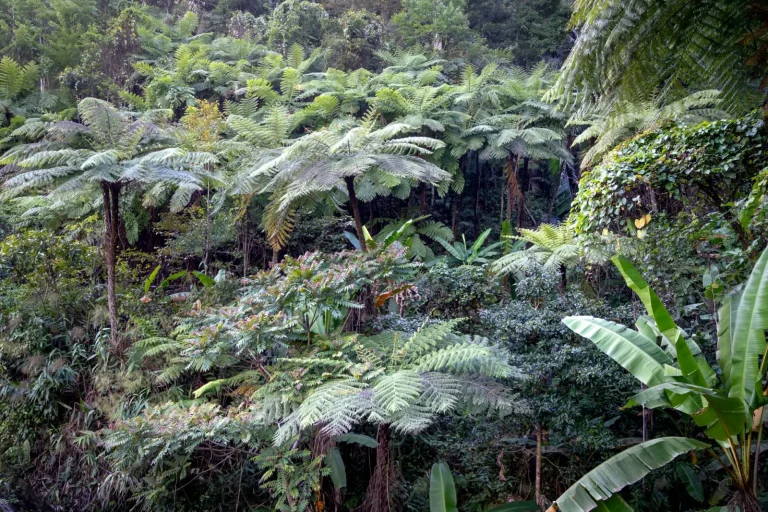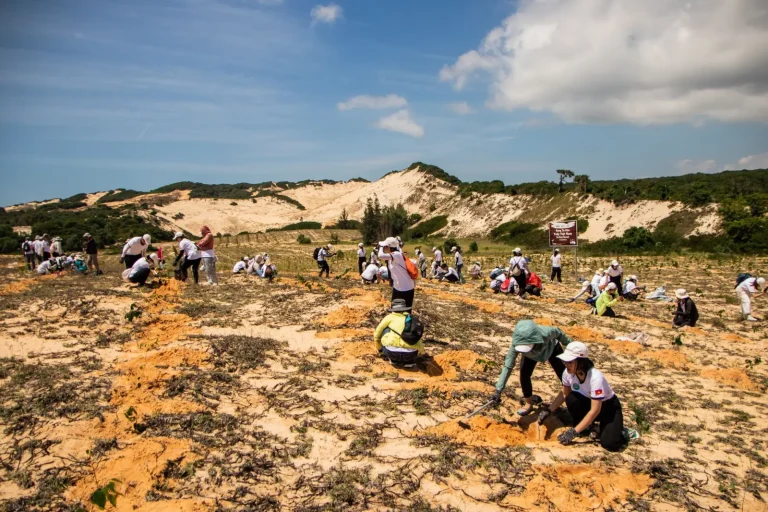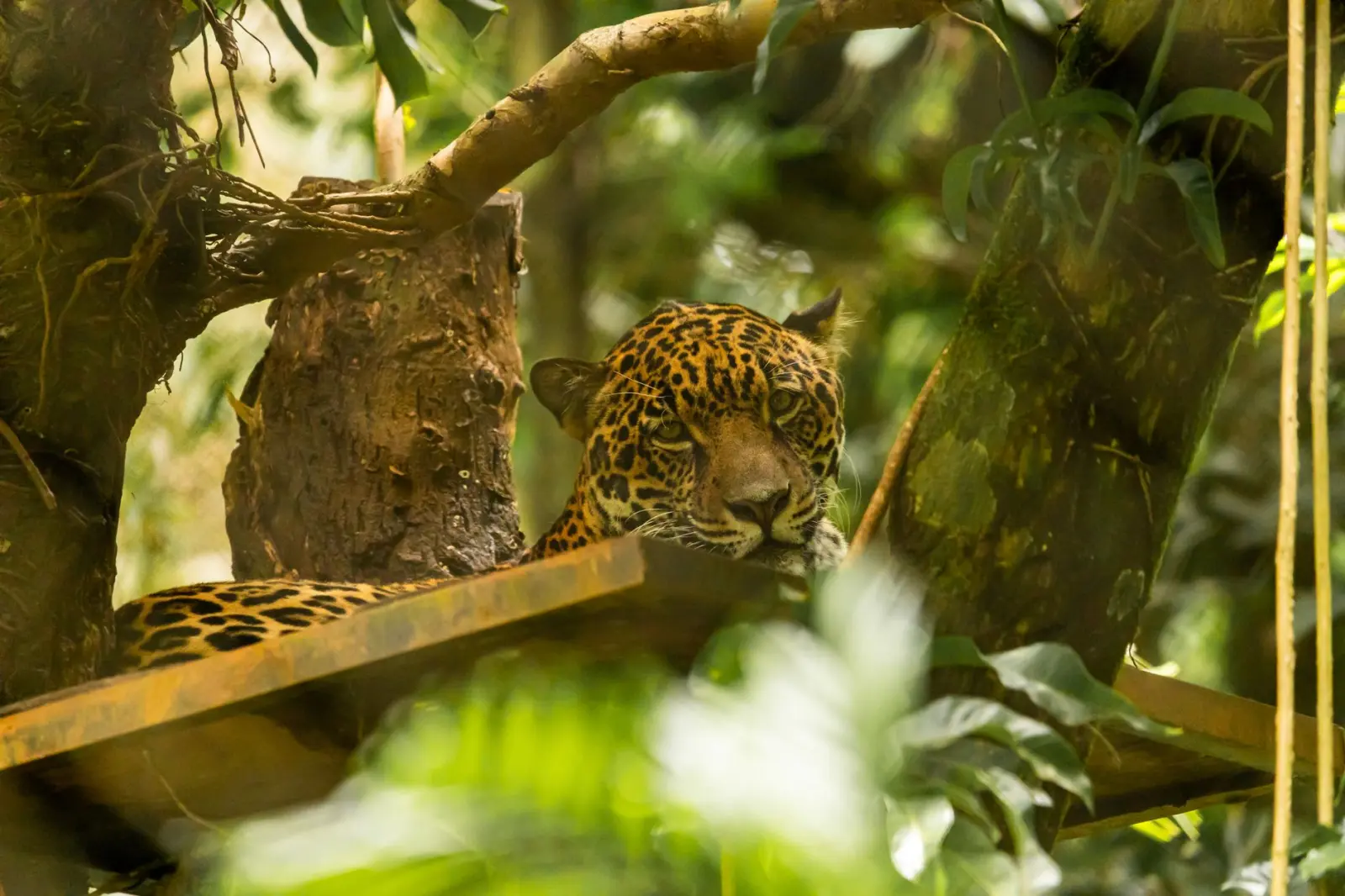
After years of working in tropical forest regions, I’ve noticed a pattern that most people miss when they look at a map of protected areas. The reserves exist, sometimes quite large ones, but they sit like islands in a sea of cleared land. What happens to the animals living in those islands becomes apparent only after you spend time tracking movement patterns, studying population genetics, and watching how species respond when they can’t move freely between forest patches.
The problem isn’t subtle once you see it. A jaguar needs to roam across dozens of square kilometers. A harpy eagle hunts across vast territories. Poison dart frogs, for all their vivid beauty and small size, still require access to multiple water sources and food plants spread across connected forest. When a protected reserve becomes surrounded by cattle pasture, oil palm plantations, or development, these animals don’t simply adapt to smaller spaces. They either die trying to cross hostile terrain, or their populations begin a slow decline as genetic diversity drops and breeding opportunities shrink.
What Isolation Actually Means for Population Survival
I’ve watched researchers collect data from isolated forest fragments over fifteen years, and the pattern is remarkably consistent. A population that seems stable in year one or two begins to show stress by year five. Birth rates decline. Disease spreads more easily through a smaller, genetically similar group. The animals that remain are often the least fit individuals, because the strongest and most mobile ones attempted to leave and didn’t survive the journey.
The mathematics of this is straightforward but grim. A viable breeding population of large carnivores typically requires hundreds or thousands of individuals. When you fragment a forest into separate reserves, you’re not just making the habitat smaller – you’re creating multiple small populations where one large one existed before. Each fragment supports fewer animals, and without genetic exchange between fragments, each population becomes increasingly inbred. Within a few generations, you see the consequences: reduced fertility, increased susceptibility to disease, behavioral abnormalities.
Smaller animals and plants face different but equally serious pressures. A forest fragment might support adequate numbers of a particular bird species, but if that species depends on seasonal food sources that exist only in certain areas, the birds can’t access them when isolated. Pollination networks collapse when key insect species disappear. Seed dispersal patterns break down. The forest doesn’t just become smaller – it becomes functionally broken.
How Corridors Restore Movement and Gene Flow
A rainforest corridor is essentially a connected pathway of forest that allows animals to move between larger habitat patches. It doesn’t need to be wide or continuous in the strictest sense. I’ve seen corridors as narrow as a few hundred meters still facilitate movement for many species, though wider corridors obviously support more species and more frequent movement.
The function is deceptively simple but ecologically profound. A jaguar moving between two reserves through a corridor can find mates outside its immediate population, introducing genetic diversity that strengthens the species’ survival prospects. A harpy eagle can hunt across a larger territory, increasing its chances of finding adequate prey. Poison dart frogs can access seasonal breeding sites. Plant species can disperse seeds across wider areas, maintaining genetic health and allowing populations to respond to environmental changes.
What I’ve observed is that corridors work best when they follow natural features. Rivers, ridge lines, and existing forest vegetation provide both physical pathways and psychological comfort for animals moving through unfamiliar terrain. A corridor that cuts through open space, even if it’s technically forested, functions poorly because many animals won’t use it. They perceive it as exposed and dangerous. A corridor that follows a river valley, where the forest is naturally denser and more complex, sees far more use.
The Challenge of Maintaining Connectivity Across Decades
Creating a corridor on a map is easy. Maintaining it through changing political and economic pressures is far harder. I’ve seen corridors that existed on paper but were never adequately protected, gradually degraded by selective logging or encroachment until they became impassable. I’ve also seen corridors that were actively managed and maintained, and the difference in wildlife presence is striking.
The practical reality is that corridors require ongoing investment. They need protection from poaching and illegal logging. They need active restoration in areas where degradation has already occurred. They need monitoring to ensure they’re actually being used by wildlife. None of this is cheap, and none of it generates immediate economic returns. This is why so many corridor initiatives struggle – they’re designed with enthusiasm but funded with insufficient, inconsistent resources.
Local communities living near corridors present both challenges and opportunities. In some cases, corridors pass through land where people have legitimate livelihood interests. A corridor that cuts through a region where people hunt for subsistence or harvest forest products creates genuine conflict. The most successful corridors I’ve seen are those where local communities have been involved in planning and management, where their economic interests are acknowledged and addressed rather than simply overridden.
Measuring Success: What Actually Happens When Corridors Work
The evidence of a functioning corridor isn’t always obvious. You won’t necessarily see more animals walking through it. Instead, you see changes in population genetics – genetic markers showing that individuals from different reserves are breeding together. You see range expansions for species that were previously confined to single reserves. You see improved population stability over time, with fewer dramatic crashes and recoveries.
I’ve worked with camera trap data from corridor regions, and the patterns are telling. Species that rarely appeared in isolated reserves show up regularly in areas connected by corridors. Predators have larger territories and healthier body condition. Prey species show more stable population dynamics. These aren’t dramatic, visible changes, but they’re measurable and they matter for long-term survival.
The scale of impact varies by species. Large carnivores benefit enormously from corridors because they need such vast territories anyway. Small rodents and insects benefit differently – they don’t need to travel far, but they benefit from the genetic exchange that corridors enable. Plants benefit from expanded seed dispersal networks. The ecosystem function that depends on these connections – pollination, seed dispersal, predation, nutrient cycling – becomes more resilient.
What I’ve learned from years of observation is that rainforest corridors aren’t a luxury or an idealistic add-on to conservation planning. They’re a fundamental requirement for keeping forest ecosystems functional. An isolated reserve, no matter how large or well-protected, is ultimately a managed zoo, not a wild ecosystem. Corridors transform reserves from isolated fragments into parts of a larger, functioning whole. Without them, we’re not really conserving rainforests – we’re just slowing their decline.