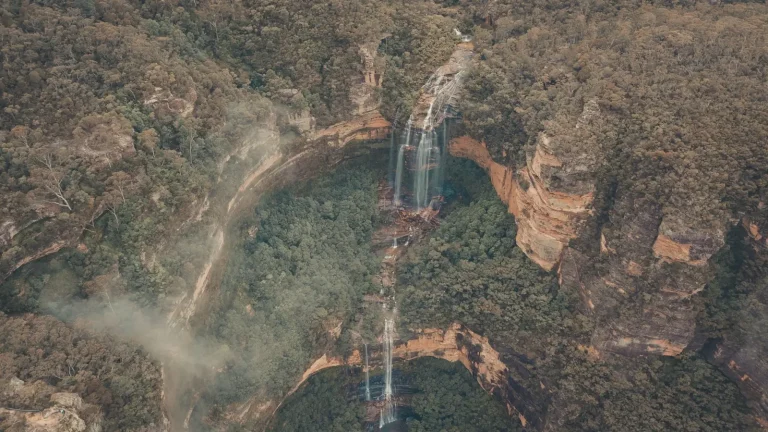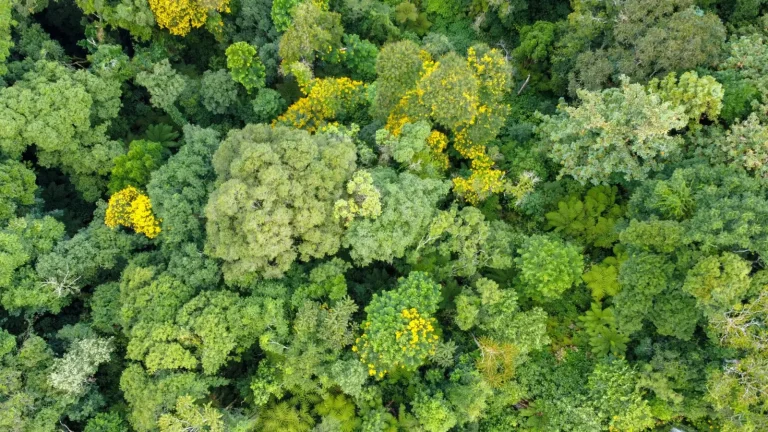
The Big Scrub rainforest once covered roughly 240,000 hectares across northern New South Wales and southern Queensland. Today, less than 1,200 hectares remain – roughly 0.5 percent of what existed before European settlement. Walking through what survives now, you can sense the absence as much as the presence. The forest is there, but it’s fractured. Isolated patches separated by agricultural land, urban sprawl, and roads. The reduction happened in stages over 150 years, and understanding how it occurred matters because the restoration work underway reveals both what’s possible and what remains permanently lost.
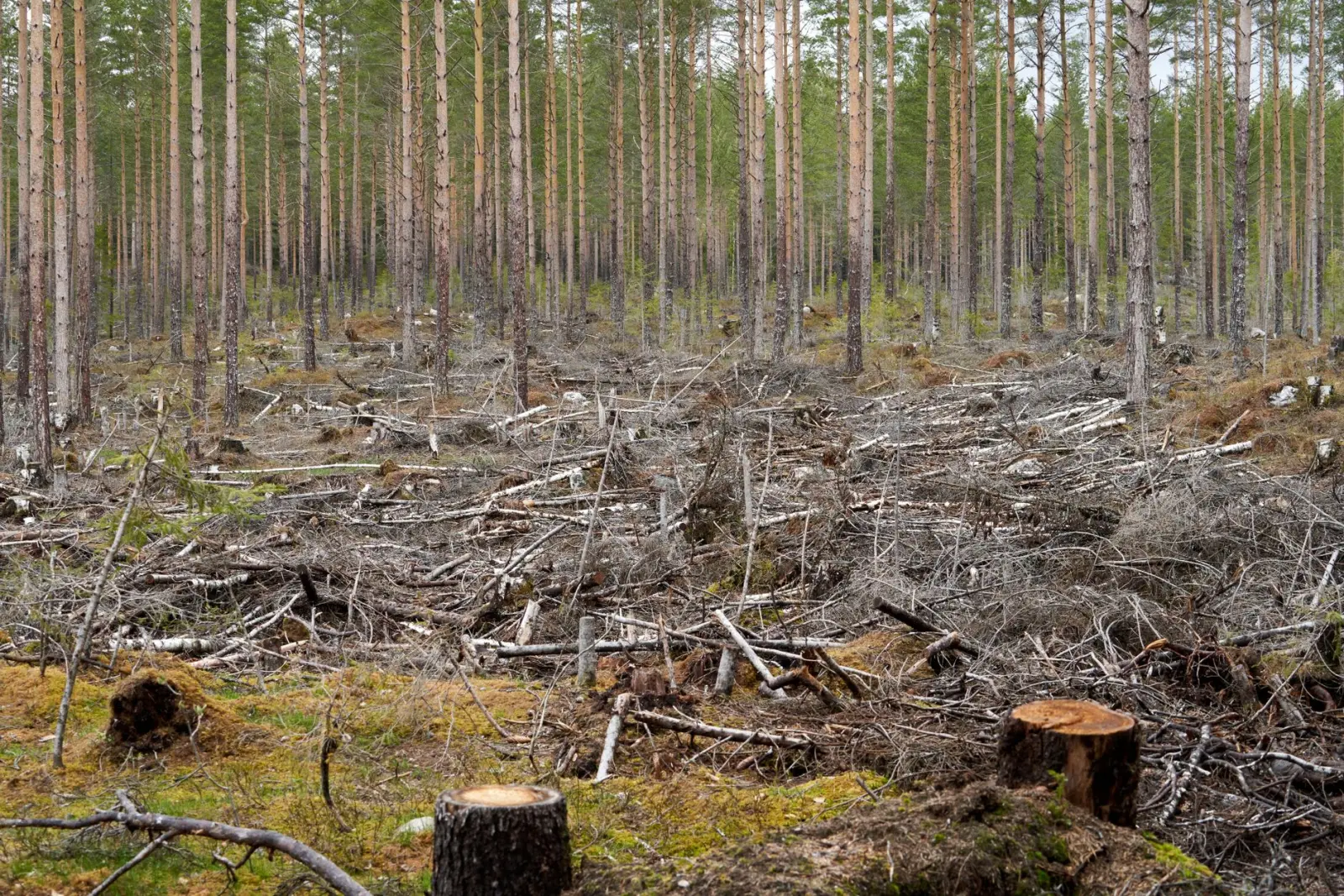
The clearing accelerated in the 1880s and 1890s when the timber industry discovered the commercial value of the scrub’s hardwoods. Cedar, in particular, drew loggers deep into the forest. The wood was prized for furniture and building, and the profit margins were substantial enough to justify the labor of felling and hauling massive trees. What people don’t always appreciate is that once the canopy opened, the forest became vulnerable in ways that weren’t immediately obvious. The understory plants that had evolved in deep shade began to fail. Soil temperatures shifted. Moisture retention changed. The ecosystem wasn’t just being harvested – it was being fundamentally altered in the process.
After the timber boom subsided, agricultural conversion took over as the primary driver of loss. Dairy farming, sugar cane, and general grazing land replaced forest across much of the region. The economics were straightforward: cleared land could generate immediate income. Rainforest, by contrast, offered no quick return. Farmers who inherited or purchased scrub-covered land often saw it as an obstacle to productivity rather than a resource worth preserving. The clearing continued steadily through the mid-20th century, with each decade reducing the forest further.
What Remained and Why It Mattered
By the 1970s, conservation groups and botanists began documenting what was left. The remaining patches were concentrated in areas that had been either too steep to farm effectively, too isolated to be worth clearing, or protected by accident through private ownership by people who simply hadn’t cleared their land. These fragments became crucial. They contained seed stock, established root systems, and soil microbiology that had persisted through centuries. They weren’t pristine – many had been selectively logged or had invasive species established in their understory – but they were alive in ways that completely cleared land was not.
The fragmentation created a different kind of problem. Isolated forest patches lose genetic diversity over time. Pollinators and seed dispersers become scarce when forest is broken into small islands. Soil erosion increases at the edges where wind and rain now reach areas that had been protected. Weeds from surrounding agricultural land creep in. The forest doesn’t just shrink; it degrades from the edges inward, even when you’re not actively cutting trees. I’ve observed this pattern repeatedly in other rainforest regions, and it’s one of the hardest dynamics to reverse because it’s not a single action you can stop – it’s a cascade of secondary effects triggered by fragmentation itself.
The Restoration Approach and Its Constraints
Restoration work in the Big Scrub began in earnest in the 1990s, driven by community groups, researchers, and government agencies working together. The strategy has been to expand existing forest patches by planting native species on adjacent cleared land, creating corridors that reconnect isolated fragments. This sounds straightforward in principle. In practice, it involves years of site preparation, weed control, careful species selection, and ongoing maintenance.
The planting itself requires understanding which species will establish in degraded soil. Many rainforest plants have specific requirements – particular soil pH, mycorrhizal associations, shade conditions. You can’t simply plant rainforest species in open paddock and expect them to thrive. Early restoration efforts learned this the hard way. Plantings that didn’t account for soil preparation or that used the wrong species mix failed at high rates. Over time, practitioners refined the approach. They began working with soil amendments, using pioneer species that could establish first and create conditions for more sensitive species later, and sourcing seed from local genetic stock rather than using plants from other regions.
One persistent challenge is the sheer time scale. A planted rainforest doesn’t reach structural complexity for decades. It takes 20 to 30 years for canopy closure to develop naturally. Understory diversity builds even more slowly. Soil fauna and fungal networks require time to reestablish. If you’re thinking about restoration as something that happens in a year or two, you’re not being realistic about what you’re attempting. The people doing this work understand that they’re planting forests for conditions they won’t see mature.
What Can and Cannot Be Recovered
The question that lingers over all restoration work is whether you can truly restore a rainforest or whether you’re creating something new that resembles the original. In the Big Scrub’s case, the answer is nuanced. The species composition can be recovered because seed sources still exist in the remaining fragments. The structural form – the layering of canopy, midstory, and understory – can be rebuilt. But certain things are genuinely lost. Soil organisms that took millennia to develop don’t reestablish quickly. Rare species that were driven to extinction in the region can’t be brought back. The genetic diversity within surviving species has been reduced by the bottleneck of fragmentation.
I’ve walked through restored sections of the Big Scrub that are now 20 to 25 years old, and they’re genuinely impressive. The canopy is closing. Native birds have returned. The forest feels alive in a way that open paddock never does. But it’s not identical to what was there before. It’s a new forest built on the foundation of the old one. Whether that distinction matters depends on what you think the goal of restoration should be. If it’s about recovering ecosystem function and biodiversity, the work is meaningful. If it’s about recreating the exact forest that existed in 1880, that’s not possible.
The financial and labor investment required to restore even a fraction of what was lost is substantial. Most of the Big Scrub’s restoration has been achieved through volunteer effort, government grants, and funding from conservation organizations. The scale of clearing was so vast that full restoration isn’t feasible. What’s happening instead is strategic expansion of the most viable fragments and creation of corridors between them. It’s pragmatic rather than comprehensive.
The Big Scrub story illustrates something that applies across rainforest regions globally: prevention is vastly more efficient than restoration. Once forest is gone, recovering it requires decades of deliberate effort and ongoing management. The forest that remains now in the Big Scrub is valuable not just for what it is, but because it represents a foundation that restoration can build upon. Complete clearing followed by restoration from bare ground is exponentially harder. The people working in the Big Scrub today are managing the consequences of decisions made 150 years ago, and they’re doing it with incomplete tools and limited resources. That’s the reality of restoration work.