
Spend enough time walking through rainforest, and you stop seeing trees as individual entities. Instead, you notice the forest as a living system in constant negotiation. A rainforest tree’s life is not a simple climb from seed to canopy. It is a prolonged struggle against competing neighbors, shifting light conditions, and the forest’s own relentless recycling of resources. I have watched this cycle play out across decades in different tropical regions, and the patterns are consistent enough to be predictable, yet varied enough to remind you that no two trees follow identical paths.
The germination phase is deceptively simple in appearance. A seed falls – or is carried by animal, wind, or water – and lands on the forest floor. Most seeds never germinate. They land on unsuitable substrate, get eaten, or simply fail to find the right moisture and temperature combination. The ones that do germinate face an immediate problem: the rainforest floor is dark. Even on a clear day, less than 2 percent of light reaches the ground beneath a closed canopy. A seedling that emerges in this gloom must make a critical biological choice early on. It can invest energy in growing tall and thin, racing toward whatever light exists, or it can grow slowly and allocate resources to leaves that can function in low-light conditions. Most seedlings do something between these extremes, but the strategy they adopt depends partly on their species and partly on their exact location.
The Understory Years
If a seedling survives its first months, it enters what I think of as the waiting phase. This can last years, sometimes decades. The young tree grows slowly, its trunk barely thickening, its crown remaining small and modest. It is not dormant – it is photosynthesizing, accumulating biomass, and developing root systems – but it is not thriving in any obvious way. During this time, the tree is essentially betting on a future event: a gap in the canopy. In undisturbed rainforest, gaps appear when large trees fall, whether from age, disease, wind, or the weight of vines and epiphytes. A gap might be small, just enough to let a shaft of direct sunlight reach the forest floor for a few hours a day. Or it might be large, created by the collapse of a massive emergent tree, opening the canopy for dozens of meters in all directions.
The young tree’s survival depends on recognizing and responding to these opportunities. Trees that have spent years in shade suddenly experience a surge in light availability. The response is rapid and visible. Growth accelerates. The stem thickens. New leaves emerge, often with different architecture than the shade-adapted leaves below. This is not a gradual transition. It is a physiological shift triggered by the change in light quality and quantity. I have marked individual trees and returned months later to find them transformed, their growth rings suddenly wider, their canopies expanded. Trees that fail to capitalize on gaps – those that are too slow to respond, or too weak from disease or competition – tend to stall. They may persist for years in a state of minimal growth, eventually succumbing to shade, insect damage, or fungal infection.
Reaching the Canopy
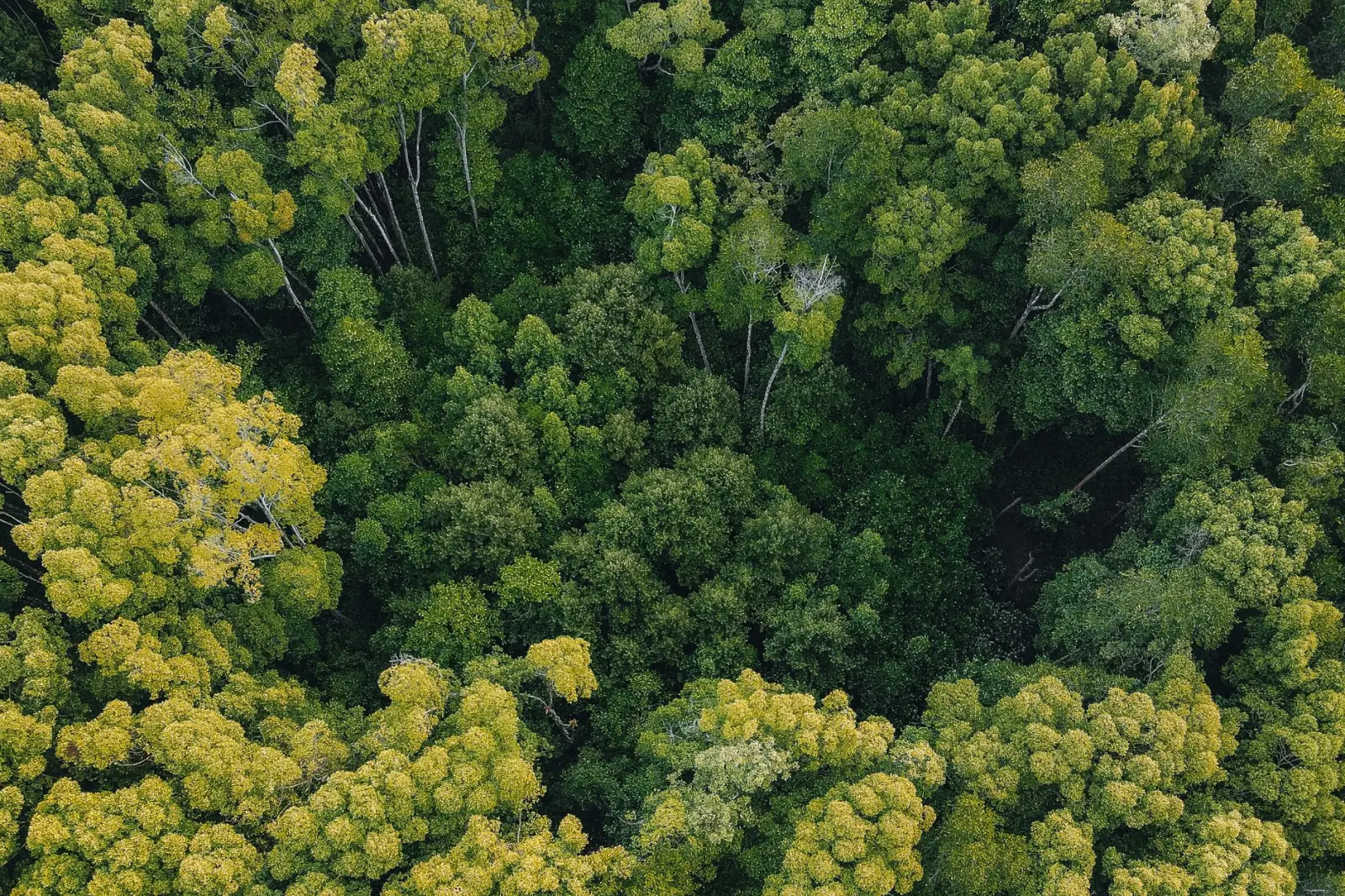
The transition from understory to canopy is the critical threshold. A tree that reaches the main canopy layer, roughly 30 to 40 meters above the forest floor depending on the forest type, has essentially won the competition for light. It is no longer fighting for scraps of illumination filtered through multiple layers of leaves. It is now part of the structure that determines how much light reaches everything below it. This phase typically takes 20 to 50 years, though some fast-growing species can do it in 10 to 15 years, and some slow species may take a century or more.
Once established in the canopy, a tree’s growth pattern changes again. The urgency diminishes. The tree is no longer racing upward to escape shade. Instead, it expands laterally, thickening its trunk, developing a wider crown, and investing in reproduction. The annual growth rings, visible in cross-sections, become a record of this transition. Narrow rings from the understory years suddenly widen once the tree reaches full light. In some trees, you can count back and pinpoint almost exactly when the tree broke through to the canopy.
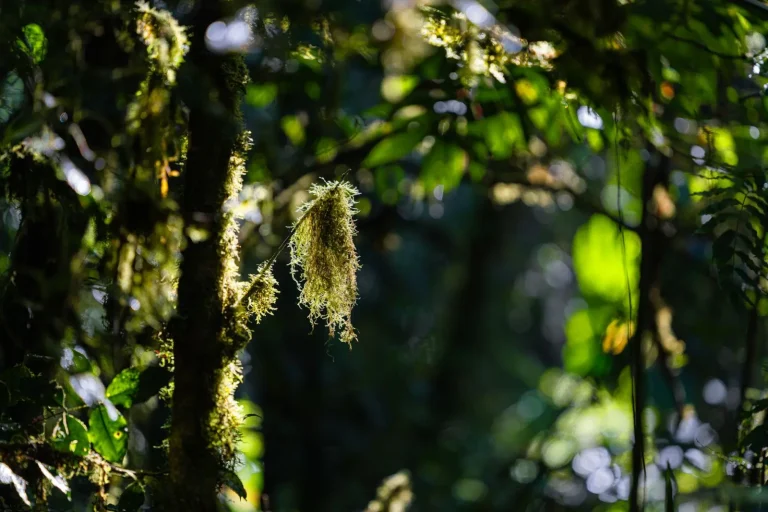
The canopy phase is also when a tree becomes ecologically significant in ways beyond its own survival. Its flowers and fruits feed insects, birds, and mammals. Its crown provides habitat for epiphytes – orchids, bromeliads, mosses, and lichens – that create entire miniature ecosystems in the air. Its bark becomes home to beetles, spiders, and countless other arthropods. A mature canopy tree is not just a plant; it is a structure that supports hundreds of other species. This is why the loss of large old trees represents a disproportionate ecological loss. A young tree in the understory, no matter how vigorous, does not provide these services.
Maturity and Decline
A rainforest tree reaches its maximum size somewhere between 80 and 200 years of age, depending on the species and the forest’s productivity. At this point, growth slows considerably. The tree is no longer adding much to its height or crown width. Instead, it is maintaining itself and reproducing. The wood becomes denser, the heartwood darker and more resistant to decay. In many tropical species, this is also when the tree becomes most susceptible to certain diseases and insect attacks. Fungi that specialize in breaking down wood begin to colonize the trunk. Bark beetles tunnel through the outer layers. Vines grow up the trunk, sometimes so densely that they effectively strangle the tree by blocking light from reaching the leaves.
The decline phase is gradual and uneven. A tree does not simply weaken uniformly. One side of the crown might thin as branches die back. A section of bark might be girdled by vines or damaged by animals. The root system, which has been anchoring the tree for a century or more, may begin to rot from fungal infection. The tree becomes increasingly vulnerable to environmental stress. A severe drought that a healthy mature tree could withstand becomes lethal. A storm that would have bent a younger, more flexible tree now snaps a brittle, weakened trunk.
Death itself is not instantaneous. A tree can remain standing for years after the cambium stops functioning, the heartwood completely dead but the outer shell still intact. Woodpeckers and other cavity-nesting birds may colonize the dead trunk. Fungi accelerate the decomposition. Eventually, the structural integrity fails. The tree falls, either in a single dramatic collapse or in pieces as branches break off. Once down, the fallen log becomes habitat for a different community of organisms. Beetles tunnel through the softening wood. Fungi fruit from the decaying surface. Small mammals nest in the hollow interior. Seedlings germinate on the moist, nutrient-rich surface of the log, using it as a nurse log to establish themselves above the competing vegetation of the forest floor.
The entire cycle – from germination to death to decomposition – typically spans 150 to 300 years, though some species live much longer. During this time, the tree occupies a specific ecological niche, competes with its neighbors, supports hundreds of other species, and eventually returns its accumulated biomass to the forest system. Understanding this cycle is not academic. It explains why old-growth rainforest is irreplaceable in the short term. It takes centuries to rebuild what can be cleared in days. It also explains why rainforests are resilient. They have evolved to recover from disturbance, to fill gaps, and to recycle resources with remarkable efficiency. But that resilience has limits, and those limits are being tested.