
The Gold Coast hinterland holds some of the most accessible waterfall country in southeastern Australia, yet most visitors experience only a fraction of what’s actually there. After spending considerable time moving between these falls – both during peak season and in quieter months – I’ve noticed patterns that don’t make it into the standard travel guides. The falls themselves are genuine and worth visiting, but the experience depends almost entirely on when you arrive and how you approach the logistics.
What strikes me most is how the same waterfall can feel like two entirely different places depending on the time of day and season. Purling Brook Falls, one of the most visited, transforms from a crowded car park experience in mid-morning to something genuinely peaceful by late afternoon. The water volume doesn’t change much between seasons in the hinterland – the subtropical climate keeps these creeks flowing year-round – but the psychological experience of being there shifts dramatically. I’ve found that visiting between 3 PM and sunset, or arriving before 9 AM, makes a measurable difference in how you actually experience the place.
Getting There and Staying Put
The hinterland sits roughly 30 to 45 minutes inland from the coast, depending on which falls you’re targeting. Most people underestimate the drive time from their accommodation on the beach. What looks straightforward on a map involves winding mountain roads, and mobile navigation can be unreliable in patches. I’ve watched visitors arrive flustered after taking wrong turns or discovering that their GPS routed them through private property gates. The towns of Tamboram, Mudgeeraba, and Austinvilla serve as rough anchors, but the falls themselves are scattered across small roads that don’t always appear on basic maps.
Parking is finite at most falls. Purling Brook, Tallebudgera, and Austinvilla Falls have designated car parks, but they fill by mid-morning on weekends and school holidays. Once full, you’re either turning back or parking on the roadside and walking further. I’ve seen people park illegally and return to find their vehicles blocked in or ticketed. The sensible approach is to arrive early or accept that you’ll be sharing the space with others. There’s no secret back entrance or hidden car park – the infrastructure is what it is.
Water Conditions and Swimming
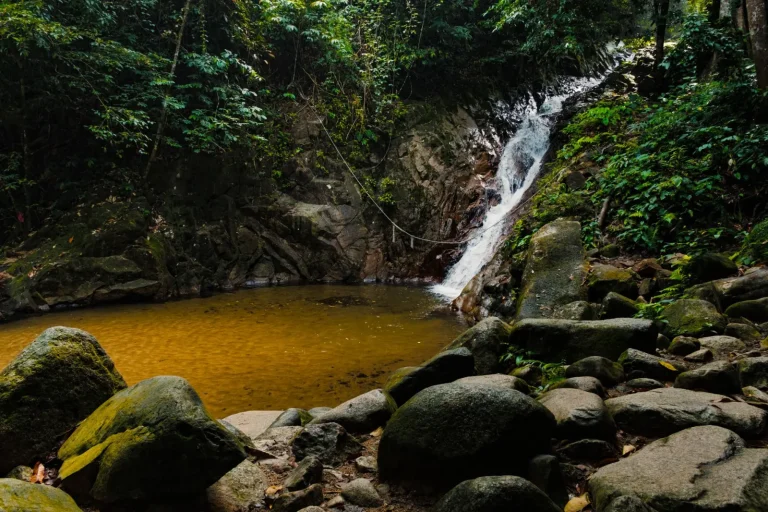
The waterfalls themselves vary in swimmability and safety. Purling Brook has a deep pool that’s generally safe for swimming, though the water is cold year-round – it comes straight off the mountains. Tallebudgera Falls has a shallower pool and more slippery rocks. Austinvilla is smaller but less crowded. The key variable is recent rainfall. After heavy rain, these creeks swell quickly and become genuinely dangerous. The water turns brown, the current strengthens, and rocks become treacherous. I’ve seen people attempt to swim in conditions where the creek was clearly unsafe, usually because they’d driven an hour to get there and didn’t want to waste the trip.
The rocks around the pools are consistently slippery, regardless of season. Algae and moss grow year-round in the humid subtropical environment. Proper footwear matters more than most people realize. Thongs or casual sneakers lead to slips and twisted ankles. I’ve encountered several minor injuries that could have been prevented with appropriate shoes. The pools themselves are usually clear enough to see the bottom, but the approach paths are where most accidents happen.
The Hike Factor
Walking distances to the falls are modest – most are between 500 meters and 2 kilometers return. This sounds manageable until you factor in humidity, fitness variation, and the psychological weight of a steep descent followed by an ascent back out. The Purling Brook walk is straightforward and well-maintained. Tallebudgera involves more scrambling and root-work. Austinvilla is shorter but steeper. None of these are difficult in absolute terms, but they’re not flat walks either, and the humidity means you’ll be warmer and more fatigued than the distance alone suggests.
The trails are well-marked and maintained by local councils, but they can become muddy and slippery after rain. The vegetation is dense – you’re walking through rainforest, not open bushland – so there’s limited shade relief even though you’re surrounded by trees. The canopy is thick enough to block most direct sun, but it also traps humidity. People often underestimate how much water they’ll need. A 2-kilometer walk in this environment can leave you thirstier than a 5-kilometer walk on the coast.
Crowds and Realistic Expectations
The hinterland waterfalls are not remote. They’re popular destinations, and especially during school holidays and weekends, you’ll encounter other visitors. The car parks fill, the pools have people in them, and the walks have regular foot traffic. This isn’t inherently a problem – the falls are genuinely worth seeing – but it’s worth acknowledging that you’re not discovering some hidden gem. You’re visiting a well-known regional attraction.
The experience is still worthwhile. The rainforest environment is genuine, the water is cold and refreshing, and there’s something restorative about being near flowing water and dense vegetation. But the fantasy of solitude or exclusivity doesn’t align with reality. If you’re seeking that, you’d need to venture further into the hinterland, beyond the car park falls, which requires more planning and fitness.
What I’ve consistently observed is that visitors who arrive with realistic expectations – understanding that they’ll encounter other people, that the walk requires reasonable fitness, and that the experience depends on timing – tend to have a better visit than those expecting a private rainforest escape. The falls deliver what they actually are: accessible subtropical waterfall pools with decent walks and reliable infrastructure. That’s genuinely valuable for a day trip from the coast, even if it’s not the undiscovered wilderness some people imagine.