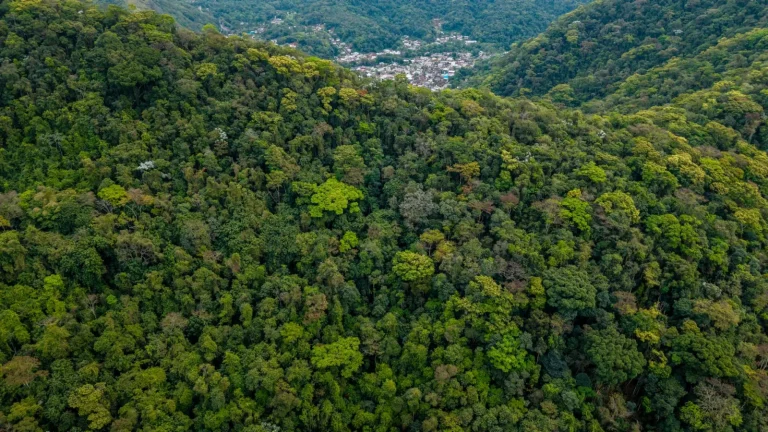

Spend enough time walking through the eucalypt woodlands of eastern Australia, and you start to notice something odd. The landscape doesn’t feel entirely consistent. The dry, open forest floor with its scattered gum trees and sparse understorey will suddenly give way to something altogether different – a pocket of dense, layered vegetation where the canopy closes overhead and the air feels heavier, more humid. These aren’t new forests. They’re remnants of something older, fragments of subtropical rainforest that have persisted in sheltered gullies and south-facing slopes for thousands of years, surrounded by the drier eucalypt country that eventually became the dominant vegetation across much of eastern Australia.
What’s striking about these pockets is how abruptly they appear. You don’t drift gradually from one forest type to another. The transition can happen within metres. One moment you’re walking on dry leaf litter under scattered stringybarks or ironbarks, and the next you’re stepping into a different world entirely – one with soft, damp soil, multiple canopy layers, and a density of plant life that feels almost subtropical. This sharpness of boundary tells you something important about how these forests work. They’re not simply a gradual shift in moisture or soil type. They’re ecological islands shaped by specific microclimates and protected from the disturbance regimes that have shaped the surrounding landscape.
Why They Survive Where They Do
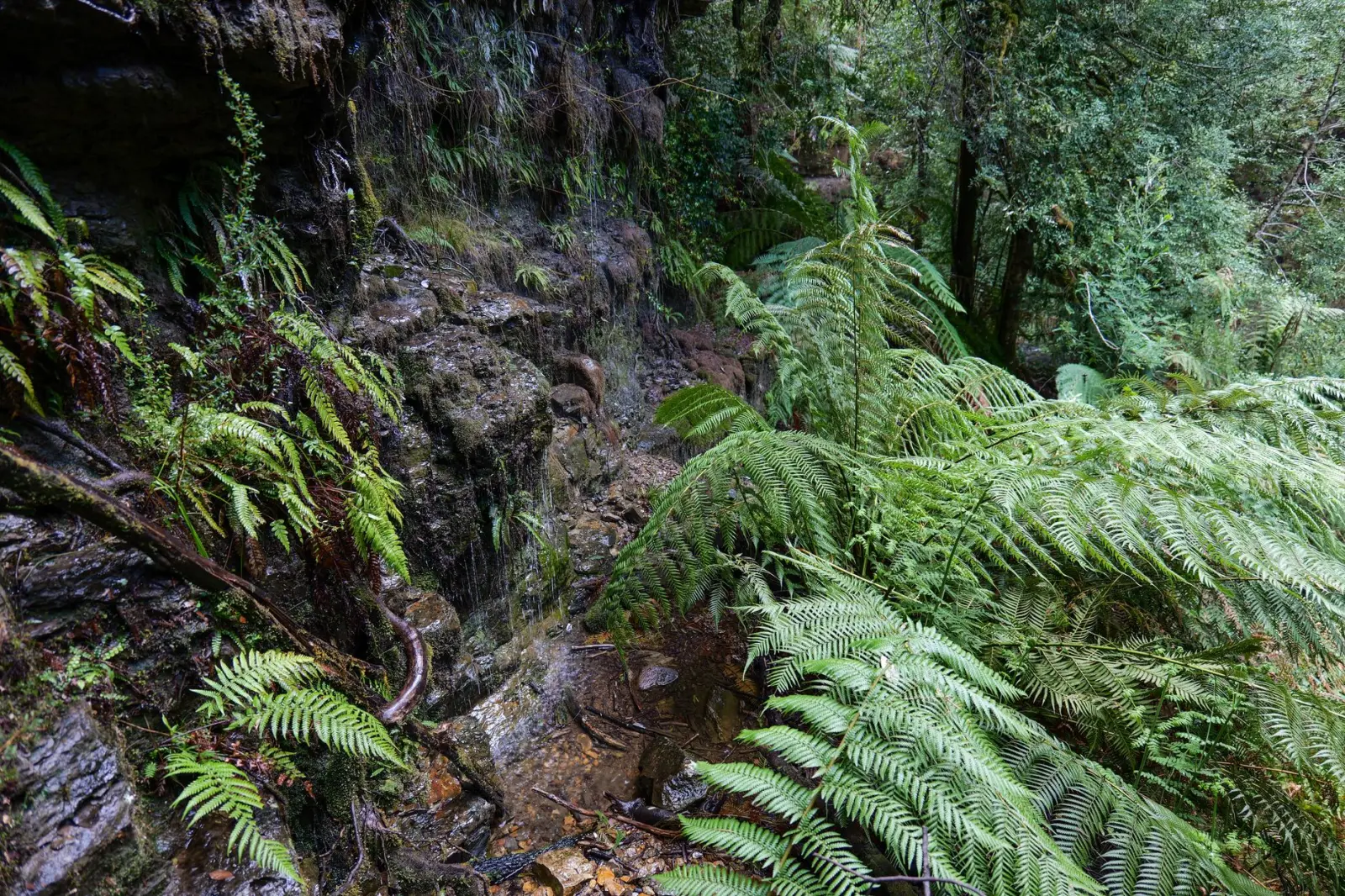
The survival of these rainforest pockets depends almost entirely on aspect and drainage. South-facing gullies in temperate regions stay cooler and damper. They receive less direct sun, which means less evaporation and more consistent moisture availability throughout the year. The gullies themselves channel water downslope, creating conditions that favour moisture-loving vegetation. Over time, as the climate became drier and eucalypts became more competitive in the surrounding landscape, these sheltered gullies became refugia – places where the old rainforest vegetation could persist because the local conditions still suited it.
The soil in these pockets tends to be richer and deeper than the surrounding country. Rainforest vegetation produces a different type of leaf litter – softer, more nitrogen-rich, more readily decomposed. This creates a feedback loop. Better soil supports denser vegetation, which produces more leaf litter, which improves the soil further. The eucalypt country, by contrast, produces harder, slower-decomposing litter that doesn’t build soil fertility in the same way. Once you understand this pattern, you start to see why the boundaries are so sharp. The rainforest pocket can’t easily expand into the drier country because the soil conditions don’t support it. The eucalypt forest can’t easily invade the gully because the moisture and soil conditions favour rainforest plants instead.
What Actually Lives in These Spaces
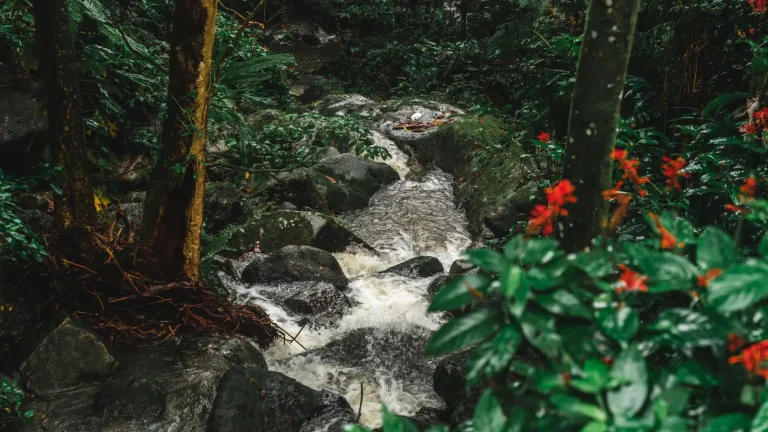
The composition of these pockets varies depending on latitude and local conditions, but certain plant families appear consistently. Figs are common – often substantial trees with buttressed roots and dense canopies. Sassafras, coachwood, and various species of Elaeocarpus turn up regularly. Palms appear in the warmer pockets. Tree ferns are almost always present, sometimes in considerable numbers. The understorey is thick with vines, shrubs, and smaller trees competing for light in the dim conditions beneath the canopy. It’s a layered, three-dimensional space in a way that eucalypt forest rarely is.
What you won’t see much of is the eucalypt woodland’s typical ground flora. Grasses are sparse or absent. The open, sunny understorey of the eucalypt country doesn’t exist here. Instead, the ground is often bare soil or covered in fallen logs, leaf litter, and low shrubs. The light levels are low enough that herbaceous plants struggle. This is actually one of the most reliable ways to identify these pockets when you’re moving through the landscape. The sudden absence of grass and the sudden presence of dense shade tells you more than any individual species identification.
The Practical Reality of Finding Them
These rainforest pockets aren’t always easy to access, and they’re often smaller than you’d expect. A “pocket” might be only a few hectares in extent. Some are barely wider than the gully itself. They don’t show up clearly on standard maps because they’re too small to register at most scales. You find them by walking the landscape and learning to read the vegetation patterns. Local knowledge helps enormously. Long-term residents often know where the best pockets are, which gullies hold rainforest, which creeks run through sheltered country.
Access can be genuinely difficult. Many of these pockets are on private land or in steep terrain. The gullies that protect them from fire and drought also make them harder to reach. You might need to navigate through dense vegetation, cross creeks multiple times, or scramble down steep slopes. The reward for doing so is genuine – you get to experience a forest type that has become increasingly rare across the landscape. But it requires time, physical effort, and often local guidance to do it properly.
The seasonal timing matters too. These pockets are most accessible in drier months when creeks are lower and the ground is firmer. In wet seasons, some gullies become genuinely difficult to traverse. The vegetation is also more lush in spring and early summer, which means better light for photography but denser vegetation to push through. Autumn and winter offer clearer sightlines and cooler conditions for walking, but the vegetation is less visually striking.
Ecological Significance and Current Threats
These rainforest pockets matter ecologically out of proportion to their size. They support plant and animal species that have largely disappeared from the surrounding landscape. Birds, insects, and small mammals that depend on rainforest conditions persist in these refugia. Some species are found nowhere else in a given region. The pockets also maintain genetic diversity within species that have been fragmented across the landscape. They’re not just interesting botanical curiosities – they’re functioning parts of the regional ecosystem.
The main threats are less obvious than you might expect. Direct logging is rarely the issue anymore, though it was historically. The bigger problem is gradual drying. Climate change is shifting rainfall patterns and increasing temperatures, making conditions in these pockets less reliably moist. Invasive species, particularly vines and aggressive shrubs, can alter the structure of these forests. Fire, while historically rare in these gullies, is becoming more frequent as the surrounding landscape dries and fire seasons lengthen. A single intense fire can fundamentally alter a pocket that has persisted for millennia.
Fragmentation is also significant. These pockets are isolated from each other. They can’t exchange genetic material or support large animal populations that require extensive ranges. They’re vulnerable in ways that larger, connected forests are not. Some pockets have shrunk considerably over the past century as surrounding land use has changed and water availability has shifted.
Walking through one of these rainforest pockets, you’re experiencing something genuinely ancient. The vegetation patterns, the species composition, the structure of the forest – these reflect conditions that existed across much of eastern Australia thousands of years ago. That they persist at all is remarkable. That they persist in such small, fragmented patches, surrounded by a landscape that has fundamentally changed, speaks to the resilience of these ecosystems and the importance of the specific microclimates that allow them to survive.