
Rainforest mist is not something that happens everywhere in a rainforest, and it’s not something that happens at all times. After spending years moving through tropical highlands – from Central America to Southeast Asia to East Africa – I’ve learned that mist is actually a product of very specific atmospheric conditions. Most travelers show up expecting to walk through clouds and instead find themselves in ordinary forest under ordinary light. Understanding where and when mist actually forms changes how you plan, and more importantly, whether you’ll actually see it.
The basic mechanism is straightforward: mist forms when warm, moist air cools rapidly as it rises in elevation. In rainforests, this happens most reliably where mountains force air upward, and where the forest canopy is dense enough to trap moisture. The mist you see in photographs is usually not rain falling. It’s condensation – water vapor in the air turning visible as tiny droplets. This distinction matters because it means you’re not looking for rainy weather. You’re looking for the right combination of elevation, vegetation density, and temperature differential.
The most consistent mist experiences happen between roughly 1,200 and 2,500 meters elevation, depending on latitude and local geography. Below that range, the air tends to be too warm. Above it, you’re often above the cloud layer entirely, which creates a different effect altogether. In my experience, the sweet spot is usually somewhere around 1,800 to 2,200 meters, where the temperature drop is significant enough to trigger condensation but the forest is still dense and intact.
Timing and Season Matter More Than Location
I’ve been to the same cloud forest site in Costa Rica during dry season and wet season, and the difference is dramatic. During the dry months, mist is sporadic and often brief. During the wetter months – particularly early morning during the transition between night and day – mist is nearly guaranteed. This is because wet season air holds more moisture overall, and the temperature swing between night and early morning is more pronounced.
The time of day is equally critical. Mist typically forms and persists strongest in early morning, roughly from dawn until mid-morning. This is when the temperature is lowest and the moisture content is highest. By midday, as the sun warms the forest floor and surrounding air, the mist burns off or thins dramatically. I’ve seen visitors arrive at a famous cloud forest site at 11 a.m. and complain about poor visibility, when the same location at 6 a.m. would have been completely enveloped. The forest hasn’t changed. The atmospheric conditions have.
Late afternoon can sometimes produce a second, weaker mist event as temperatures begin to drop again, but it rarely lasts long. Evening and night are generally too cold for the kind of mist that creates that distinctive visual effect. The temperature needs to be in a particular range – cool enough for condensation, but not so cold that you’re dealing with fog that obscures everything.
Geography and Elevation Gradients
Not all rainforests sit at the right elevation. Lowland rainforests – the Amazon, much of the Congo basin, Southeast Asian lowlands – rarely produce the mist effect that travelers associate with cloud forests. The air is simply too warm, even at night. The mist you might see in a lowland rainforest is usually localized, temporary, and often more like humidity than visible condensation.
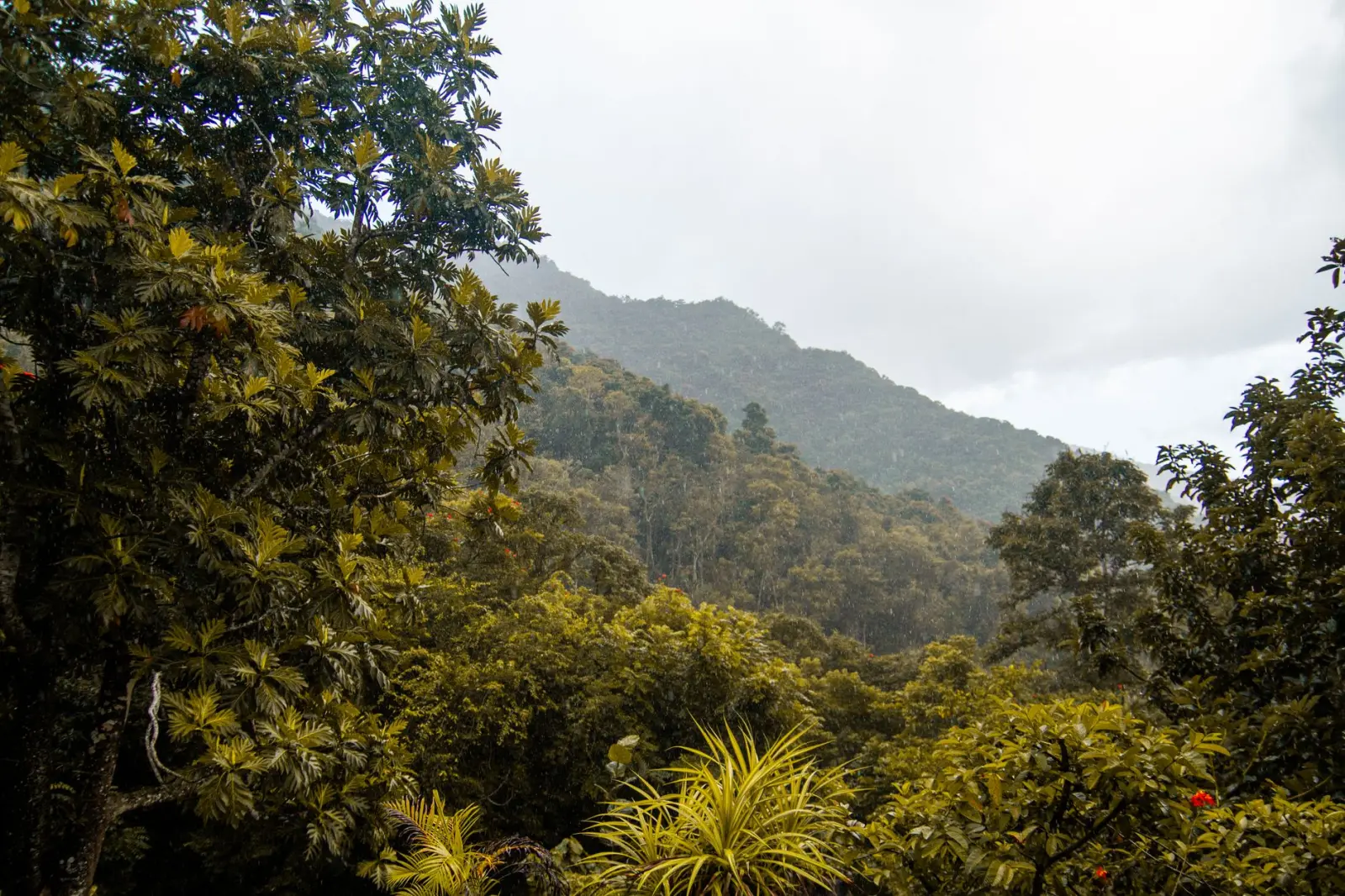
The most reliable mist experiences are in montane rainforests, particularly on the windward side of mountain ranges. When moisture-laden air is forced upward by a mountain slope, it cools predictably. The windward side of a ridge gets more consistent mist because air is continuously being pushed upward. The leeward side, by contrast, tends to be drier because the air has already lost its moisture on the other side.
I’ve noticed that the most dramatic mist occurs where there’s a steep elevation gradient. A gentle slope produces mist, but a sharp escarpment or a ridge with steep sides tends to create more intense, more visible condensation. This is why some of the most photographed cloud forests sit on dramatic topography – the Monteverde Cloud Forest in Costa Rica, the cloud forests of the Colombian Andes, the highlands of Rwanda and Burundi.
Forest Density and Canopy Structure
The forest itself plays a role. Dense, intact canopy forests trap moisture more effectively than degraded or partially cleared areas. The trees themselves contribute to mist formation through transpiration – they release moisture that adds to the atmospheric water content. A forest that has been logged or cleared will produce less mist, or mist that disperses more quickly, because there’s less vegetation to hold moisture and less canopy structure to trap it.
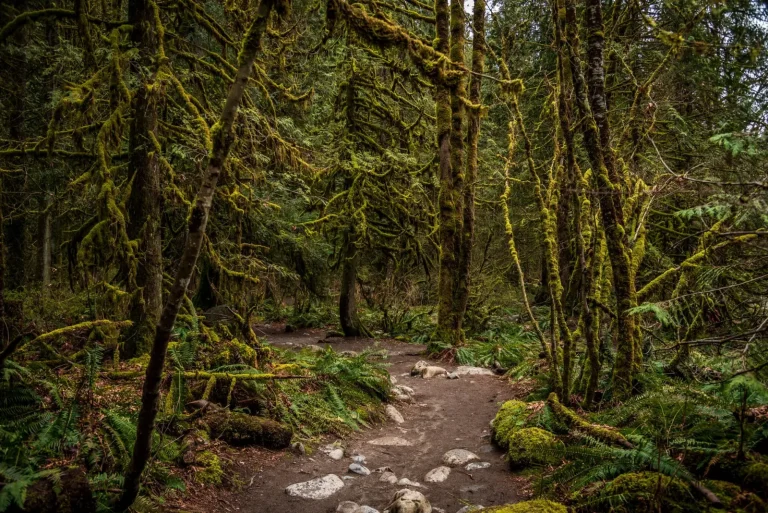
The type of vegetation matters too. Older growth forests with complex canopy layers tend to produce more persistent mist than younger secondary growth. Moss-covered trees and dense epiphyte growth are usually a sign that you’re in the right kind of forest for mist – these plants thrive in high-moisture environments, and their presence indicates that mist is common enough to support them.
Practical Realities for Visitors
If you’re planning to experience rainforest mist, start by identifying a location that’s actually at the right elevation. Check the elevation range of the specific forest or trail you’re considering. Many popular rainforest destinations are too low. Then, plan to visit during the wetter season if possible, and arrive early in the morning. This is not negotiable if you want to see mist.
Weather forecasts are less useful than you might think. Local conditions can vary dramatically over short distances, and general weather predictions don’t capture the micro-scale atmospheric dynamics that produce mist. A forecast showing “clear skies” might coincide with perfect mist conditions if the temperature and moisture are right. Conversely, a forecast showing rain might mean no mist at all if the rain is falling from clouds above the forest.
Physical fitness and acclimatization matter. Many of the best cloud forests are accessed by hiking to higher elevations, and the altitude can affect how you feel. If you arrive at elevation and immediately exert yourself, you’ll be tired and possibly uncomfortable, which diminishes the experience. Spending at least one night at or near the elevation where you’ll be viewing mist helps considerably.
The mist experience itself is subtle. You’re not necessarily looking for dramatic clouds rolling through the forest like in photographs. Real mist often feels more like humidity made visible – a softness in the air, reduced visibility, moisture on your skin and clothes, a particular quality of light filtering through the water droplets. If you’re expecting dramatic cloud formations, you might miss the actual mist that’s present. The most reliable indicator is usually the moisture on vegetation and the reduced visibility of distant features.
After years of chasing and studying rainforest mist, I’ve learned that it’s less about finding a magical location and more about understanding the atmospheric conditions that create it. The forests that produce the most consistent mist are those at the right elevation, in the right season, with the right forest structure. Show up at the right time of day, and you’ll see it. Show up at the wrong time, and you won’t, regardless of how famous the location is.