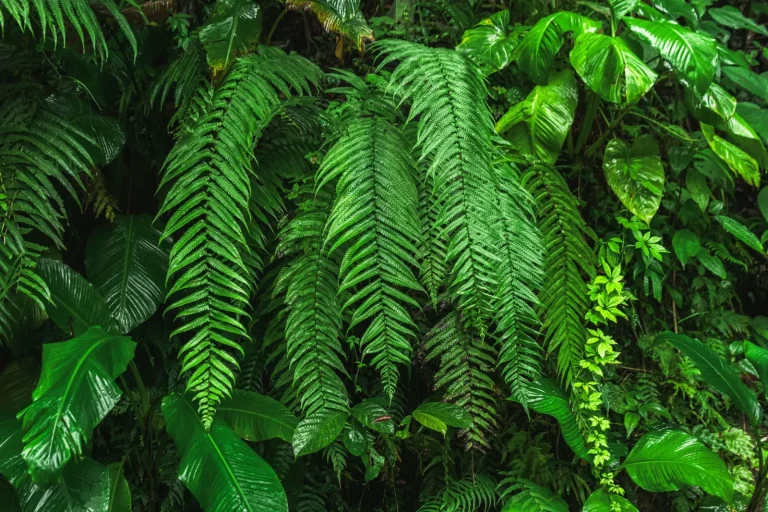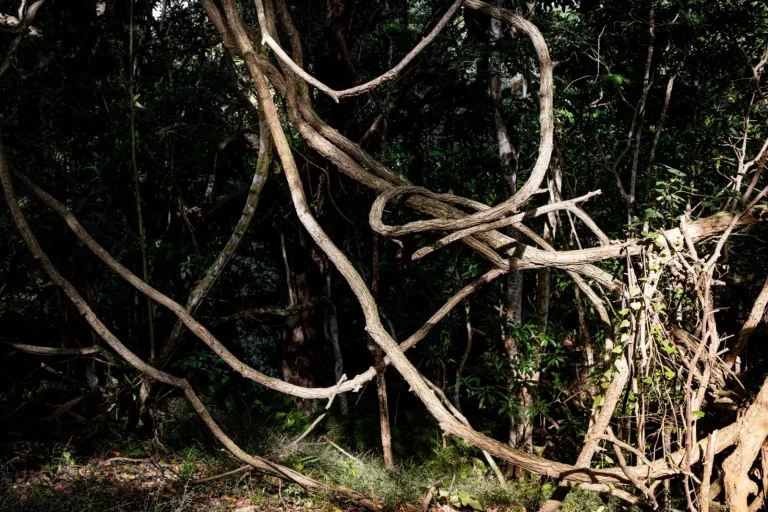

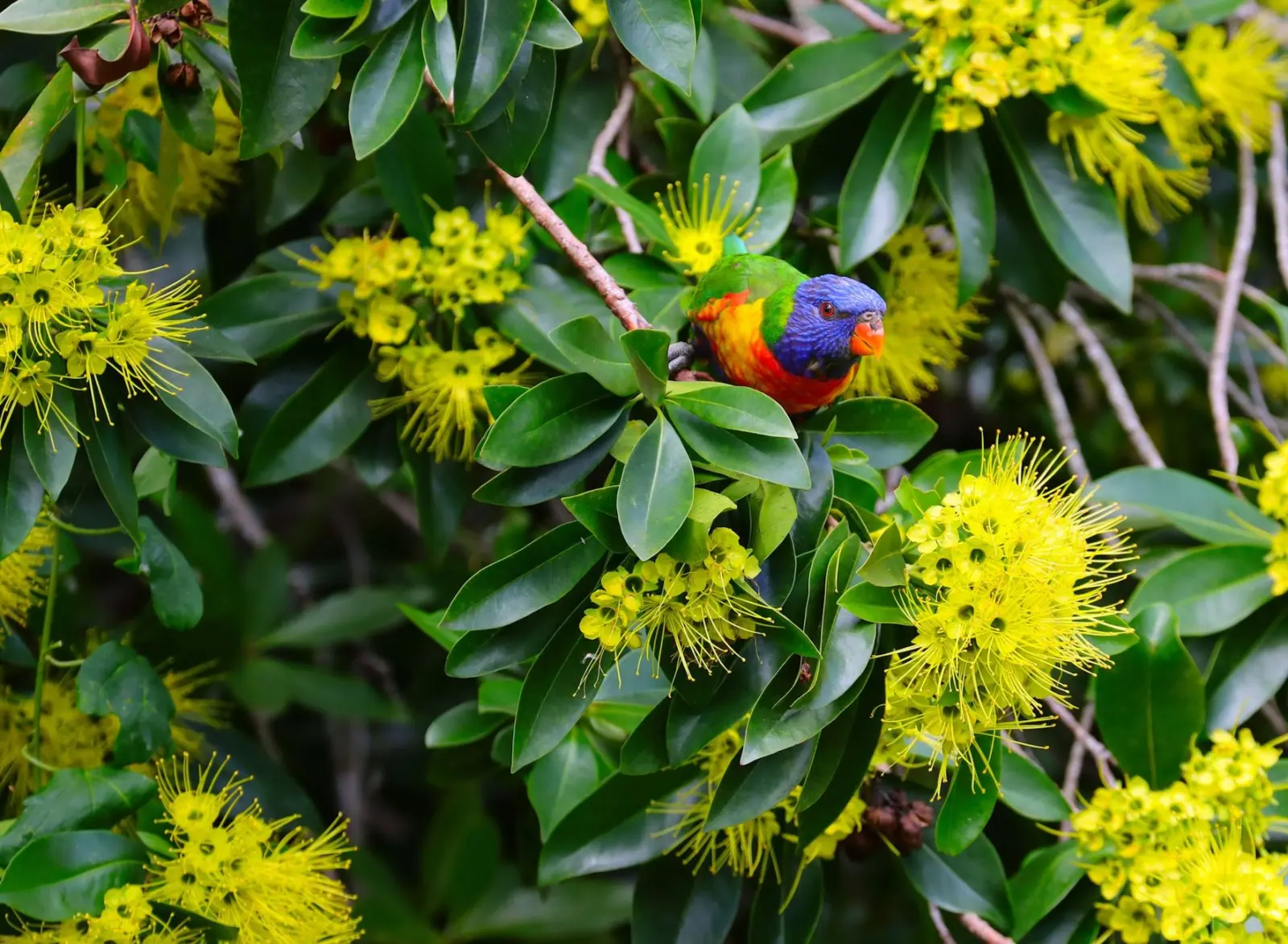
Walking through an Australian rainforest, particularly in the northeastern regions, you encounter plants that feel genuinely out of place in the modern world. Not because they look primitive or crude – many are elegant and efficient – but because they represent lineages that have persisted for tens of millions of years while their relatives elsewhere went extinct. This isn’t random luck. The rainforests of Australia contain ancient plant families because of a specific combination of geography, climate stability, and isolation that has allowed certain evolutionary lines to survive when they disappeared from nearly everywhere else on Earth.
The core reason comes down to Australia’s journey as a continent. Around 30 million years ago, Australia began drifting southward and becoming increasingly isolated from other landmasses. This isolation meant that plant communities couldn’t easily migrate to follow shifting climate zones, and new species couldn’t readily arrive from abroad to outcompete existing ones. At the same time, the continent’s interior dried out dramatically, but pockets of rainforest persisted in sheltered, high-rainfall regions – particularly along the east coast and in Tasmania. These refugial zones became evolutionary time capsules.
The Gondwanan Legacy
Many of the ancient plant lineages found in Australian rainforests have roots in Gondwana, the supercontinent that included Australia, South America, Africa, and Antarctica. Families like the Proteaceae, Myrtaceae, and various fern groups diverged during the Gondwanan period, roughly 80 to 100 million years ago. When Gondwana fragmented and continents drifted apart, these plant families found themselves on separate landmasses. On most continents, climate change, competition, and new predators eliminated or drastically reduced these older lineages. But in Australia’s isolated rainforests, they persisted.
The Araucariaceae family, which includes the kauri and hoop pines, exemplifies this pattern. These conifers were dominant across Gondwana but are now restricted to small areas of Australia, New Zealand, and a few Pacific islands. In Australia, they thrive in the wet tropics of Queensland and parts of New South Wales. Their presence there isn’t a sign of recent arrival – it’s evidence of a continuous lineage stretching back millions of years. The same applies to cycads, which were far more diverse and widespread during the Mesozoic era but now survive in scattered populations, with Australia holding a disproportionate number of species.
Rainfall Stability and Microhabitat Refuge
The rainforests themselves owe their existence to a stable rainfall pattern that has persisted for millions of years. The Great Dividing Range, running along Australia’s east coast, intercepts moisture-laden air from the Pacific Ocean. This creates a reliable wet zone where annual rainfall exceeds 1,500 millimeters in many areas. This consistency matters enormously. While other parts of the world experienced dramatic swings between wet and dry periods – particularly during ice ages – these Australian rainforests remained relatively stable. That stability allowed plants with narrow ecological requirements to survive without needing to adapt rapidly or migrate.
Within the rainforest itself, microhabitats create additional refuge. Dense canopy cover moderates temperature fluctuations. Leaf litter and soil moisture remain high year-round. Streams and seepage areas provide reliable water. These conditions suit plants that evolved in warm, wet, stable environments and never developed the adaptations needed to survive drought or temperature extremes. A plant species that couldn’t tolerate dry seasons would be eliminated on most continents, but in a rainforest, it can persist indefinitely.
Competition and Niche Saturation
Another factor works in favor of ancient lineages: the rainforest ecosystem is already densely packed with established species. This might seem counterintuitive – you’d expect competition to eliminate older, less efficient plants – but the reality is different. Once a plant family has occupied a rainforest niche for millions of years, it has become deeply integrated into the local food web, soil chemistry, and microbial associations. New competitors arriving from elsewhere face an uphill battle. They lack these co-evolved relationships. An invasive species can sometimes break through, but native plants that have been present for eons have a structural advantage that trumps any theoretical efficiency gains a newer arrival might offer.
This is why you see certain fern families, palms, and flowering shrubs in Australian rainforests that are genuinely relict species. They’re not thriving because they’re particularly advanced or well-adapted to modern conditions. They’re thriving because they’ve been there so long that the ecosystem has organized itself around them. Removing them would destabilize the whole system.
Isolation from Competing Floras
Australia’s geographic isolation has been crucial. Rainforests in Africa, South America, and Southeast Asia have experienced repeated invasions of new plant families from neighboring regions. These invasions bring competition and often result in older lineages being displaced. Australian rainforests, separated from other tropical regions by ocean and desert, have been largely protected from this competitive pressure. A plant family that thrived in Southeast Asian rainforests 20 million years ago might have been outcompeted there by newer arrivals, but in Australia, its ancient relatives continued undisturbed.
This isolation also meant that when Australia’s climate became drier overall, the surviving rainforests remained as isolated pockets. Unlike the Amazon or Congo Basin, which maintained broader connections across their regions, Australian rainforests became fragmented. Paradoxically, this fragmentation may have actually preserved diversity. Isolated populations of ancient plants continued evolving separately, sometimes producing new species or subspecies adapted to local conditions. The rainforests became archipelagos of evolutionary activity, each island preserving its own mix of ancient lineages.
What Happens When Conditions Change
The stability that allowed these ancient plants to survive for millions of years is now under pressure. Climate change is altering rainfall patterns and temperature regimes. Introduced species are invading the rainforest margins. Habitat fragmentation is isolating populations further. Many of these ancient lineages have narrow ecological ranges – they can’t easily adapt to warmer, drier conditions because they never needed to. A plant that has thrived in stable, warm, wet conditions for 50 million years lacks the genetic variation and physiological flexibility to suddenly tolerate drought or heat stress.
In practical terms, this means that Australian rainforests are becoming a conservation priority not just for their biodiversity, but because they contain genetic and evolutionary information that exists nowhere else on Earth. Lose a population of an ancient plant lineage here, and you’re not just losing a species – you’re losing millions of years of evolutionary history that can’t be recovered.
The presence of ancient plant lineages in Australian rainforests is ultimately a story of geography, time, and stability. The continent’s isolation, the persistence of suitable climate conditions, and the lack of major competitive pressure from newer plant families have allowed evolutionary lineages that disappeared everywhere else to continue. These aren’t primitive relics – they’re successful survivors of an extraordinarily long tenure. Understanding why they’re here and how they’ve persisted offers insight into how evolution works at continental scales and what conditions allow life to endure across deep time.