
The rainforest around Cairns is genuinely accessible without paying for a tour operator, but the reality is more constrained than marketing suggests. I’ve spent enough time moving through these areas independently to know where the friction points are and where things actually run smoothly. The main issue isn’t that self-guided access doesn’t exist – it does – but that most people underestimate what “self-guided” actually means in a tropical rainforest environment where conditions change hourly and navigation isn’t always obvious.
The Cairns area has several pockets of accessible rainforest, but they’re scattered and require different approaches depending on what you’re trying to do. Some are literally a short drive from the city center. Others require more planning. What matters most is understanding the difference between walking a maintained trail and navigating a rainforest, because those are two different experiences with different demands on your time, fitness, and preparation.
The Barron Falls and nearby walking options
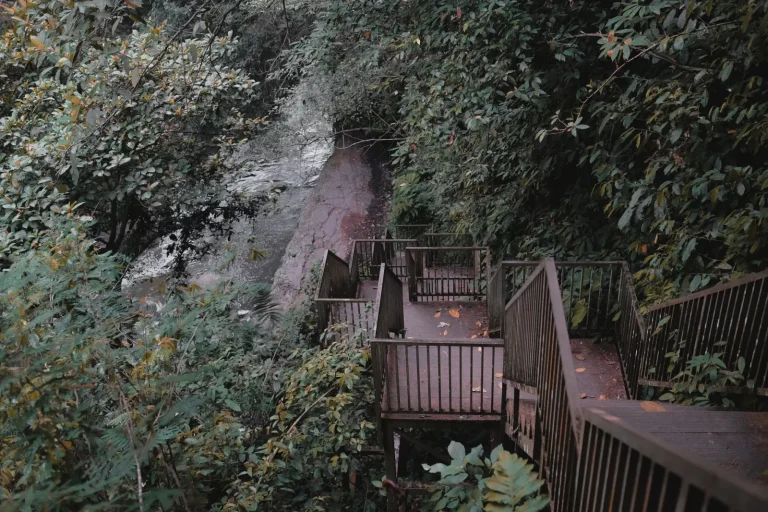
Barron Falls itself is one of the most straightforward rainforest experiences you can have independently. The falls are visible from the Kuranda Scenic Railway, but you don’t need to take the train. There’s a car park at the Barron Falls Lookout, and from there you can walk down to the base of the falls on a well-maintained track. The walk takes about 20 to 30 minutes down, longer coming back up because it’s steep. The track is wet and slippery most of the year, and the rocks at the base are genuinely treacherous when water flow is high. I’ve seen people slip badly here, so proper footwear matters more than it sounds.
The surrounding area has other short walks branching off, though they’re less obvious. The Barron Gorge National Park has several trails that aren’t heavily promoted, which means they’re quieter but also less maintained. If you walk beyond the main falls lookout area, you’re moving into terrain where you need to pay attention to where you’re going. The trails aren’t marked with the same consistency as major tourist routes, and the rainforest canopy is dense enough that you lose visual reference points quickly.
Josephine Falls and the Wailamo track
Josephine Falls is about 30 kilometers south of Cairns, near the town of Innisfail. It’s a popular spot, but most people arrive via tour bus in the morning, which means if you go mid-afternoon or early morning, you’ll have it largely to yourself. The walk to the falls is short – maybe 15 minutes – and the track is clear. The falls themselves are swimmable, though the water temperature is cold year-round, and the rocks are slippery. The real value here is that you can access it on your own schedule without waiting for a group to assemble.
The Wailamo track runs near Josephine Falls and offers a longer rainforest walk if you want more immersion. It’s about five kilometers return and moves through denser forest than the falls walk. The track is marked but not heavily trafficked, so you need to stay alert. I’ve found that walking this in the early morning is better than later in the day – the light is better, the air is cooler, and you’re less likely to encounter the midday heat that makes rainforest walking genuinely exhausting.
Daintree and Cape Tribulation access
The Daintree Rainforest north of Cairns is often assumed to require a tour, but you can absolutely drive there independently and walk sections on your own. The drive from Cairns takes about 90 minutes, and the landscape changes noticeably as you head north. The Daintree Discovery Centre has trails you can walk without paying for a guided experience, though the center itself charges entry. The boardwalks and tracks around the center are well-maintained and let you experience the rainforest without significant navigation demands.
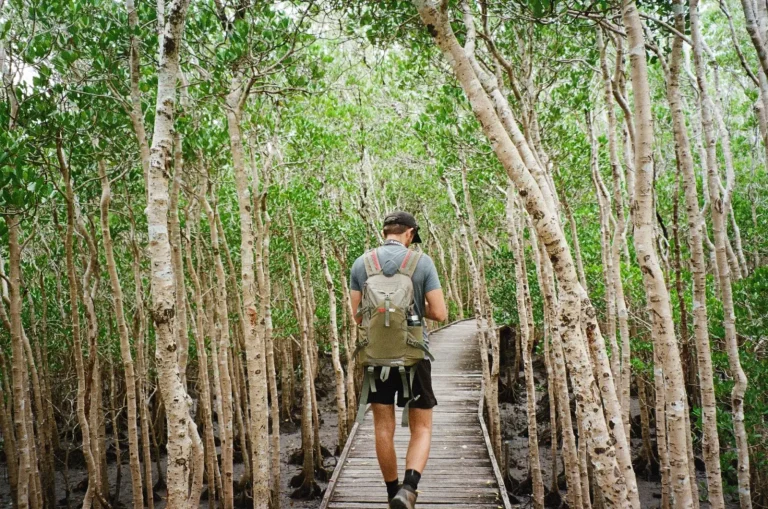
Cape Tribulation, further north, has several walking options accessible to independent travelers. The Dubuji Boardwalk is short and easy, moving through rainforest right to the beach. The Thornton Beach area has longer walks if you want to spend more time in the forest. The main constraint here is distance – you’re looking at a three-hour drive from Cairns, so it’s a full-day commitment. The road to Cape Tribulation crosses a creek via a low-level ferry, which sounds exotic but is really just a practical transport method. It operates frequently and isn’t a bottleneck, though in heavy rain it can close, so check before committing to the drive.
What self-guided actually requires
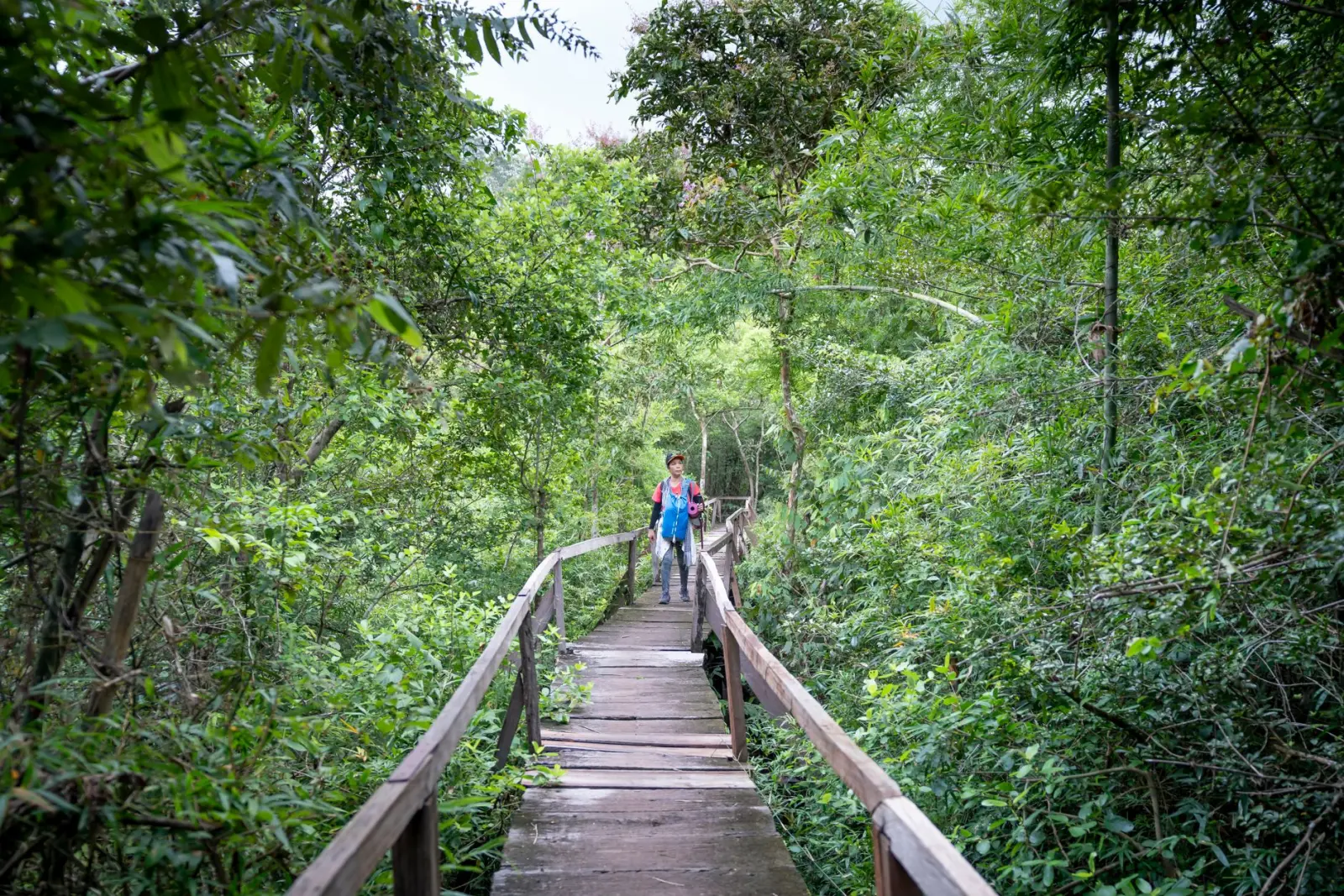
Walking rainforest alone means you need to be genuinely self-sufficient. There’s no tour guide to navigate, no group to help if something goes wrong, and no radio to call for help if you get injured. The rainforest itself is not hostile, but it’s indifferent. Most trails near Cairns are safe if you stay on them and move with awareness, but “staying on the trail” requires you to actually pay attention to where you’re walking. The canopy is so dense that you lose the sun’s orientation quickly, and the forest floor is confusing – roots, rocks, and fallen branches look similar, and the trail isn’t always obvious.
Timing matters significantly. The rainforest is hotter and more humid in the afternoon, which drains your energy faster than you’d expect. Walking in the morning, you’ll move farther and feel better. Rain is frequent, and wet rainforest trails become slippery fast. I’ve found that walking within a few hours of rain is actually better than during rain – the ground has drained slightly, and you can see the trail more clearly. Walking during active rain is slower and more hazardous than most people anticipate.
Navigation tools are important. Phone GPS works in many areas but not consistently under dense canopy. Paper maps are better than nothing, but the detail on standard tourist maps often isn’t sufficient for small trails. Taking photos of trail junctions as you walk helps you navigate back. Most people don’t do this and end up retracing their steps more slowly than necessary.
Practical realities of independent rainforest walking
Insects and wildlife are present but rarely problematic if you’re moving during the day on established trails. Leeches are common in wet conditions and are annoying rather than dangerous. Snakes exist but are genuinely rare to encounter on busy trails. The bigger issue is heat exhaustion and dehydration – people consistently underestimate how much water they need in a tropical rainforest. The humidity means sweat doesn’t evaporate effectively, so you overheat without realizing it. Carrying at least two liters of water is practical, not excessive.
Footwear is worth taking seriously. Rainforest trails are wet, muddy, and slippery. Hiking boots with good ankle support and aggressive tread perform significantly better than sneakers or trail runners. I’ve seen people in inappropriate footwear turn a 30-minute walk into a two-hour ordeal because they’re moving cautiously to avoid slipping.
The rainforest near Cairns is genuinely walkable without a tour, but it requires you to approach it as a real environment rather than a scenic backdrop. The trails that work best are the ones where you accept that you’re moving through someone else’s habitat, not visiting a curated experience. That shift in perspective – from tourist to person moving through a place – is what makes independent rainforest walking actually rewarding rather than just logistically possible.