
Murray Falls sits in a pocket of rainforest that draws people for the obvious reason – the water, the light filtering through the canopy, the sound of it dropping. But the forest around it operates on its own logic, and most visitors only experience a thin slice of it. The walk to the falls themselves is straightforward. The forest beyond it, where people actually get lost or turn back, is something else entirely.
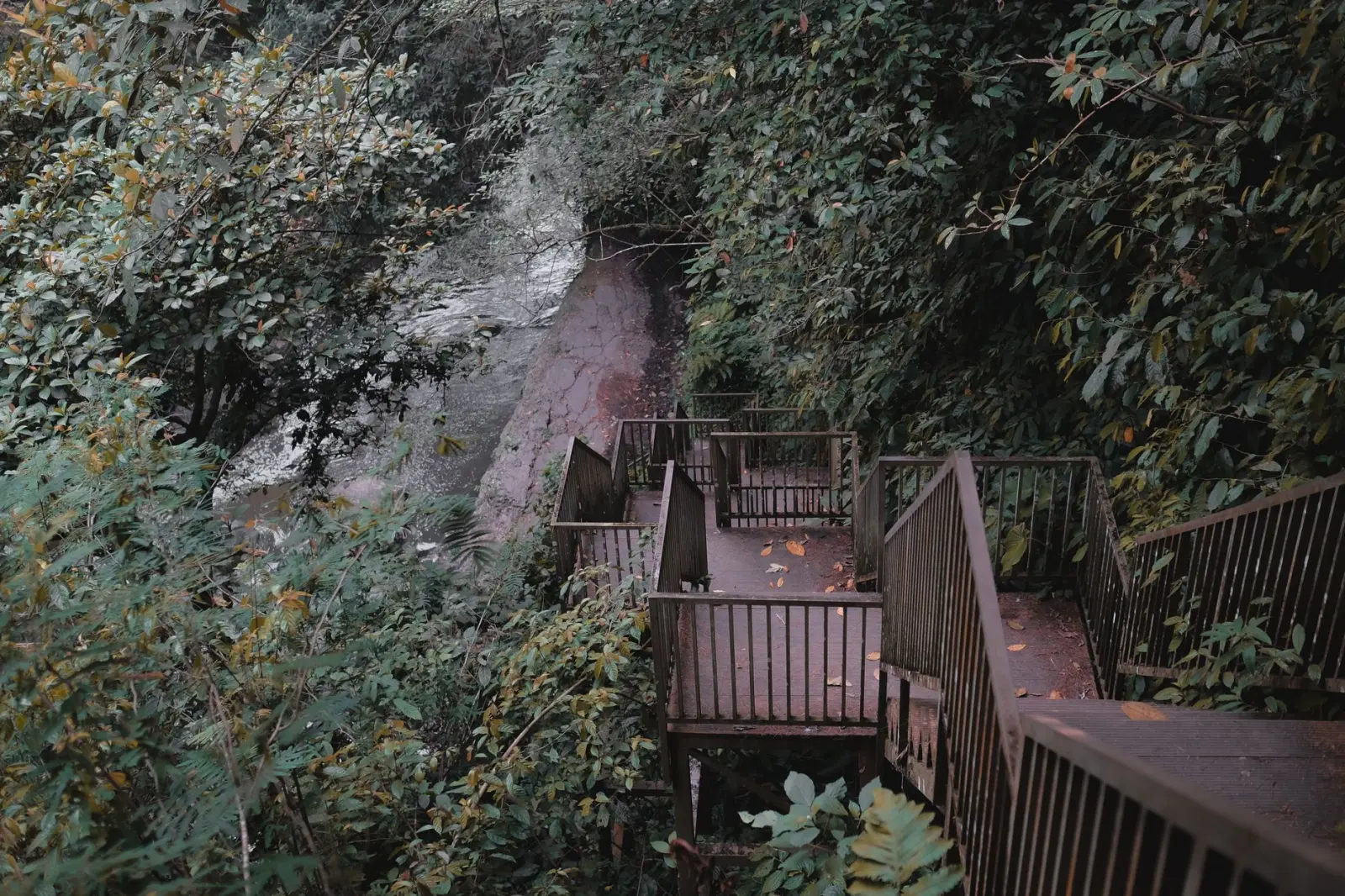
The immediate surroundings are well-maintained. A defined track leads in, wooden steps appear where the slope steepens, and the infrastructure is recent enough that you won’t be stepping over rotting timber or dodging obvious hazards. This is where the false confidence starts. Visitors arrive expecting a similar standard everywhere, then find themselves on a track that narrows, becomes less distinct, or simply ends where maintenance stopped. The forest doesn’t care about your expectations.
The terrain around Murray Falls changes quickly depending on which direction you move. Head upstream and the forest floor becomes wetter, with exposed roots that hold moisture and create a slipping hazard even when they look dry. The canopy closes in more densely upstream, which means less light and more difficulty reading the ground ahead. Downstream, the forest opens slightly but the slope becomes more pronounced, and the proximity to water adds a psychological weight that affects decision-making. People move more cautiously near water, even when the actual danger is minimal.
Seasonal Variations and Water Conditions
The forest changes significantly between wet and dry seasons, though “dry” in this part of Queensland is a relative term. During the wet season, from November through March, the ground stays saturated. Tracks that are merely muddy in other seasons become genuinely treacherous – not because of depth but because of the way wet soil compacts and becomes almost slippery. Fallen branches sit in water, making them harder to spot. The creek itself rises, and what was a minor crossing becomes a genuine obstacle. I’ve watched people misjudge the water level and get their boots soaked, then spend the rest of the walk dealing with cold, heavy footwear.
In the drier months, April through October, the ground firms up but the forest becomes a different kind of challenge. Leaf litter accumulates thicker, hiding uneven ground and creating a surface that rolls under your foot. Fallen branches become brittle and snap loudly, which sounds dramatic but also means they’re less stable if you’re using them for balance. The creek level drops, exposing more rock, which is often slippery with algae or moss. The advantage is visibility – you can see further into the forest and spot hazards more easily. The disadvantage is that the forest feels more open and inviting, which encourages people to wander off-track.
Track Conditions and Navigation
The main track is marked, but the marking system assumes you’re already on it. If you step off, the blazes become harder to spot, and the forest floor looks the same in multiple directions. This is where people’s sense of direction becomes unreliable. The slope of the land, the direction of water flow, and the distribution of trees all provide subtle cues, but they’re not obvious to someone who’s only been walking for ten minutes. I’ve encountered groups who became uncertain after just a few hundred meters off the main path, not because they were lost in any dramatic sense but because they couldn’t confidently identify which way they’d come.
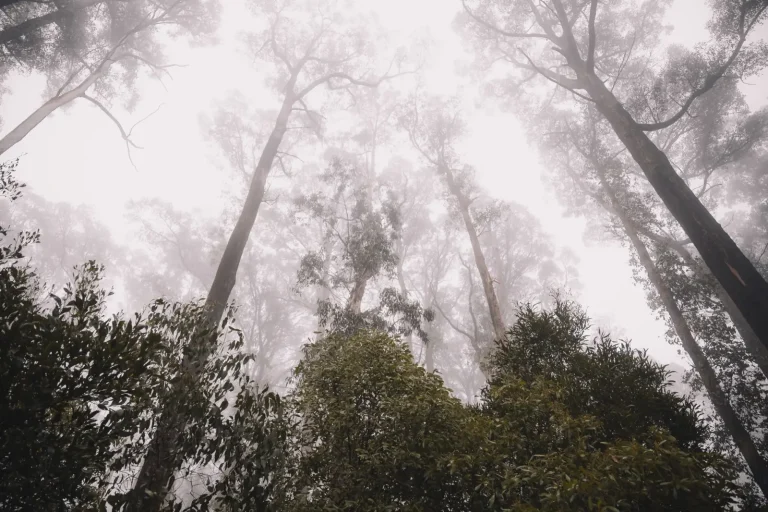
The forest canopy affects navigation more than people realize. Under dense cover, the sun becomes invisible, and the light is diffuse and shadowless. This removes one of the most reliable navigation aids. Compasses work, but most casual walkers don’t carry them or know how to use them. GPS works too, but signal can be patchy under heavy tree cover. The practical reality is that most people navigate by following the path and remembering landmarks, which works fine until the path becomes ambiguous.
Flora, Fauna, and Practical Concerns
The forest around Murray Falls contains the usual tropical suspects – stinging trees, various insects, and snakes. The stinging trees are the most common source of actual incidents. They’re not aggressive; people simply brush against them without realizing what they are. The sting is unpleasant but not dangerous in any serious way. It causes local burning and irritation that can last hours. The real problem is the panic response – people who’ve been stung want to leave immediately, which can lead to rushed decisions on the track.
Snakes exist in the area but encounters are rare. They hear you coming and move away. The insects – leeches, mosquitoes, various biting flies – are more of a consistent annoyance than a genuine hazard. Leeches are particularly common after rain, and they’re more psychologically unsettling than actually harmful. People spend mental energy worrying about them, which distracts from paying attention to the actual terrain.
The forest itself is dense with life, which means dense with noise. Bird calls, insect sounds, and the constant movement of small animals in the undergrowth create an immersive soundscape. This is part of the appeal, but it also masks other sounds – approaching weather, water level changes, or other people on the track. On multiple occasions, I’ve encountered groups who were surprised to find others nearby because they hadn’t heard them approach.
Practical Realities of Time and Fatigue
The walk to Murray Falls itself takes roughly 45 minutes to an hour from the car park, depending on fitness and how often you stop. This is the distance most people cover. Exploring further takes noticeably longer because the terrain becomes more variable and your pace naturally slows. What feels like a short extension – another 20 or 30 minutes – often becomes an hour once you account for careful footing, water crossings, and the mental effort of navigating less-defined terrain.
Fatigue accumulates differently in forest walking than on open trails. The uneven ground requires constant micro-adjustments, which is tiring in a way that’s not immediately obvious. By the time people realize they’re tired, they’re often further from the car park than they intended. The return journey then feels longer because you’re moving more slowly and the light is changing – if you started in mid-morning, the forest is noticeably dimmer by mid-afternoon.
Most people exploring the forest around Murray Falls don’t run into serious problems. They walk a defined track, see the falls, and return. But the forest operates on its own terms, and the moment you step off the maintained path, you’re managing variables that don’t announce themselves. The weather can shift quickly. The ground can be more unstable than it appears. Your sense of direction, which feels reliable in familiar spaces, becomes surprisingly unreliable under a rainforest canopy. These aren’t dramatic dangers, but they’re real constraints that shape what’s actually possible in a day of forest exploration.