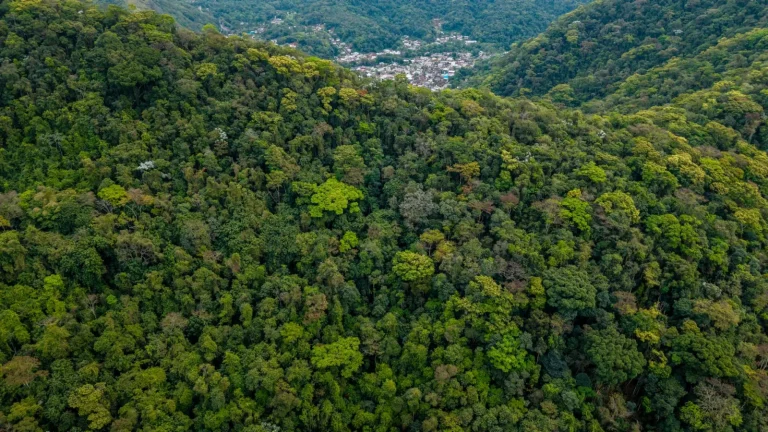


Spending time in rainforests where Aboriginal communities have lived for tens of thousands of years changes how you see the landscape. What appears to an outsider as undifferentiated green density actually contains a detailed pharmacopoeia, a food system, and a material culture that developed through patient observation across countless generations. The plants weren’t discovered through random trial and error. They were systematically understood – their properties, seasonal availability, preparation methods, and the specific conditions under which they work best.
The depth of this knowledge becomes apparent when you walk through a rainforest with someone whose family has inhabited it. A leaf that looks unremarkable to you has a specific harvesting window. A bark that appears useless has been processed in a particular way for generations. A root that seems toxic under certain conditions becomes medicinal under others. This isn’t folklore or superstition. It’s empirical knowledge encoded in practice.
How Plants Were Integrated Into Daily Life
Aboriginal peoples didn’t separate medicine, food, and material culture the way modern systems do. A single plant often served multiple purposes. The outer bark might become cordage, the inner bark a food source, the leaves a treatment for inflammation, and the roots a dye. This integration meant that deep knowledge of individual species was essential for survival and efficiency. You couldn’t afford to be casual about plant identification or preparation.
The timing of harvest mattered enormously. Many plants have compounds that vary in concentration depending on season, time of day, and environmental conditions. Aboriginal harvesters understood these cycles. They knew which plants were most potent after dry seasons, which ones needed to be gathered at dawn, which ones improved with age and which needed to be used fresh. This kind of specificity comes only from sustained, multi-generational engagement with a particular place.
Medicinal Plants and Their Preparation
The medicinal applications were remarkably sophisticated. Eucalyptus species, which dominate many Australian rainforests and woodlands, were used for respiratory conditions, fever, and wound treatment. The leaves contain volatile oils that have genuine antimicrobial and anti-inflammatory properties. But knowing that eucalyptus leaves are useful is different from knowing that you need to steep them at a specific temperature, that the timing of collection affects potency, and that certain preparations work better for certain conditions than others.
Rainforest plants like finger limes, Davidson plums, and various native peppers were used not just as food but as digestive aids. The astringency and tannin content that makes some of these plants challenging to eat in quantity actually serves a purpose when used strategically. Aboriginal peoples understood which plants supported digestion, which ones helped with specific ailments, and how to combine them for better effect. This wasn’t guesswork. It was careful observation of cause and effect over many seasons.
Plant toxins were also understood with precision. Many rainforest plants contain compounds that are poisonous in their raw state but become safe or beneficial after specific processing. Cycads, for example, contain neurotoxins that can cause serious neurological damage, but Aboriginal peoples developed leaching and fermentation techniques that rendered them edible and nutritious. This level of knowledge suggests not just experimentation but systematic testing and refinement of methods.
Materials, Tools, and Structural Uses
Beyond medicine and food, rainforest plants provided the materials for an entire material culture. Bark was processed into containers, clothing, and shelter materials. Different species had different properties – some bark was more flexible, some more durable, some better for waterproofing. Vines and flexible branches became fishing lines, traps, and binding materials. Certain woods were preferred for tool handles because of their weight distribution and durability. This wasn’t random preference. Each choice reflected understanding of material properties and performance under specific conditions.
The construction of shelters and temporary structures relied on knowing which plants could be bent without breaking, which would resist rot in humid conditions, and which would shed water effectively. A shelter built from rainforest materials needed to withstand not just rain but the particular challenges of high humidity, insect pressure, and fungal growth. The plant choices reflected this reality.
Knowledge Transfer and Ecological Understanding
What’s often overlooked is that this knowledge system was embedded in a broader understanding of ecology. Aboriginal peoples managed rainforests actively, not passively. They used fire, selective harvesting, and transplantation to maintain useful plant populations. They understood succession – which plants appeared after disturbance, which ones indicated soil conditions, which ones supported other species they valued. This wasn’t conservation in the modern sense. It was active management based on ecological understanding.
The transmission of this knowledge happened through practice, not through written manuals. A child learning to identify plants was also learning about seasons, weather patterns, animal behavior, and soil conditions. The knowledge was integrated and contextual. You didn’t learn about a plant in isolation. You learned about it as part of a landscape, a season, and a system of relationships.
Modern ethnobotanical research has validated much of this traditional knowledge. Plants that Aboriginal peoples used for specific conditions often do contain active compounds that support those uses. But validation misses something important. The traditional knowledge systems were more sophisticated than simply “this plant treats this condition.” They included understanding of dosage, preparation method, individual variation, contraindications, and the broader context in which a plant was used.
The loss of this knowledge is ongoing and significant. As fewer people practice traditional harvesting and preparation methods, the detailed understanding of plant properties and seasonal timing erodes. What remains is often fragments – a recipe without the reasoning behind it, a use without understanding the conditions that make it effective. Reconstructing this knowledge from written sources is possible but incomplete. The full understanding existed in practice, in hands, in the seasonal rhythms of a particular place.