Spend enough time in Australian rainforests and the eastern yellow robin becomes familiar in a way that surprises most visitors. It’s not the bird you notice first. The loud calls, the large parrots, the honeyeaters that move in aggressive flocks – those demand attention. The yellow robin works differently. It sits low, moves deliberately, and has a presence that feels almost methodical. After years of moving through rainforest canopy and understory, you recognize the pattern: a small flash of yellow and olive, a particular perch preference, a hunting style that never varies.
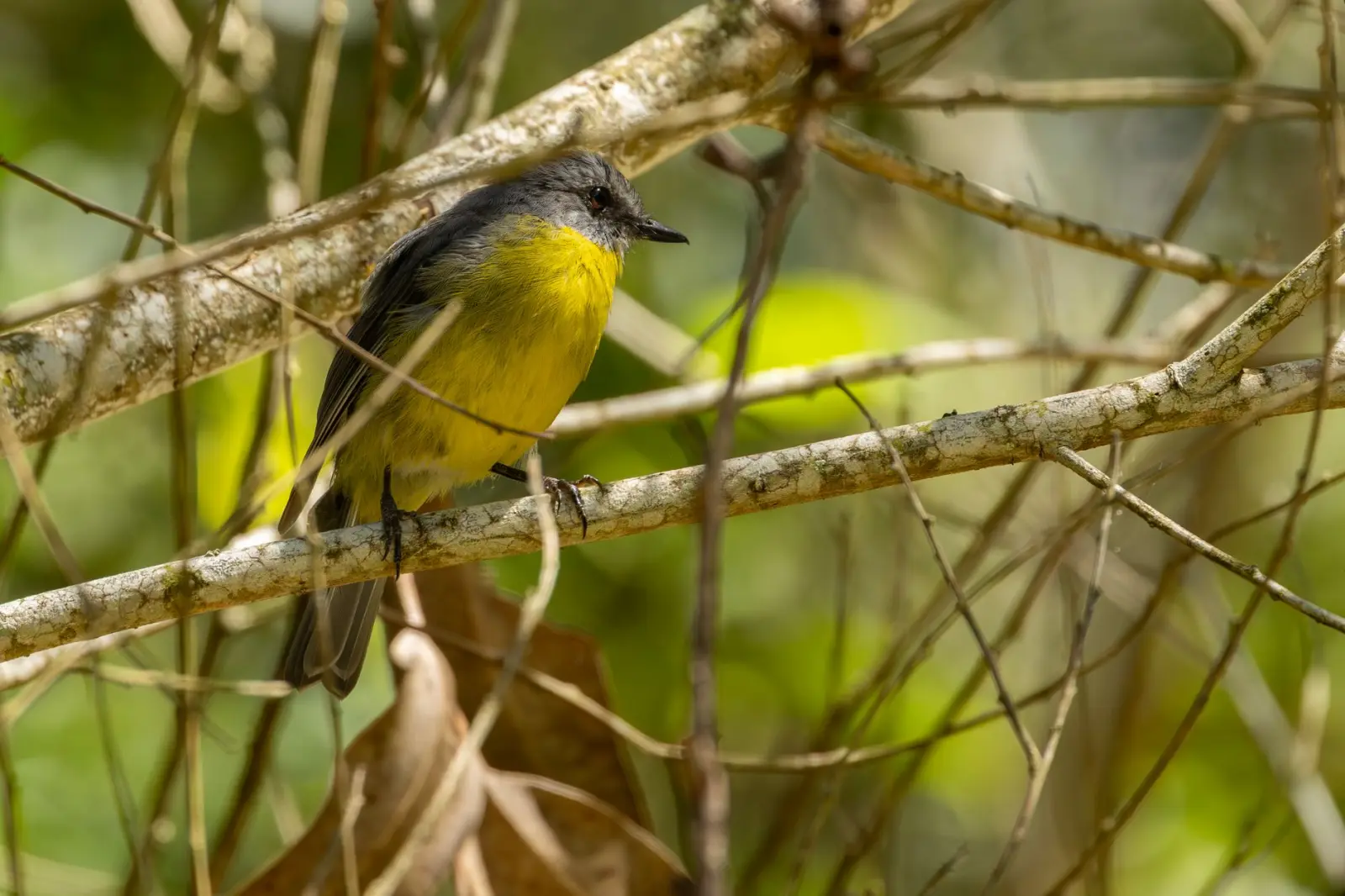
The bird itself is modest in size, around 16 centimeters from beak to tail. What makes it distinctive is the combination of that bright yellow underside – chest, belly, undertail – against the olive-green back and head. In good light, the contrast is clear. In the dappled, often dim conditions of rainforest understory, you catch the yellow first, then register the rest. The bird tends to sit upright, alert, in a way that makes it look almost formal compared to the looser posture of other small forest birds.
Behavior and Hunting Patterns
What strikes you most about eastern yellow robins is their hunting method. They’re not gleaning insects from foliage like many small forest birds. They’re watching. They’ll perch on a low branch, often between two and six meters high, and remain still for extended periods. Then they drop to the ground, grab something – an insect, a small arthropod – and return to the same or a nearby perch. This sally-hunting behavior is consistent. You see it happen dozens of times across a morning walk, always the same sequence. The bird is patient in a way that feels almost predatory, despite its small size.
They’re not social in the way some rainforest birds are. You don’t see them in mixed feeding flocks. Instead, they move in pairs or small family groups, staying within a defined territory. The territory itself tends to be modest – not sprawling across hectares, but concentrated in specific patches of suitable understory. Once you learn where they’re active, you find them in roughly the same areas on successive visits. This consistency is useful if you’re trying to observe them, but it also means they’re vulnerable to habitat disruption. They don’t easily shift to new ground.
Vocalization is another reliable marker. They produce a sharp, clear call – a series of notes that carries reasonably well through dense vegetation. It’s not the most prominent sound in a rainforest soundscape, but once you know it, you pick it up. The call seems to serve territorial and social functions. You’ll hear it most frequently in early morning and late afternoon, during the periods when forest activity peaks.
Habitat Requirements and Distribution
Eastern yellow robins occur along the east coast of Australia, from tropical rainforests in far north Queensland down to temperate forests in Victoria. But they’re not equally distributed. They’re rainforest specialists, which means they depend on specific forest structure. They need dense understory, adequate leaf litter, and the invertebrate populations that come with undisturbed forest floor. In fragmented or heavily logged areas, they become scarce or absent. This isn’t a bird that adapts readily to modified landscapes.
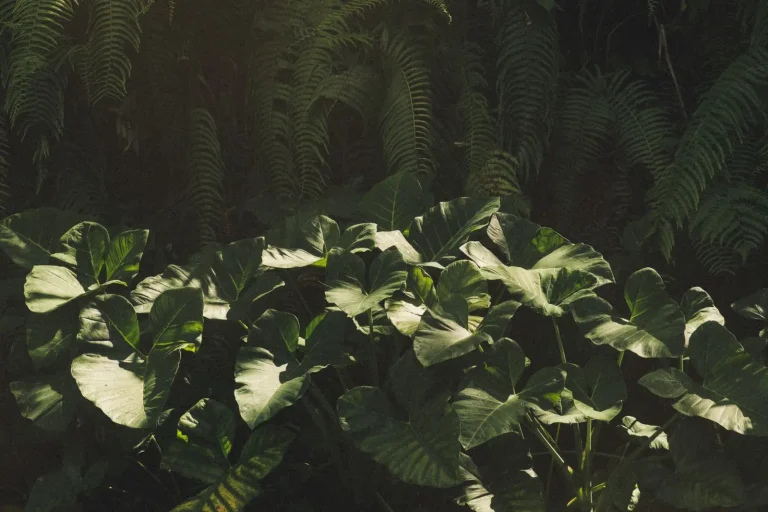
Within rainforests, they favor areas with good structural complexity – places where trees have fallen, where there’s layering of vegetation at different heights, where the understory is thick enough to provide shelter but open enough for them to move and hunt. Monoculture plantations, even if they’re planted with native species, don’t work. The birds need the messy, diverse structure of intact forest.
The rainforests of southeastern Australia – particularly in places like the Daintree, the Atherton Tablelands, and the subtropical rainforests of northern New South Wales – support healthy populations. In these areas, if you’re walking quietly through the understory, you’re likely to encounter them. But even within these regions, their presence varies depending on local conditions. A recently disturbed area, a patch that’s been selectively logged, or a section where invasive species have altered the understory structure will have fewer or no yellow robins.
Why They Matter to Rainforest Health
From an ecological perspective, eastern yellow robins are useful indicators. Their presence suggests that the understory is functioning, that invertebrate populations are adequate, and that the forest structure remains relatively intact. They’re not apex predators or keystone species in the technical sense, but they’re part of the food web in ways that matter. They consume arthropods that might otherwise reach damaging densities. They’re also prey for larger predators – snakes, larger birds – so they’re part of the energy flow through the forest.
What’s less obvious is their role in forest regeneration. When they forage on the forest floor, they’re moving through leaf litter and disturbing it. This activity, repeated across many birds over seasons, influences decomposition rates, nutrient cycling, and the conditions under which seeds germinate and seedlings establish. It’s not dramatic, but it’s real.
For people working in rainforest conservation or management, the presence or absence of eastern yellow robins tells you something about whether your efforts are working. If populations are stable or increasing, it suggests the forest is recovering or being maintained well. If they disappear, it’s a signal that something has changed – usually something problematic.
Practical Observations for Visitors
If you’re walking through Australian rainforest and want to see them, early morning is your best window. The forest is quieter, activity is higher, and you have better light. Move slowly and pause frequently. Listen for their call. When you spot one, don’t approach directly. They’re not aggressive, but they will move away if they feel threatened. Sit or stand quietly, and often they’ll resume their normal behavior within minutes. Watch the hunting sequence – the perch, the drop, the return. It’s repetitive enough that you can anticipate it.
Binoculars help, though they’re not essential. In dense rainforest, you’re often close enough to see them without magnification. A camera with a decent zoom is useful if you want to record them, but the experience of watching them live – seeing the quick movements, hearing the calls, understanding the rhythm of their behavior – is what stays with you.
The eastern yellow robin is one of those species that rewards patience and attention. It’s not flashy, not rare in the true sense, but it’s easy to miss if you’re moving quickly or expecting something more dramatic. After years of rainforest work, I’ve found that the birds you overlook initially often become the ones you understand best. The yellow robin fits that pattern exactly.