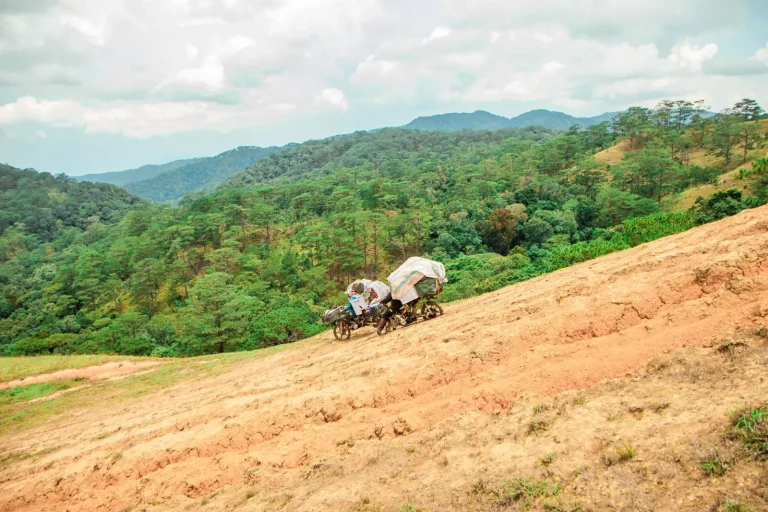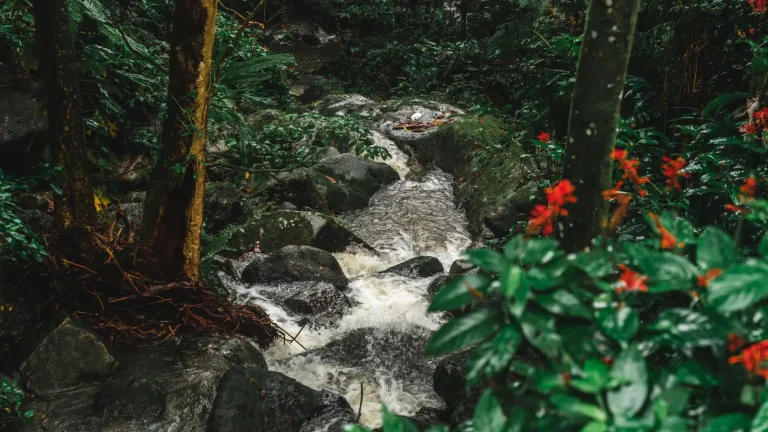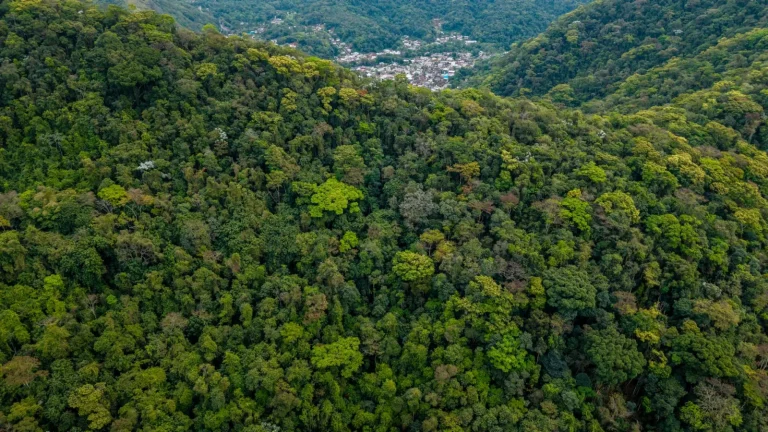

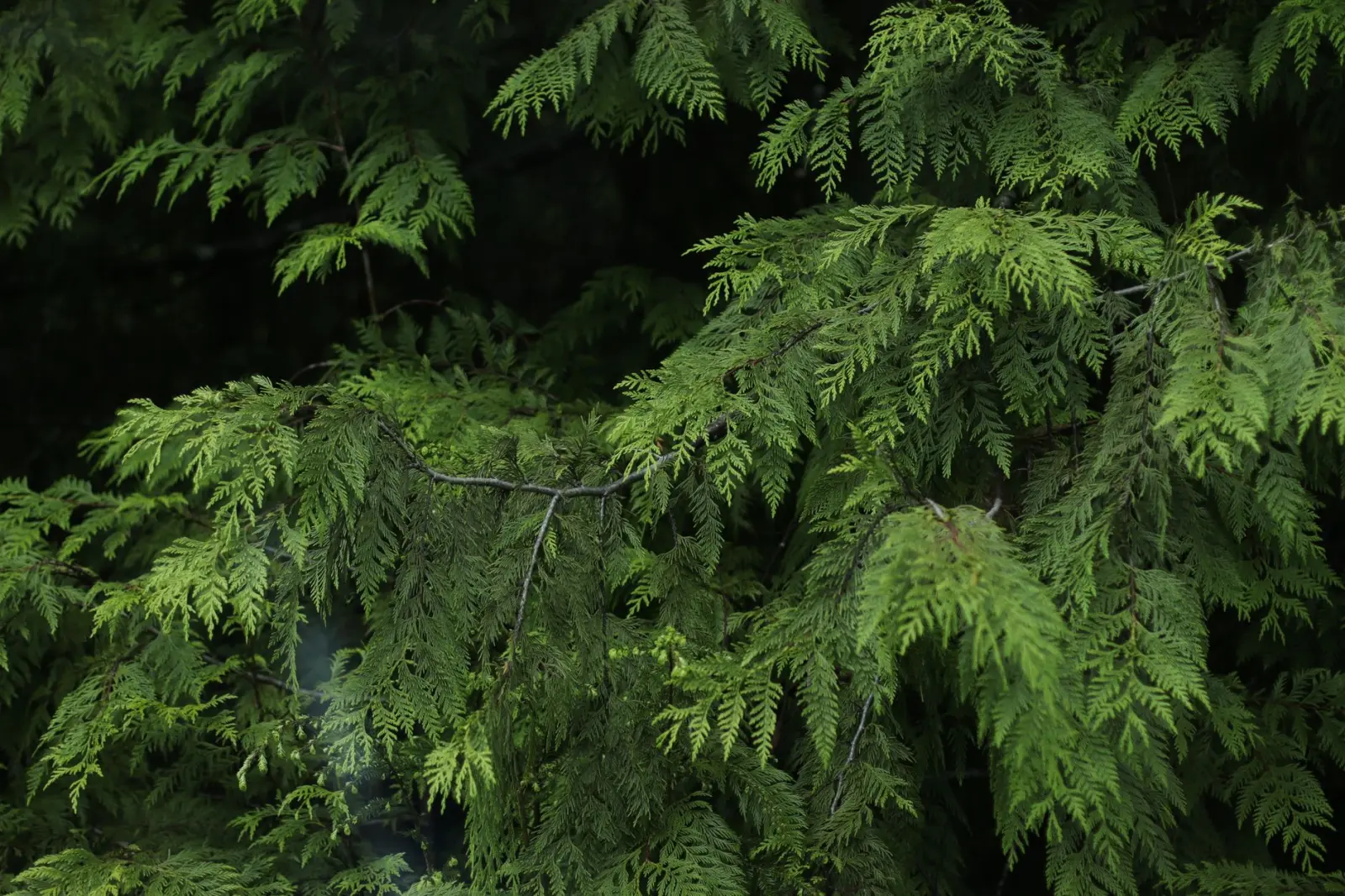
Walking through the subtropical rainforests of northeastern Australia, you notice something that doesn’t fit the mental image most people carry of Australian wilderness. Among the familiar eucalypts and dense understory, there are conifers – ancient ones, some of them. Not the introduced pines that dominate plantations, but native species that have occupied these forests for millions of years. They’re easy to overlook if you’re moving quickly, which most visitors do. The trees themselves don’t announce their age or rarity. They simply exist, often standing quietly among more visually dominant neighbors.
These conifers represent a botanical lineage that stretches back to the Mesozoic era. The Araucariaceae family, which includes the distinctive hoop pines and bunya pines, has been present in Australian rainforests since the age of dinosaurs. What strikes you when you spend time among them is how little they’ve changed – structurally, reproductively, genetically. They’re living fossils in the truest sense, not because they’re static museum pieces, but because they’ve persisted through climate shifts, continental drift, and the rise and fall of entire ecosystems around them. Their presence in these rainforests is a direct line to a much older Australia.
Where They Persist
The distribution of these ancient conifers is highly specific. You won’t find them scattered across the continent. Instead, they cluster in isolated rainforest pockets along the eastern seaboard, particularly in Queensland and northern New South Wales. The most significant populations occur in the Wet Tropics of Queensland, where the climate remains humid year-round and the forest canopy provides consistent moisture and shade. These aren’t random refuges – they’re the remnants of much larger rainforest systems that once covered far more of eastern Australia.
The Macrozamia species, which are often mistaken for ferns or cycads by casual observers, grow alongside the conifers in these same pockets. Both groups share a preference for the wetter, more stable microclimates that rainforests provide. What’s notable is how tightly these plants are bound to their specific locations. A hoop pine forest in the Atherton Tablelands behaves differently from one further south. The soil composition, rainfall patterns, and associated plant communities shift subtly but measurably. When you’re moving between different rainforest reserves, you begin to sense these variations – the density of the understory changes, the light quality shifts, the smell of the forest floor varies. These differences matter enormously for the survival of the conifers themselves.
Reproduction and Persistence
One of the most striking features of these ancient conifers is how slowly they reproduce. A bunya pine can take 15 to 20 years to reach reproductive maturity, and even then, it doesn’t produce cones every year. Hoop pines follow a similar pattern. This reproductive constraint is something you notice when you look at age structure in these forests – you see mature, dominant trees, and then large gaps in the younger age classes. The forest isn’t regenerating at the rate you might expect from a healthy ecosystem. This isn’t necessarily a sign of crisis, but it is a sign of a system operating under specific constraints.
The seeds themselves are large and nutrient-rich, which makes them attractive to wildlife. Native pigeons, particularly the wompoo fruit dove, feed on them. But dispersal is limited compared to species with smaller, wind-dispersed seeds. The cones of a bunya pine are heavy and fall directly beneath the parent tree, meaning the next generation tends to cluster nearby rather than spread widely. This pattern has worked for millions of years, but it also means these populations are vulnerable to localized disturbances. A single fire, a logging operation, or a disease outbreak in a small rainforest patch can have outsized impacts on the genetic diversity of the entire population.
The Ecological Role
What often gets overlooked in discussions of these conifers is their functional role within the rainforest ecosystem. They’re not just botanical curiosities – they’re structural components that shape the forest itself. The tall, straight trunks of hoop pines create emergent layers that influence light penetration and wind patterns. Their needle litter, which decomposes slowly compared to broadleaf material, alters soil chemistry and nutrient cycling. The dense, waxy foliage sheds water differently than the broader leaves of rainforest angiosperms, affecting moisture distribution on the forest floor.
The fauna associated with these conifers is also distinctive. Certain insects have evolved specifically to exploit conifer foliage and wood. Birds that nest in the tall, sturdy branches of bunya pines have different nesting requirements than those using broadleaf trees. When you remove these conifers from a rainforest system, you’re not just losing a tree – you’re disrupting a set of ecological relationships that have been refined over millions of years. The impact isn’t always immediately visible, but it accumulates.
Practical Realities of Conservation
If you visit these rainforests as a traveler, you’ll encounter the conservation challenges firsthand, though they may not be obvious. Many of the most significant populations of ancient conifers exist on private land or in reserves that are chronically underfunded. The Bunya Mountains, which hold substantial populations of bunya pines, are protected, but the broader landscape surrounding them continues to be developed. Rainforest clearing for agriculture, particularly in the lowlands, has fragmented populations that were once continuous. This fragmentation is perhaps the most serious long-term threat these species face.
Climate change introduces another layer of complexity. These conifers evolved under specific temperature and rainfall regimes. While they’re adapted to the current climate of their rainforest refuges, shifts in those conditions could stress populations that have narrow ecological tolerances. The models suggest that suitable habitat for some species may shift or contract over the coming decades. What’s uncertain is whether these slow-reproducing, slow-dispersing trees can migrate or adapt quickly enough to track those changes.
Visiting these forests and seeing these ancient conifers in their actual habitat provides perspective that no amount of reading can match. You understand viscerally why they matter – not because they’re rare, though they are, but because they represent an unbroken connection to a vastly older world. The experience of standing beneath a 200-year-old hoop pine, knowing that its lineage extends back 150 million years, shifts how you think about time, extinction, and what we stand to lose when ecosystems are simplified or fragmented. The conifers themselves ask no questions and demand nothing. They simply persist, slowly, in the spaces where the conditions still favor their survival.