
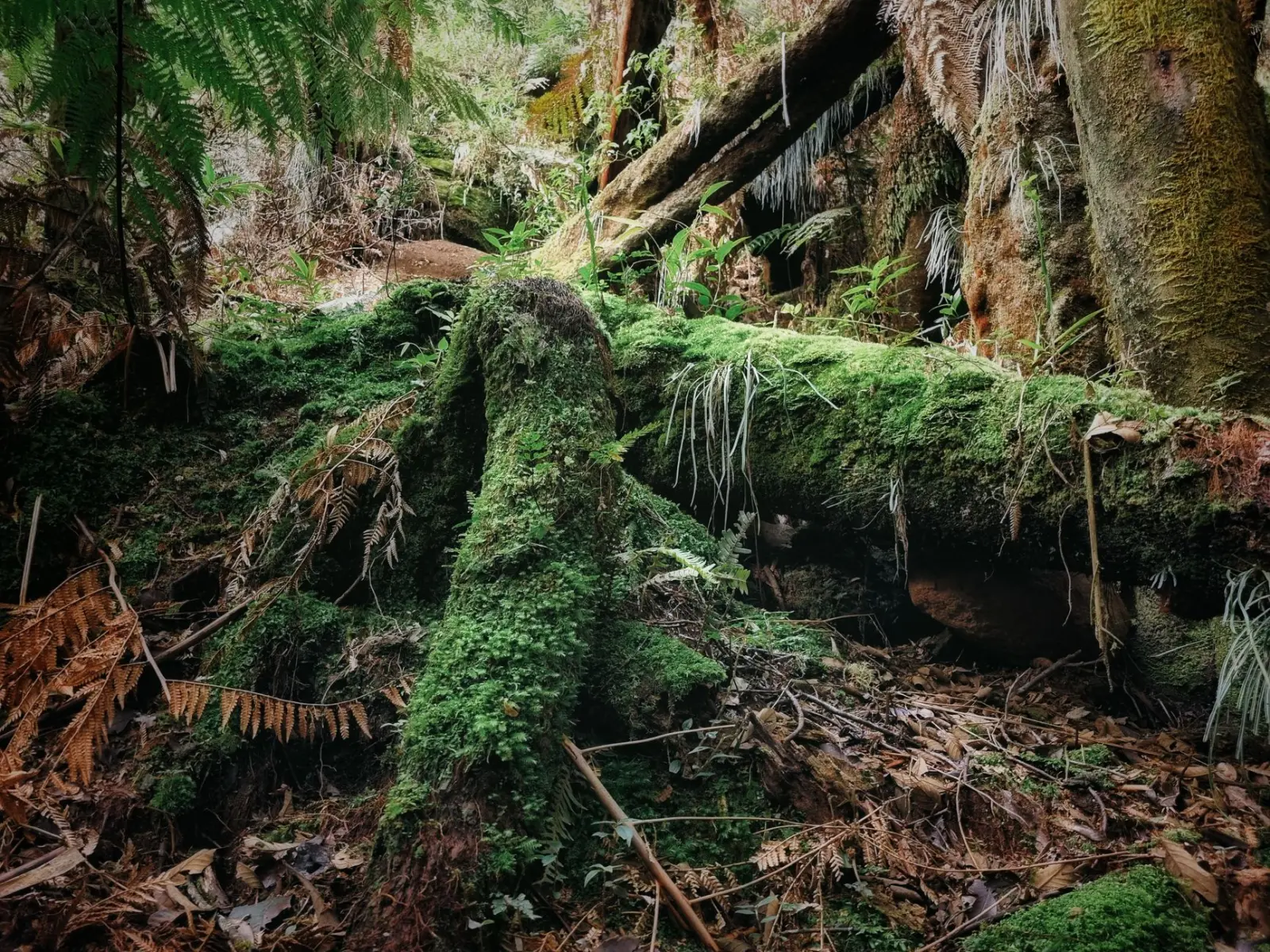
Spend enough time walking through a rainforest, and you stop seeing fallen trees as clutter. You start seeing them as infrastructure. The massive trunks lying across the forest floor, often wrapped in moss and sprouting smaller plants, aren’t signs of decay or damage. They’re the operating system that keeps the entire ecosystem functioning. Most visitors and even some researchers initially miss this because a healthy rainforest looks chaotic, and fallen wood fits that visual impression of disorder. But the disorder is the point.
The sheer volume of dead wood in a tropical rainforest is staggering once you start paying attention. In mature rainforests, fallen logs and woody debris can represent 10 to 20 percent of total biomass. That’s not incidental. That’s a major structural and functional component. These trees don’t disappear quickly. In the warm, wet conditions of the tropics, you might expect rapid decomposition, and some does happen, but large logs can persist for decades. During that time, they’re doing several critical jobs simultaneously.
Nutrient Release and Soil Building
When a tree falls in a rainforest, it doesn’t just rot away into nothing. The decomposition process is a slow, deliberate transfer of nutrients from the dead wood back into forms that living plants can use. Fungi colonize the wood first, breaking down the complex polymers in cellulose and lignin. Bacteria follow, and then arthropods – termites, beetles, millipedes – fragment the material further. This isn’t quick work. A large log might take 20, 30, or even 50 years to fully decompose, depending on its size and the local conditions.
During that entire period, the log is a nutrient depot. As it breaks down, nitrogen, phosphorus, potassium, and trace minerals are released in forms that plant roots can absorb. In rainforests, where soils are often nutrient-poor – leached by centuries of rainfall – this recycling is essential. The nutrients aren’t coming from weathered rock or fresh mineral inputs. They’re coming from the forest itself, cycling through dead wood back into living tissue. Remove the fallen logs, and you’re removing a major source of available nutrients. The forest doesn’t collapse immediately, but the long-term productivity declines.
Habitat and Structural Complexity
A fallen log creates a microhabitat that supports thousands of species. The surface of the wood hosts lichens, mosses, and small plants. Underneath, in the rotting interior, you find invertebrates that exist nowhere else in the forest. Beetles lay eggs in the wood. Ants nest in the cavities. Fungi fruit from the surface. Amphibians shelter in the moisture that accumulates in the decomposing wood. Small mammals use the logs as highways through the understory, moving between feeding areas without dropping to the forest floor.
The structural role matters too. Fallen logs create barriers and stepping stones. They slow water movement during heavy rains, reducing erosion and allowing water to infiltrate the soil rather than running off. They create small dams in streams, forming pools where fish shelter and feed. In steep terrain, a fallen log can stabilize a slope and prevent landslides. These aren’t minor effects. In a rainforest where water moves aggressively downhill during storms, the presence of woody debris fundamentally changes how water, nutrients, and sediment move through the landscape.
Regeneration Platforms
One of the most visible functions of fallen wood is as a germination site for new trees. In the rainforest, the forest floor is dark, wet, and often covered in leaf litter that’s actively decomposing. Seeds that land there face intense competition from fungi and bacteria. But a fallen log, especially one that’s been on the ground for a few years and has a soft, partially decomposed surface, offers something different. The wood is elevated slightly above the saturated soil, reducing waterlogging. It’s colonized by fungi and bacteria that suppress pathogens. It’s rich in nutrients as it decomposes.
Seeds that germinate on logs have a genuine advantage. They’re less likely to rot before they establish. Their roots can penetrate the soft wood and access the nutrient-rich decomposing material. As the seedling grows, its roots eventually reach the soil below, but by then the young tree has a head start. Walk through a mature rainforest and look up. Many of the large trees you see are growing from fallen logs. Some are so old that the original log has completely decomposed, leaving the tree supported only by its own root system, but the log was the launching platform.
This is particularly important in the canopy gaps that form when large trees fall. The gap itself is a disturbance that opens space and light, allowing different species to establish. But the fallen log at the center of that gap isn’t just dead wood – it’s the nursery for the next generation of trees that will eventually close the gap and reshape the canopy structure.
Carbon Storage and Climate Regulation
Dead wood is also a carbon reservoir. The carbon that was fixed by photosynthesis and incorporated into the tree’s structure doesn’t disappear when the tree dies. It persists in the wood, slowly released as the wood decomposes. In the short term, this represents stored carbon. In the long term, it’s part of the carbon cycle that connects the forest to the atmosphere. Rainforests with abundant fallen wood are effectively storing more carbon than rainforests where dead wood is rapidly removed or doesn’t accumulate. This has implications not just for local forest function but for global carbon dynamics.
The decomposition of wood also drives microbial activity in the soil. Fungi and bacteria that break down wood produce enzymes and metabolites that influence soil structure, water retention, and nutrient availability. The activity is intense around decomposing logs, creating zones of high biological productivity. These zones support the organisms that, in turn, support the plants that make the rainforest what it is.
In practical terms, what this means is that a rainforest that looks “messy” because it has fallen trees everywhere is actually operating more efficiently than one that’s been cleaned up. The fallen wood isn’t a problem to solve. It’s the solution that keeps the forest functioning. Understanding this changes how you interpret what you see when you walk through a rainforest, and it changes how you think about forest management. Removing dead wood might make the forest look tidier, but it removes one of the core mechanisms that keeps the system alive.