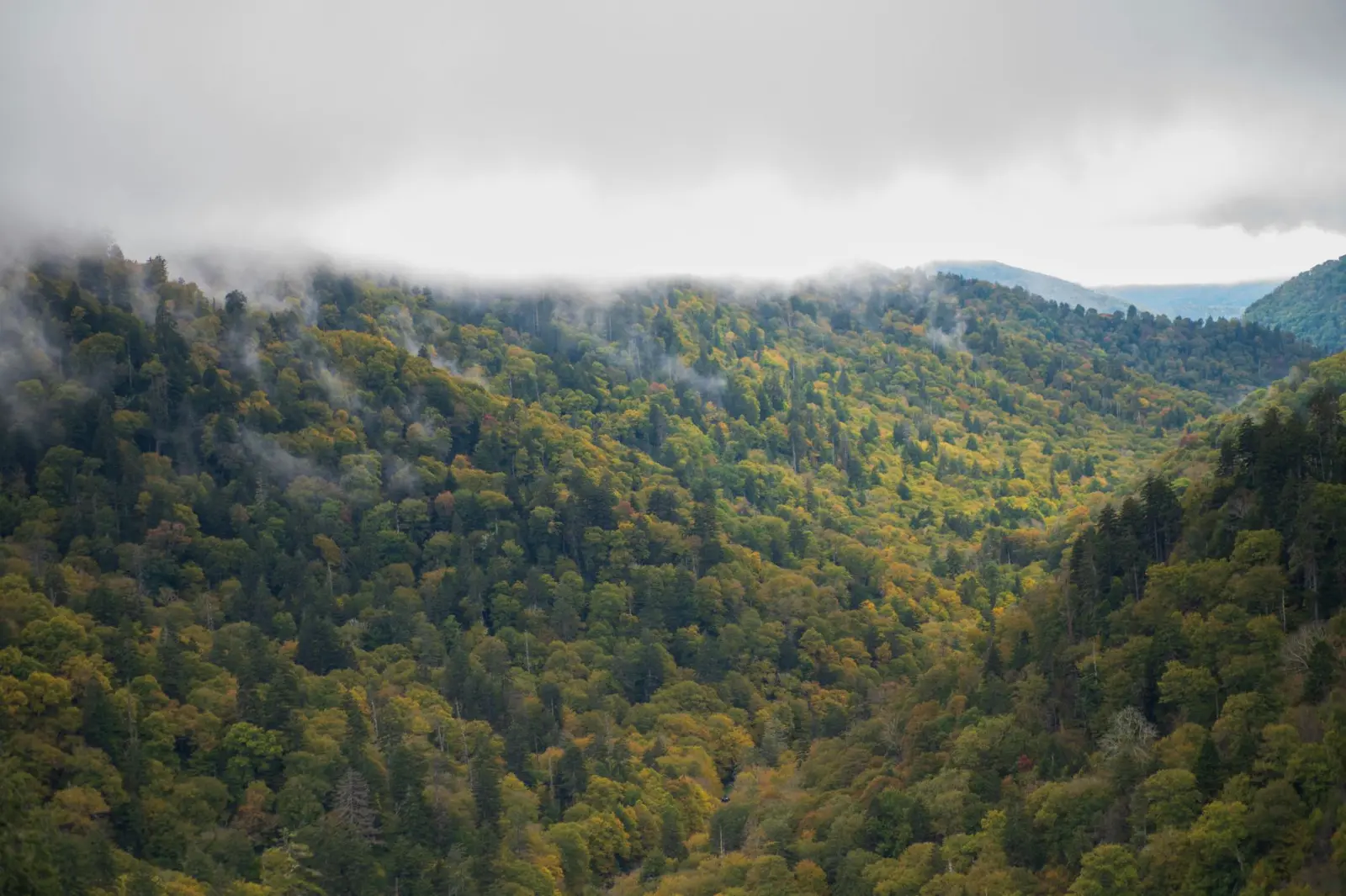
Spend enough time in a rainforest and you notice something that contradicts the popular image of perpetual green. Many trees lose their leaves during what you’d expect to be their most abundant growing season. The wet season, with its daily downpours and high humidity, seems like the ideal time for a tree to keep every leaf working. Yet across the Amazon, Southeast Asia, and Central Africa, substantial leaf drop occurs precisely when rainfall peaks. This isn’t a sign of stress or disease. It’s a calculated response to conditions that make holding onto leaves more costly than shedding them.
The mechanics of this are rooted in how water actually moves through a tree. When soil becomes waterlogged – which happens regularly during monsoon periods – the tree’s root system faces a paradox. Water is everywhere, yet the tree struggles to absorb it. Waterlogged soils become anaerobic, meaning oxygen disappears from the soil pores. Roots need oxygen to function properly. Without it, they can’t maintain the osmotic pressure needed to pull water up through the xylem. A tree surrounded by water may actually experience water stress, a condition where the plant cannot access the moisture it needs despite abundant rainfall.
The Hydraulic Bottleneck
This is where leaf shedding becomes rational. A tree with fewer leaves transpires less water. Transpiration is the process by which water is pulled up through the plant and released through leaf pores. During the wet season, when root function is compromised, maintaining a full canopy creates a demand for water that the roots simply cannot meet. The tree faces a choice: keep the leaves and risk hydraulic failure – where water columns in the xylem snap under tension – or drop the leaves and reduce demand. Most species choose the latter.
I’ve observed this pattern most clearly in deciduous rainforest species, which are far more common than the evergreen stereotype suggests. Trees like certain Dipterocarp species in Southeast Asia and various Legumes in the Amazon show predictable leaf-fall patterns timed to the peak of the wet season. They’re not responding to day length or temperature the way temperate trees do. They’re responding to soil conditions. Once waterlogging eases and root function recovers, the trees flush new leaves within weeks.
Competition for Light and Nutrient Cycling
There’s a secondary factor at work here that’s often overlooked. Rainforest canopies are densely packed, and light penetration to the understory is minimal. During the wet season, cloud cover increases and light availability drops further. For a tree in the lower or middle canopy, the energy return from photosynthesis may not justify the metabolic cost of maintaining leaves. Leaf tissue requires constant maintenance – enzymes must be repaired, cell walls defended against pathogens, and nutrients must be invested in growth and respiration. If light levels fall below a certain threshold, a leaf becomes a net drain rather than an asset.
Nutrient cycling also plays a role. Rainforest soils are notoriously poor in available nutrients, despite the appearance of lush vegetation. Most nutrients are locked up in living biomass. When a tree sheds leaves, those leaves fall to the forest floor and decompose, returning nutrients to the soil where they can be recycled. The timing of this is strategic. Leaf drop during the wet season means rapid decomposition, since moisture and warmth accelerate microbial activity. The nutrients are then available for uptake when root function improves and the tree flushes new leaves.
Species Variation and Microhabitat Differences
Not all rainforest trees follow this pattern, and the variation tells you something important about how finely tuned these strategies are. Emergent trees – those that tower above the main canopy – often retain their leaves year-round. They have deeper root systems that penetrate below the waterlogged surface layers, so they avoid the hydraulic bottleneck. Shallow-rooted understory species are more likely to be deciduous. Some species show partial leaf loss, dropping maybe 30 to 50 percent of their canopy rather than going fully bare. This suggests a fine balance between the costs of transpiration and the benefits of maintaining photosynthetic capacity.
Microhabitat matters too. A tree on a slope drains better than one in a depression, so slope-dwelling species may hold their leaves longer into the wet season. Trees on sandy soils, which drain rapidly, show less dramatic leaf loss than those on clay. I’ve walked through sections of rainforest where adjacent trees of the same species showed markedly different leaf-shedding patterns based purely on their position relative to water flow.
The timing of leaf drop is also more precise than casual observation suggests. It doesn’t happen all at once across the forest. Trees drop leaves over a period of weeks, staggered by species and microhabitat. This staggering likely serves a function – it prevents a massive nutrient pulse all at once, which might be washed away by heavy rain, and it ensures that some canopy structure is maintained to intercept rainfall and reduce erosion.
Understanding this phenomenon matters for anyone trying to make sense of rainforest ecology or predict how these systems might respond to changing climate patterns. If rainfall intensity increases without improving drainage, waterlogging stress could intensify, leading to more severe leaf loss. If dry periods become more pronounced, the hydraulic advantage of shedding leaves during the wet season might shift. The rainforest’s apparent permanence masks a sophisticated set of responses to conditions that are far more variable and stressful than they appear from the ground.