After spending years moving between lowland rainforests and their highland counterparts, you notice something that no photograph quite captures: the forest doesn’t gradually transform as you climb. It shifts in discrete layers, each one hosting a different cast of characters. The animals you see at 200 meters disappear by 1,200 meters. The plants that dominate the canopy at sea level give way to entirely different species higher up. This isn’t random variation – it’s a predictable response to the physical conditions that change with every hundred meters of elevation gain.
The primary driver is temperature. For every 100 meters of elevation gain in tropical regions, temperature typically drops by 0.6 to 1 degree Celsius. This might sound trivial, but it compounds quickly. A rainforest at sea level in Southeast Asia might sit at 26 – 28°C year-round. At 1,500 meters, you’re looking at 15 – 18°C. At 3,000 meters, it’s often below 10°C. Many tropical organisms have no metabolic tolerance for this kind of cold. Their enzymes don’t function efficiently. Their bodies can’t regulate temperature properly. They simply cannot survive, no matter how much food or water is available. This is why you rarely find lowland species persisting above certain thresholds – they’re not choosing to leave; they’re physiologically locked out.
Moisture and atmospheric pressure create secondary pressures
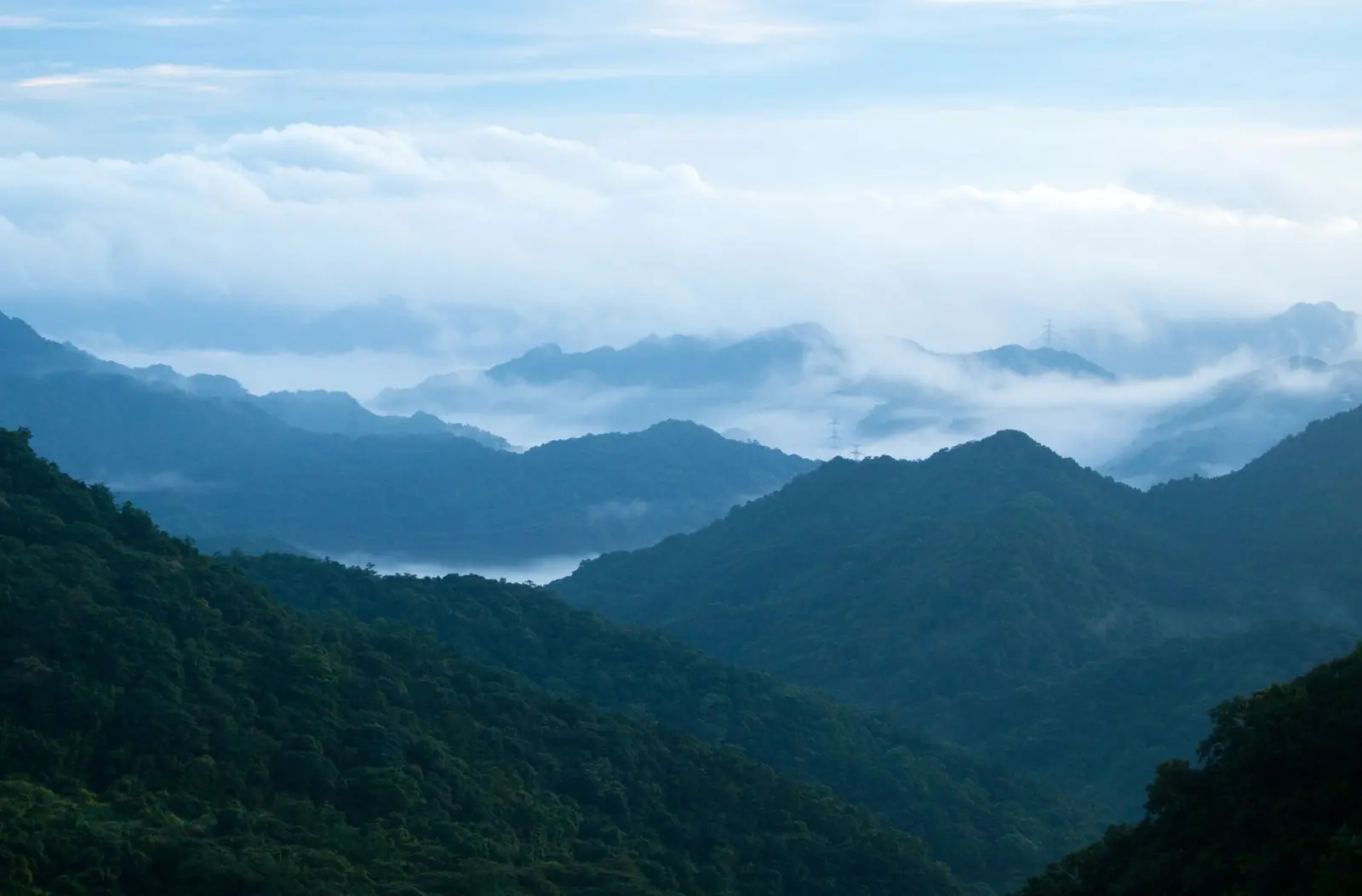
Temperature alone doesn’t tell the full story. As elevation increases, atmospheric pressure drops, which affects how plants and animals exchange gases and water. Humidity patterns also shift. Lowland rainforests are hot and humid, but the air moves. Higher elevations often trap moisture in clouds, creating what’s known as cloud forest. The canopy is constantly wet, not from rain alone but from the clouds themselves. This persistent dampness favors entirely different plant strategies. Epiphytes – plants that grow on trees without being parasitic – explode in diversity at higher elevations. Orchids, bromeliads, and mosses coat the branches. At sea level, these plants struggle because the air dries out between rain events. Higher up, they thrive.
The soil changes too. Lowland rainforests accumulate thick, nutrient-rich soils built from centuries of leaf litter breakdown. Higher elevations, especially above 2,000 meters, often have thinner, more acidic soils. Decomposition slows in the cold. Nutrients lock up in organic matter rather than cycling back into available forms. This means plants at higher elevations face different nutritional constraints than their lowland relatives. Some adapt by developing tougher, longer-lasting leaves. Others form symbiotic relationships with fungi to extract nutrients more efficiently. The entire nutrient economy of the forest shifts.
Animal communities respond in predictable ways
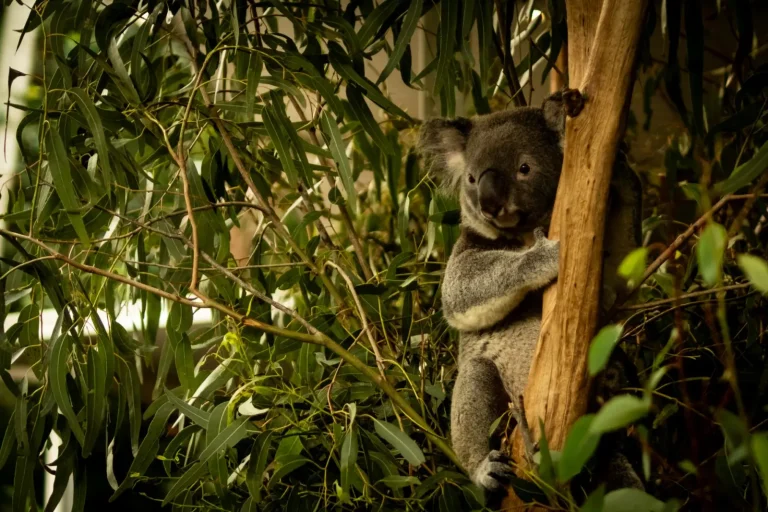
Vertebrates show the clearest patterns. Large-bodied mammals like jaguars and tapirs rarely venture above 1,500 meters in most tropical regions. Their high metabolic demands and heat-shedding challenges make the cooler highlands energetically expensive. Smaller mammals, particularly rodents and marsupials, diversify at higher elevations. Many are endemic – found nowhere else – because the altitude isolates populations. Birds follow similar rules. Hummingbirds in the Andes show dramatic turnover every few hundred meters. A species common at 1,200 meters might be completely absent at 1,500 meters, replaced by a different species adapted to the cooler conditions. Amphibians are perhaps the most sensitive. Frogs in particular seem to have narrow thermal windows. Many species found only in montane cloud forests have vanished in recent decades, likely due to warming and changes in cloud patterns.
Insects tell a more complex story. Diversity often peaks at mid-elevations rather than at the lowest or highest points. This isn’t because mid-elevation forests are inherently richer – it’s because they represent a transition zone where both lowland and highland species can coexist. Beetles, butterflies, and ants show this pattern repeatedly. Below this zone, lowland specialists dominate. Above it, highland specialists take over. The transition itself becomes a hotspot of diversity, though it’s often geographically narrow and vulnerable to disturbance.
Why elevation matters more than you’d expect
What makes elevation so powerful as a driver of biodiversity change is that it compresses multiple environmental gradients into a small geographic space. If you walk 10 kilometers horizontally in a lowland rainforest, you might see relatively little change in species composition. If you walk 10 kilometers upslope in a mountainous rainforest, you’ll pass through multiple distinct ecological zones. The lowland forest, the foothill forest, the submontane forest, the montane forest, and possibly the cloud forest – each with its own assemblage of species. This compression means that montane rainforests, despite covering far less area than lowland rainforests, often harbor disproportionate species richness and endemism.
The practical consequence is that elevation acts as a natural filter. Species are sorted by their physiological tolerances, their metabolic requirements, and their reproductive strategies. A plant that requires specific pollinators might disappear simply because those pollinators cannot survive at higher elevations. A predator that relies on hunting large prey becomes unviable when prey species thin out. These aren’t individual failures – they’re systematic incompatibilities between organisms and their environment.
Over time, this sorting creates distinct communities that are more similar to other forests at the same elevation thousands of kilometers away than to forests just a few hundred meters lower. A montane forest in Peru shares more in common with a montane forest in Cameroon than it does with the lowland forest at its own base. This convergence suggests that elevation is a more fundamental organizing principle than geography alone. The rules of what can live where are written by physics and physiology, not by latitude or longitude.