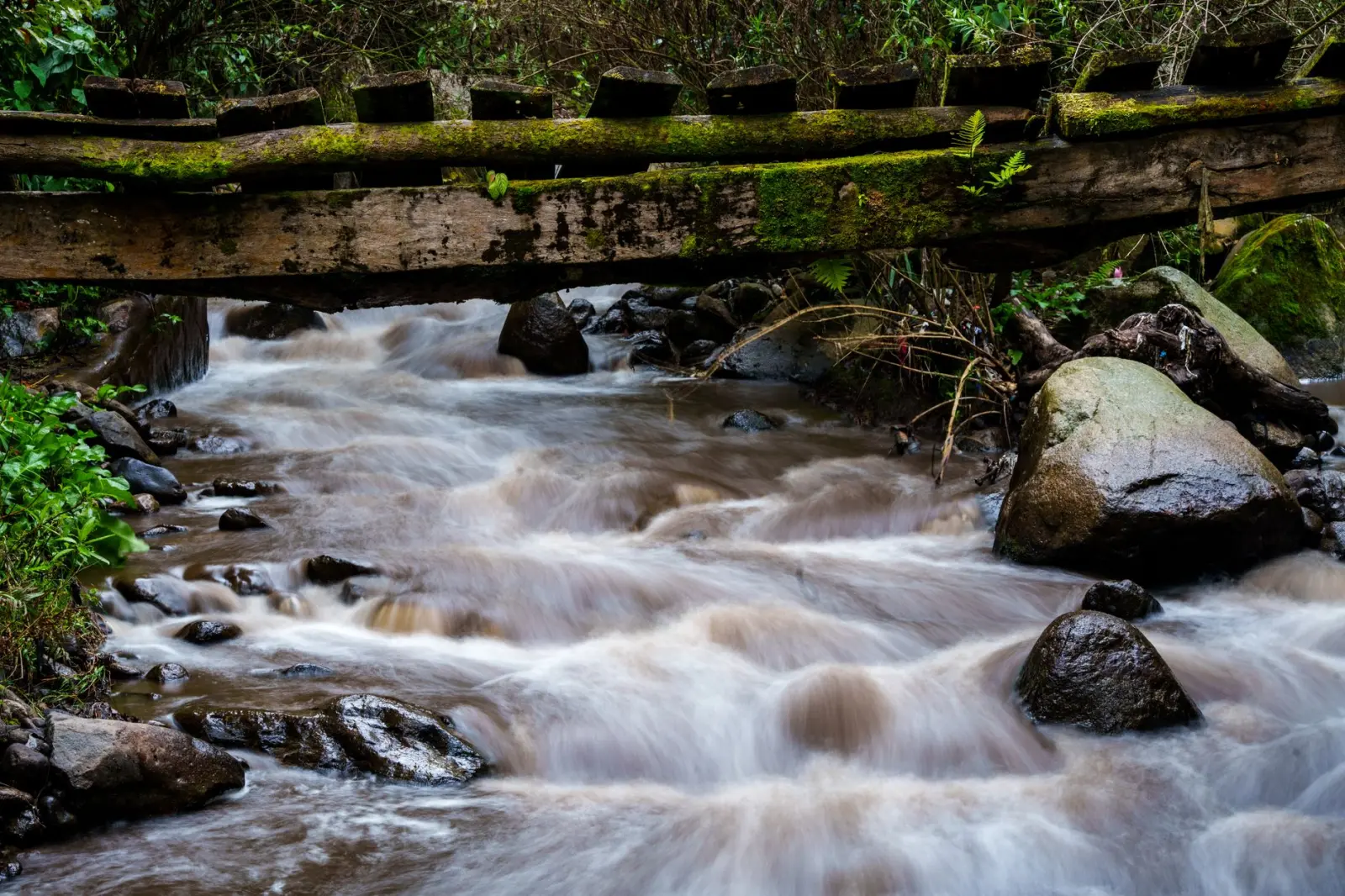
Spend enough time working in rainforest watersheds and you begin to notice something that field guides don’t always emphasize: the streams themselves are not incidental features. They are the organizing principle. The rare species clustered along them – frogs that exist in a handful of tributary systems, fish with ranges measured in kilometers, invertebrates that depend on specific water chemistry – are there because of what the stream provides, not despite the surrounding forest. The forest exists around the water; the species exist because of it.
I’ve tracked populations of endemic species across multiple rainforest regions, and the pattern is consistent. Rarity correlates with stream dependence. This isn’t coincidence. It’s a direct result of how rainforest hydrology works and what it demands of the organisms living within it.
Water Quality as a Limiting Factor
Rainforest streams are not generic flowing water. They are highly specialized chemical environments shaped by the forest canopy, soil composition, and the specific geology of their drainage basin. The water is typically acidic – often pH 4 to 6 – because of tannins leached from leaf litter and organic matter. This acidity excludes most generalist species but creates conditions that certain specialists have evolved to exploit.
The mineral content is also distinctive. Unlike streams in temperate forests or grasslands, rainforest streams often run low in calcium and other dissolved minerals. This affects everything from how fish develop scales to how aquatic invertebrates build their exoskeletons. A species adapted to these conditions cannot simply relocate to a different stream system with different water chemistry. The adaptation is too specific. I’ve observed populations of stream-dependent frogs decline sharply when upstream land use changed water pH or increased sediment load – changes that seemed minor on paper but were lethal in practice.
Temperature stability matters as much as chemistry. Rainforest canopy cover keeps stream temperatures remarkably consistent year-round, often varying by only a few degrees across seasons. Species living in these streams have narrow thermal tolerances. They don’t need the metabolic flexibility of species in seasonal climates. When the canopy is removed or thinned, temperature fluctuations increase, and endemic species begin to disappear within months, sometimes weeks.
Microhabitat Specificity and Isolation
Rarity in rainforest streams often stems from extreme microhabitat specificity. A species might depend on a particular type of substrate – smooth rocks in fast-flowing sections, leaf litter in slow pools, or moss-covered boulders in spray zones. These microhabitats exist in patches, not continuously. A species requiring moss-covered rocks in fast water exists only where that exact combination occurs. If a landslide or flood event changes the substrate composition, that population may be eliminated.
Geographic isolation amplifies this problem. Rainforest stream systems are often separated by ridges or areas of unsuitable habitat. A species endemic to one tributary system cannot easily colonize another system a few kilometers away, even if conditions seem similar. The barriers are real: terrestrial forest, altitude changes, or simply the absence of flowing water connecting the systems. Over evolutionary time, this isolation leads to divergence. Each isolated stream population accumulates unique traits, becomes genetically distinct, and loses the ability to interbreed with populations in other systems. The result is high endemism – many species with very small ranges.
I’ve documented cases where two stream systems separated by less than five kilometers support entirely different assemblages of endemic species. The physical distance is trivial, but for stream-dependent organisms, it might as well be a continental divide.
Nutrient Cycling and Food Web Dependency
The productivity of rainforest streams depends on nutrient inputs from the surrounding forest. Leaf fall, insect emergence, and organic matter from the canopy fuel the stream ecosystem. This is not a minor contribution – it’s the foundation of the food web. Aquatic invertebrates, small fish, and amphibians all depend on this steady supply of organic material.
The insects are particularly important. Mayflies, caddisflies, and other aquatic insects emerge from rainforest streams in pulses tied to seasonal rainfall and canopy phenology. Specialized predators – birds, bats, stream-dwelling frogs – have synchronized their breeding and feeding to these pulses. A species that breeds only during peak mayfly emergence is locked into that timing. If forest disturbance disrupts the timing of leaf fall or changes water flow patterns, the mismatch can be catastrophic.
Decomposition rates in rainforest streams are also unusual. The warm, humid conditions and high microbial activity mean organic matter breaks down quickly. This means nutrients cycle rapidly, but it also means the stream is sensitive to changes in input. If upstream deforestation reduces leaf fall by even 20 percent, the entire food web feels the effect. Species with specialized diets or narrow energy budgets are the first to disappear.
Breeding Requirements and Life Cycle Constraints
Many rare rainforest species have complex life cycles tied directly to stream conditions. Amphibians are the most obvious example. Many tropical frogs breed in specific stream microhabitats – splash zones on rocks, seepage areas, or particular types of leaf litter pools. Some species lay eggs in water; others lay eggs on leaves overhanging streams, and tadpoles must reach the water to develop. The tadpole stage itself often lasts months and depends on specific water conditions and food availability.
A species that breeds only in fast-flowing sections with high oxygen content cannot breed in still pools. A species whose tadpoles feed on algae growing on specific rock types cannot breed in streams lacking those rocks. These constraints are not flexible. They are the result of thousands of generations of adaptation to particular stream conditions. When those conditions change, breeding fails. Populations decline. Rarity becomes extinction.
I’ve observed breeding failures in endemic frog populations following relatively minor changes to stream flow – changes caused by upstream water extraction or altered rainfall patterns. The frogs were present in the stream, but they could not breed successfully. Within a few years, the population aged out and disappeared.
Vulnerability to Cumulative Disturbance
The fragility of rainforest stream ecosystems stems not from any single factor but from the combination of specificity and isolation. A species adapted to a narrow range of conditions in a small geographic area has no buffer against disturbance. Habitat loss, water pollution, altered hydrology, invasive species, or climate-driven changes to rainfall patterns each represent a potential extinction trigger.
What makes this particularly challenging is that disturbances often interact. Deforestation increases water temperature and sediment load while reducing nutrient input. Dams alter flow patterns while fragmenting populations. Invasive fish species compete for food while predating on endemic invertebrates. A species might tolerate any one of these changes in isolation, but the combination is often lethal.
The rarity of these species is not an accident or a curiosity. It reflects the extreme specificity of their ecological requirements and the isolation of their habitat. Rainforest streams support rare species because they are rare – they exist nowhere else because they are perfectly adapted to conditions that exist nowhere else. Understanding this relationship is essential for any meaningful conservation effort. The species cannot be saved by moving them to new streams or by breeding them in captivity. They can only be saved by protecting the streams that made them.