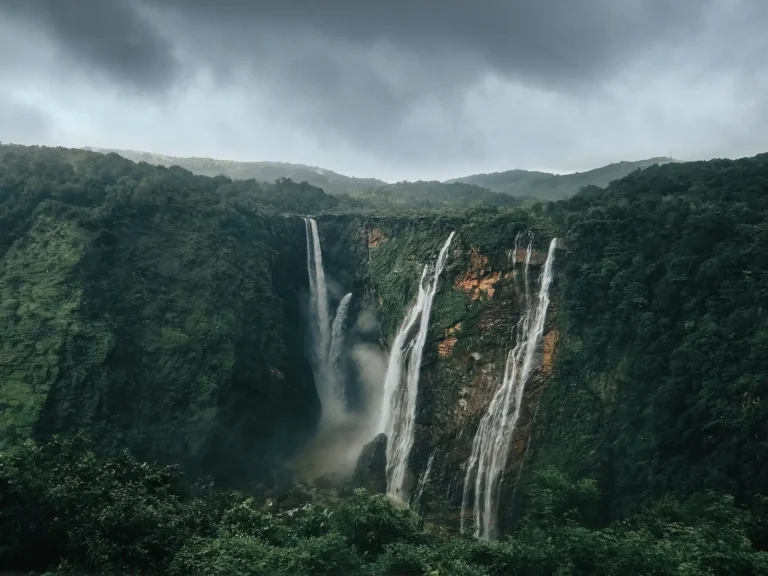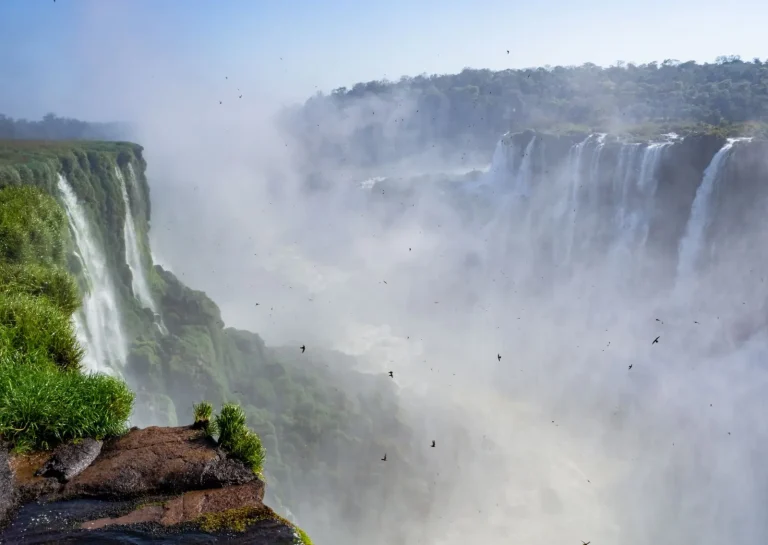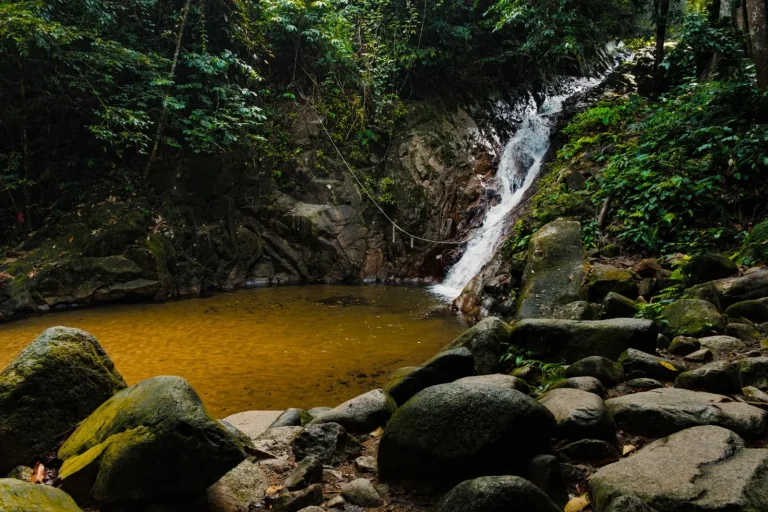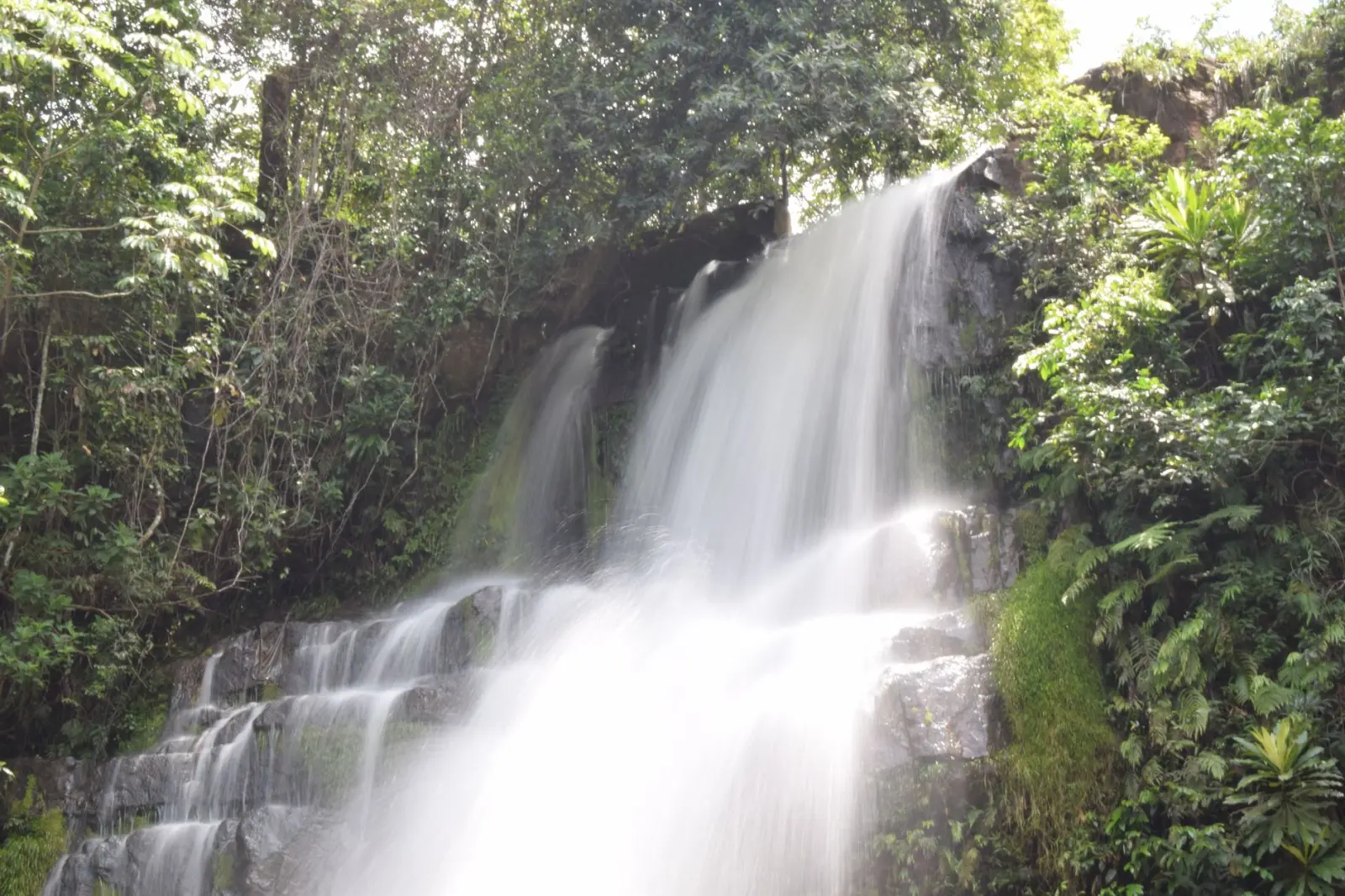
Spend enough time near rainforest waterfalls, and you start to notice something that most casual visitors miss: they’re not stationary features. A waterfall you see today exists in a slightly different location than it did fifty years ago, or five hundred. The common assumption is that waterfalls are permanent fixtures carved into the landscape, but the reality is messier and more dynamic. They migrate. They retreat. They reshape themselves through a combination of hydraulic force, rock composition, and the sheer persistence of moving water.
I’ve tracked this process across several rainforest systems in Southeast Asia and Central America, and the mechanics become clearer once you know what to look for. The retreat of a waterfall upstream is not a dramatic event. It happens in increments so small that a single human lifetime rarely captures a meaningful shift. But the evidence is everywhere if you examine the rock faces, the plunge pools, and the debris patterns around the falls themselves.
The Basic Mechanism: Plunge Pool Deepening and Headwall Collapse
A waterfall exists because water drops from a higher elevation to a lower one, typically where softer or more fractured rock meets more resistant layers. The falling water doesn’t just dissipate energy; it concentrates enormous force into a relatively small area at the base. This creates a plunge pool – a depression in the streambed where the water swirls and churns with tremendous turbulence.
The plunge pool is where the real work happens. Water, armed with sediment and small rocks, acts as an abrasive medium. It scours the pool bottom, widening and deepening it over years and decades. As the plunge pool grows deeper, the water column falls farther, and the impact force increases. This feedback loop accelerates erosion. The waterfall doesn’t retreat because the water flows backward; it retreats because the rock at the base of the falls is being worn away faster than the rock upstream.
Eventually, the deepening plunge pool undermines the rock face directly above it. The headwall – the vertical or near-vertical rock face that forms the visible drop – loses support from below. Stress fractures develop. Water seeps into cracks, freezes during cool nights in higher elevations, and expands, widening the fractures further. Blocks of rock become unstable. When failure occurs, chunks of the headwall collapse into the plunge pool, and the waterfall’s edge moves upstream. The process repeats.
Rock Type Determines the Pace
Not all rainforest waterfalls retreat at the same rate. The geology matters enormously. In areas where the bedrock is primarily basalt or other volcanic rock, retreat happens slowly. Basalt is dense and resistant to erosion. I’ve observed basalt-based falls that show minimal change over decades of observation. The plunge pools deepen, yes, but the headwall remains relatively stable.
Granite and metamorphic rocks present a different scenario. They’re harder than many sedimentary rocks, but they fracture along planes of weakness. When water exploits these planes, failure can be more sudden. A granite waterfall might seem unchanged for years, then a section of the headwall will collapse unexpectedly after a season of heavy rainfall.
Sandstone and shale are the wild cards. In rainforests with significant sandstone formations, waterfall retreat accelerates noticeably. These rocks erode more readily, and the plunge pools deepen quickly. I’ve documented cases where sandstone-based waterfalls shifted measurably upstream over a fifteen-year span. The headwall becomes undercut rapidly, and collapses occur more frequently. The waterfall doesn’t just retreat; it tends to become less stable, with loose blocks and dangerous conditions common.
Layered Rock and Differential Erosion
Many rainforest waterfalls exist at boundaries between different rock layers. A cap of harder rock sits above softer material, or vice versa. This layering creates the conditions for waterfall formation in the first place, but it also determines how the waterfall will evolve.
When softer rock underlies a harder cap, the waterfall retreats by undercutting. Water erodes the softer material beneath, leaving the harder rock unsupported. The cap eventually breaks and falls. This process can create a distinctive stepped appearance as the waterfall retreats in discrete jumps rather than smoothly. I’ve seen this pattern in several Central American rainforest systems where limestone caps overlie shale.
The reverse situation – soft rock above hard rock – creates different dynamics. The softer material erodes more evenly, and the waterfall tends to retreat more gradually. The headwall becomes lower and less dramatic over time, and the waterfall may eventually transition into a series of cascades rather than a single drop.
Climate and Seasonal Flow Patterns
Rainfall intensity and seasonality affect retreat rates significantly. Rainforests with pronounced wet and dry seasons experience different erosion patterns than those with more consistent precipitation. During the wet season, increased water volume and velocity accelerate plunge pool deepening. Debris loads increase, adding to the abrasive power of the water.
Dry seasons matter too, though in ways less obvious. When water volume decreases, the plunge pool may drain partially or completely. Exposed rock dries out and becomes more brittle. Freeze-thaw cycles, common in higher-elevation rainforest waterfalls, become more effective. The rock weakens, and when the rains return and the plunge pool refills, failure becomes more likely.
I’ve noticed that waterfalls in rainforests with extreme seasonal variation show more dramatic retreat patterns than those in regions with year-round moisture. The constant stress cycling – wet, dry, wet, dry – fatigues the rock more effectively than steady erosion alone.
What the Landscape Tells You
The evidence of waterfall retreat is written into the landscape itself. Look for a series of abandoned plunge pools upstream of the current waterfall. These are relics of previous waterfall positions. The rock around them shows smoothing and rounding from past water action, but no active erosion is occurring. They’re frozen in time, marking where the waterfall stood decades or centuries ago.
Examine the headwall closely. Fresh rock faces, lighter in color than surrounding stone, indicate recent collapse. Lichen and moss growth patterns show which surfaces have been stable long enough for biological colonization. A headwall covered in dense moss has been in place for years; one with bare, weathered rock is younger.
The plunge pool itself reveals its age and activity. A deep, well-defined pool with smooth walls suggests active erosion. A shallow pool with accumulated sediment indicates slower retreat or recent collapse that has filled the depression with debris.
Water flow patterns around the waterfall base tell their own story. If the water spreads out widely at the base rather than concentrating in a single plunge pool, the waterfall may be in transition – either widening as it retreats, or becoming less stable as the headwall fractures.
Rainforest waterfalls are not permanent landmarks, despite their appearance of timeless stability. They’re dynamic features engaged in a slow, relentless conversation with the rock beneath them. Understanding this process changes how you interpret the landscape. You begin to see not just the waterfall as it exists today, but the trajectory it’s on – where it came from and where it’s heading. The retreat is measured in human terms, but it’s happening nonetheless, driven by physics, geology, and the patient persistence of flowing water.