
After spending years working in and around tropical rainforests that have experienced everything from selective logging to hurricane damage to agricultural abandonment, I’ve learned that recovery is neither straightforward nor uniform. The word “recovery” itself is misleading because it implies a return to some previous state, when in reality what emerges is often a different forest altogether – one shaped by what was lost, what survived, and what moves in first.
The initial response to disturbance happens fast. Within weeks of a major canopy gap – whether from a fallen tree, storm damage, or logging – the forest floor changes dramatically. Light penetrates deeper. Soil temperature rises. Humidity drops slightly. These physical changes trigger a cascade of biological responses that most people never witness because they don’t spend enough time in recovering forests to see the progression. Seeds that have been dormant in the soil for years suddenly germinate. Pioneer species, the aggressive fast-growing plants that seem to appear from nowhere, actually emerge from existing seed banks or arrive as wind-dispersed seeds from nearby intact forest.
What’s often overlooked is that pioneer species aren’t a problem to be solved – they’re a necessary stage. I’ve watched foresters and conservationists express frustration at the dominance of fast-growing, light-demanding species like Cecropia, Vismia, and various pioneer palms in recently disturbed areas. But these plants do critical work. They stabilize exposed soil, reduce erosion, create shade that moderates temperature and humidity, and their leaf litter begins rebuilding soil organic matter. Without this pioneer phase, recovery would stall.
The Role of Remaining Forest Structure
The trajectory of recovery depends heavily on what remains standing. A forest that has lost 30 percent of its canopy through selective logging behaves very differently from one that has been completely cleared and then abandoned. In selectively logged areas, mature trees still present create a framework that influences everything downstream. Their root systems remain intact, holding soil. Their seed production continues, albeit reduced. Their presence shapes microclimate and creates refugia for animals that would otherwise disappear entirely.
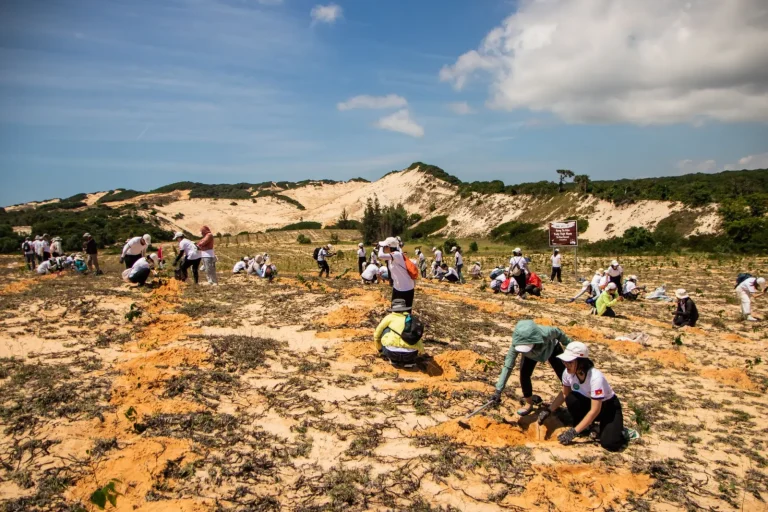
I’ve observed that forests recovering from complete clearing take substantially longer to develop structural complexity. A completely cleared site starts from near-zero in terms of soil fauna, mycorrhizal networks, and seed sources. Recovery can take 20 to 40 years just to reach the point where you have recognizable forest structure – a layered canopy with distinct strata. In contrast, selectively logged forests often show measurable recovery in biomass within 15 to 20 years, partly because the foundation never fully collapsed.
Proximity to intact forest matters enormously. I’ve worked in recovering forests adjacent to protected areas and in isolated recovering patches surrounded by pasture or agriculture. The difference is stark. Forests near intact source populations receive a constant influx of seeds, animals, and biological connectivity. Isolated recovering forests develop more slowly and often stabilize at lower biodiversity levels because colonization is limited. A howler monkey population can’t reestablish in a recovering forest if the nearest source population is 50 kilometers away.
Soil Recovery and Hidden Timescales
Above-ground recovery is visible and measurable. Soil recovery is slower and largely invisible, which is why it’s frequently underestimated. Tropical soils in rainforests are often nutrient-poor, with most nutrients locked up in living biomass rather than in the soil itself. When a forest is cleared or heavily disturbed, this nutrient capital is either exported or rapidly lost to leaching and erosion. Rebuilding soil fertility takes decades.
The mycorrhizal networks that connect trees belowground are particularly slow to reestablish. These fungal associations are essential for nutrient uptake, especially in poor tropical soils. In a mature rainforest, these networks are ancient and extensive. In a recovering forest, they’re being rebuilt from scratch. I’ve seen soil samples from recovering forests show mycorrhizal colonization rates far below those in intact forest, even 30 years into recovery. This constraint limits how quickly trees can grow and how much biomass can accumulate.
Compacted soil from heavy machinery or repeated foot traffic is another often-underestimated problem. Soil compaction reduces water infiltration, increases runoff, and limits root penetration. In recovering forests that have experienced logging or agricultural use, this compaction can persist for 15 to 20 years or longer. I’ve watched areas that were logged decades ago still show signs of soil degradation in their vegetation structure and growth rates.
Animal Recolonization and Trophic Gaps
Vegetation recovery and animal recovery are not synchronized. A recovering forest might develop a recognizable canopy structure within 20 years, but large mammal populations – jaguars, tapirs, peccaries – take much longer to return, if they return at all. This creates a temporal mismatch where the forest looks structurally recovered but functions very differently ecologically because key species are absent.
The loss of large animals during disturbance has cascading effects that persist through recovery. Without large herbivores and seed dispersers, plant composition shifts. Seeds that would normally be transported by animals accumulate near parent trees. Vegetation patterns become clumped rather than dispersed. Without large predators, smaller predator and mesopredator populations can explode, altering the entire food web. These changes don’t automatically reverse once the forest regrows.
I’ve noticed that recovering forests often develop an unusual abundance of certain plant species that are normally kept in check by herbivory. Palms, for instance, proliferate in recovering forests because the large herbivores that would browse them are gone. This creates a forest that is structurally similar to intact forest but compositionally distinct. Over very long timescales – 50 to 100 years or more – animal populations may gradually reestablish if source populations exist nearby and the forest provides adequate habitat. But this is a slow process, and many recovering forests never achieve full faunal recovery.
Disturbance History and Recovery Pathways
Different types of disturbance set forests on different recovery trajectories. A forest that experiences a single hurricane recovers differently than one subjected to repeated logging cycles. Repeated disturbance prevents the forest from reaching advanced recovery stages. I’ve observed forests in regions with frequent logging that never develop beyond early-successional structure because the disturbance interval is shorter than the time needed for structural recovery.
Fire is particularly transformative. In rainforests where fire is not a natural disturbance, even a single fire event can fundamentally alter recovery pathways. Fire-adapted species invade, soil properties change, and the forest may shift toward a more open, fire-prone system. Recovery from fire in rainforest is often incomplete because the disturbance has altered the conditions that favor rainforest regeneration in the first place.
Agricultural abandonment creates its own recovery pattern. Fields that have been cultivated and then abandoned often recover faster than logged forests because soil structure, though degraded, remains more intact than in heavily mechanized logging operations. However, agricultural soils are often depleted in nutrients and may have altered pH. Invasive species from cultivation sometimes persist and slow native forest recovery. I’ve seen abandoned cacao plantations recover to recognizable forest within 25 to 30 years, while heavily logged areas took longer to reach similar structural stages.
The reality of rainforest recovery is that it’s a long, uneven process shaped by what was lost, what remains, and what arrives next. There’s no single recovery timeline because the variables are too numerous and site-specific. What I’ve consistently observed is that recovery is possible, but it’s rarely a simple return to the previous state. Instead, recovering forests develop their own character – often productive and biodiverse, but structurally and functionally distinct from what preceded the disturbance. Understanding this distinction is critical for realistic expectations about restoration and long-term forest management.