
Spending time in Australian rainforests teaches you quickly that kingfishers are not what most people expect them to be. The image of a kingfisher perched over water, waiting to dive for fish, works well enough in temperate zones, but in the rainforests of northeast Australia, the reality is messier and more interesting. I’ve spent enough time tracking these birds through the wet tropics to know that their behavior shifts dramatically depending on which species you’re watching, what time of year it is, and how the forest itself is functioning.
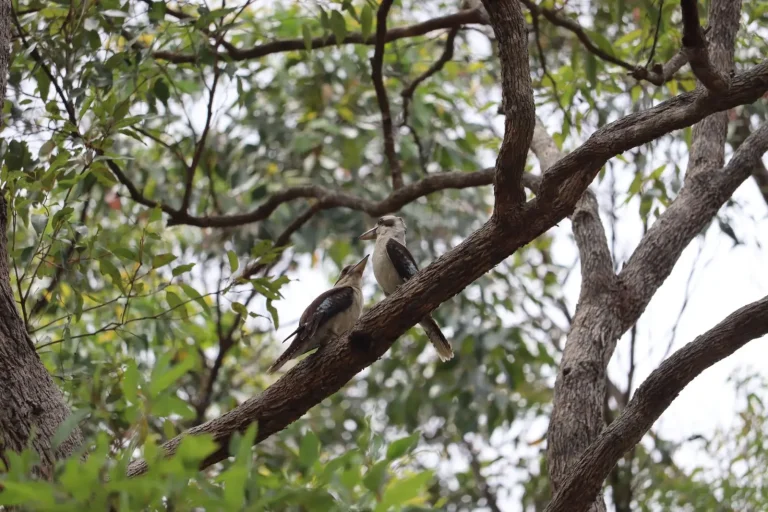
The most common assumption visitors make is that all kingfishers are aquatic hunters. This works for some species here, but it misses the point entirely for others. The Azure Kingfisher, for instance, does hunt in water, but it’s a specialist of small streams and creeks where visibility is limited. You won’t see it hovering over open water like a Eurasian Kingfisher. Instead, it perches low on branches overhanging dark water, and the hunting technique is more about patience and quick strikes than dramatic dives. The Laughing Kookaburra, which is technically a kingfisher despite its terrestrial habits, hunts snakes, lizards, and insects on the forest floor and in leaf litter. Watching one work through the understory is completely different from watching an Azure hunt.
Seasonal Patterns and Breeding Cycles
The timing of kingfisher activity in rainforests follows the broader rhythm of the wet and dry seasons, though this rhythm is less dramatic in the tropics than it is further south. What I’ve noticed is that breeding activity tends to intensify in the late dry season and early wet season, roughly September through December. This is when pairs become territorial and vocal. The Laughing Kookaburra’s famous call, which sounds like human laughter, becomes more frequent during this period. It’s not random vocalizing – it’s boundary marking and pair bonding.
During the wet season proper, when rainfall is heavy and consistent, food availability increases significantly. For the insectivorous species like the Sacred Kingfisher, this abundance means more foraging opportunities and less time spent perching and waiting. For species that hunt small vertebrates, the wet season brings increased movement in the leaf litter and understory, making prey easier to locate. The dry season reverses this. Food becomes more concentrated and harder to find, which changes kingfisher behavior noticeably. They range more widely, spend longer perching, and become less vocal overall.
Habitat Preferences and Microhabitats
Not all rainforest is the same to a kingfisher. I’ve learned to read the forest in terms of what different species need. The Azure Kingfisher requires permanent flowing water with overhanging vegetation. You find it on creeks that run year-round, not seasonal streams. The presence of a suitable creek is non-negotiable for this species. The Laughing Kookaburra, by contrast, is flexible about habitat as long as there’s open ground to hunt on and tall trees for roosting and nesting. It’s equally at home in dense rainforest, open woodland, and even suburban gardens.
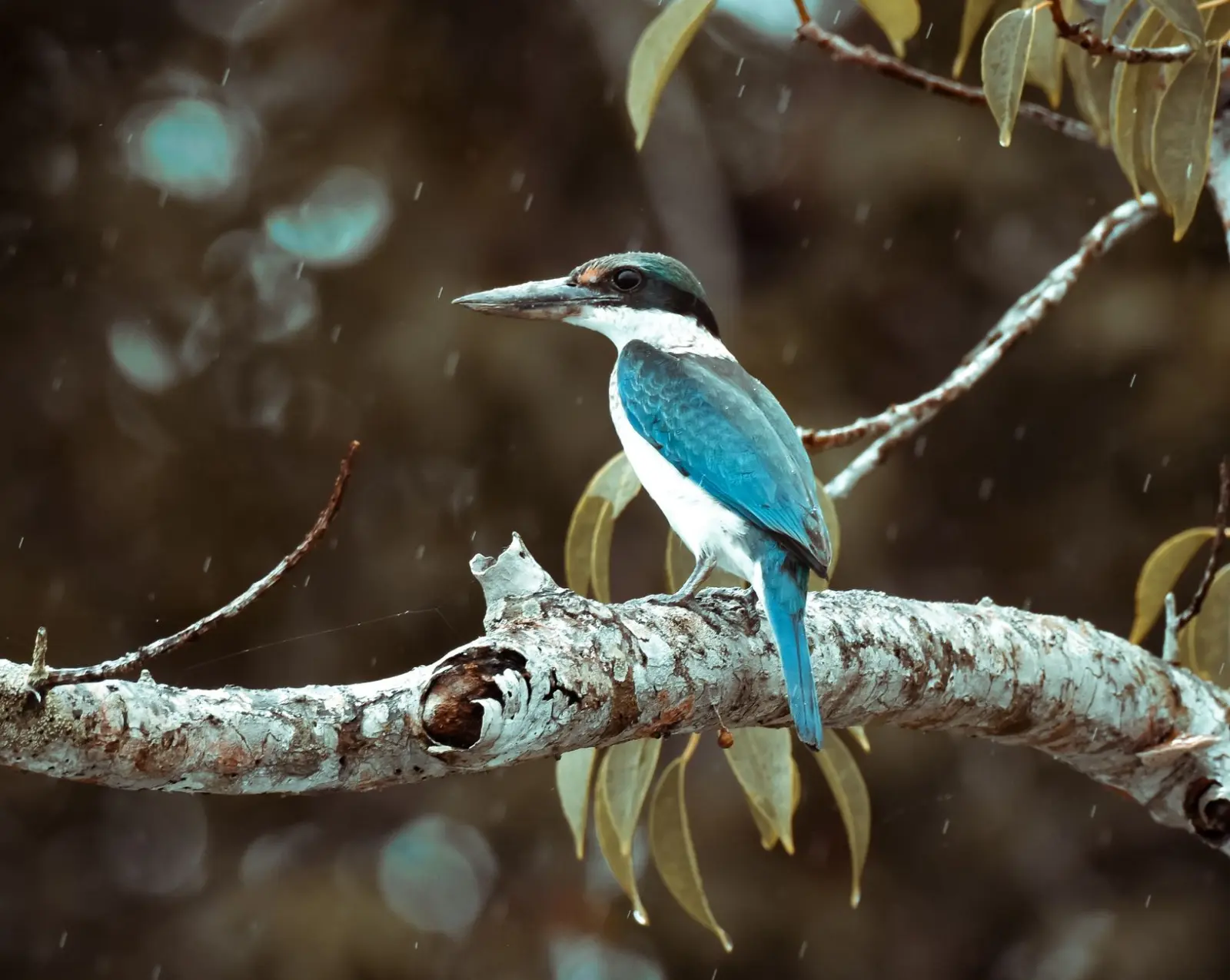
The Sacred Kingfisher is perhaps the most adaptable. It hunts insects and small reptiles from a variety of perches – branches, rocks, even power lines at the forest edge. It doesn’t require water at all, though it will use it opportunistically. What it does need is good sightlines to spot moving prey. This is why you often find Sacred Kingfishers at forest edges, in clearings, and along watercourses where vegetation is less dense.
Nesting habitat matters just as much as foraging habitat. The Azure Kingfisher nests in burrows in creek banks, which limits its distribution to areas where suitable banks exist. The Laughing Kookaburra nests in tree hollows, which means it depends on old-growth forest or scattered large trees with cavities. The Sacred Kingfisher also nests in burrows, but it’s less particular about the substrate – it will use creek banks, termite mounds, or even man-made structures like earthen banks created by road cuts.
Behavioral Observations and Feeding Ecology
One thing that becomes clear when you watch kingfishers regularly is that their hunting success varies dramatically based on conditions and time of day. Early morning is typically more productive than late afternoon. Water temperature affects prey activity in aquatic hunters, and humidity affects insect movement in terrestrial hunters. I’ve noticed that Azure Kingfishers are most active in the first few hours after dawn and again in late afternoon. Midday is a rest period. The Laughing Kookaburra, being larger and more generalist, hunts throughout the day but with reduced intensity during the hottest hours.
Prey size is constrained by body size, which seems obvious but has real implications for what you observe. The Azure Kingfisher catches small fish and aquatic invertebrates, rarely anything larger than a few centimeters. The Sacred Kingfisher takes insects and small reptiles, occasionally small mammals. The Laughing Kookaburra takes larger prey – snakes up to a meter long, lizards, large insects, and small mammals. This size difference means the hunting techniques are completely different. The Azure is a precision hunter. The Kookaburra is a power hunter that relies on strength and sharp talons.
Interspecific competition is minimal because the species occupy different niches. I’ve never observed direct conflict between Azure Kingfishers and Sacred Kingfishers despite both being present in the same rainforest areas. They hunt different prey, at different times, in different microhabitats. The Laughing Kookaburra is larger and more dominant, but it doesn’t compete directly with the smaller species because it hunts larger prey and uses different foraging sites.
Challenges and Ecological Sensitivity
Rainforest kingfishers are sensitive to habitat degradation in specific ways. The Azure Kingfisher is the most vulnerable because it depends on permanent flowing water and intact riparian vegetation. Clearing along creeks, dam construction, or changes to water flow patterns affect this species directly. I’ve seen Azure populations decline noticeably in areas where creek-side vegetation has been cleared or where water flow has been altered. The Sacred Kingfisher is more resilient but still requires some open foraging habitat. In heavily logged rainforest where the understory is dense and there are few open spaces, Sacred Kingfisher densities drop.
The Laughing Kookaburra, being generalist and adaptable, is the least vulnerable. It persists in fragmented rainforest, woodland, and even urban areas. This adaptability has allowed it to expand its range over the past century, particularly in southern Australia where it was introduced.
Observing kingfishers in Australian rainforests requires patience and attention to detail. You need to learn the different species, understand what they need from the forest, and recognize the seasonal and daily rhythms that govern their activity. This is not exotic birdwatching – it’s ecological observation. The kingfishers are indicators of broader rainforest health. Their presence, absence, or behavioral changes tell you something real about the forest’s condition.