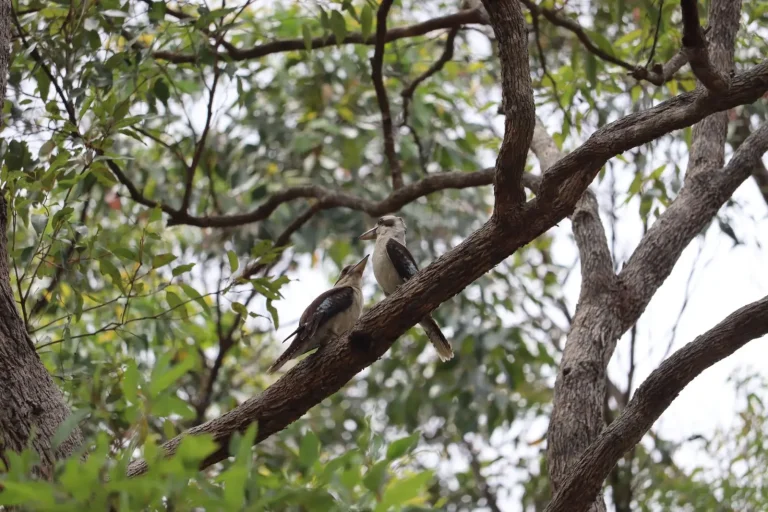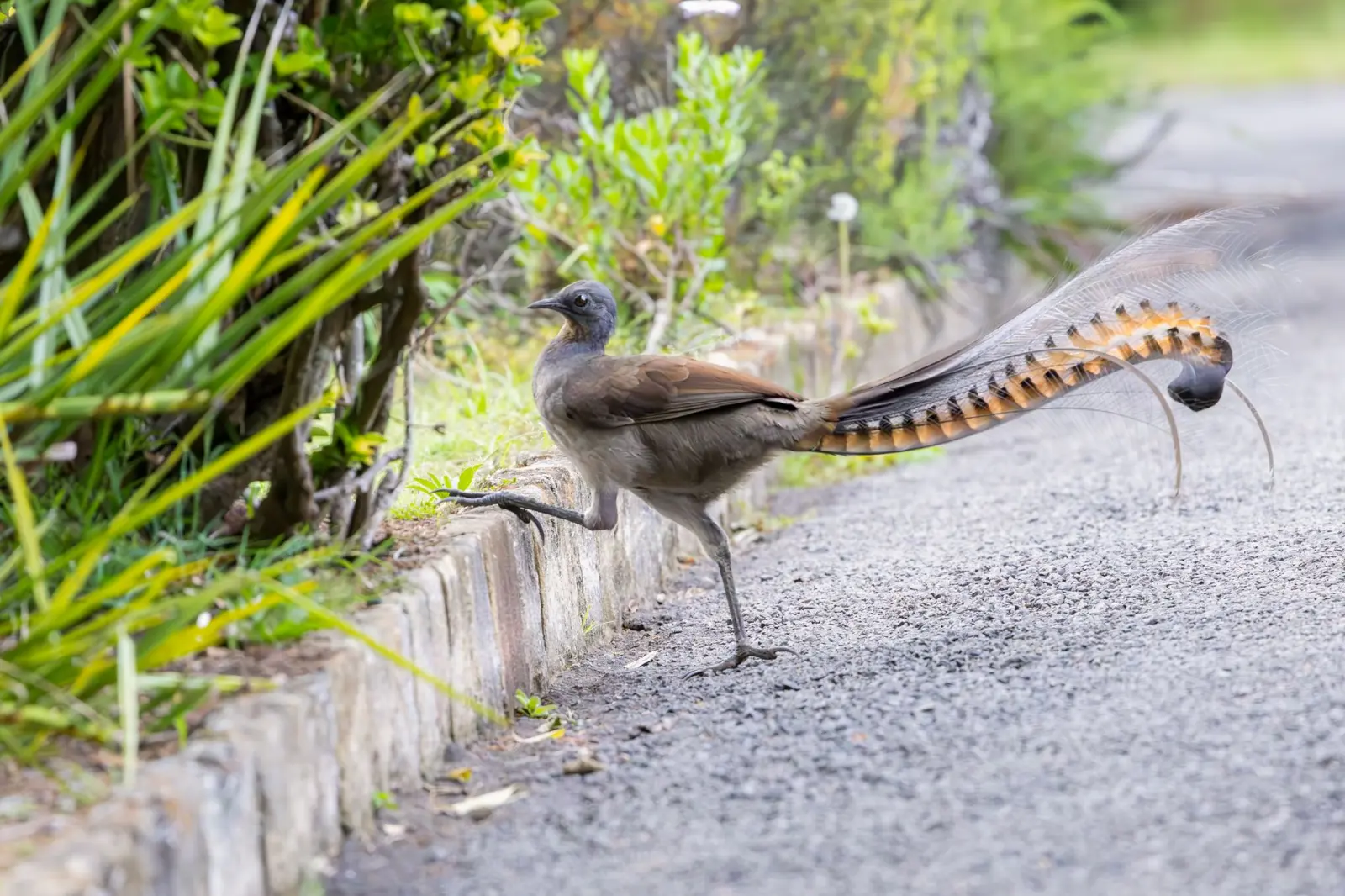
Spending time in Australian rainforests teaches you quickly that the soundscape is rarely what it initially appears to be. What sounds like a kookaburra’s laugh or a whipbird’s crack might be a lyrebird sitting thirty metres away, utterly still except for the occasional tail movement. After years of moving through these forests – tracking birds, recording calls, waiting in humid clearings – I’ve come to recognize that lyrebirds operate differently from most animals. Their vocal capacity isn’t just an evolutionary advantage; it’s become their primary way of understanding and claiming their territory.
The Australian lyrebird, found across southeastern rainforests and wet sclerophyll woodlands, possesses a syrinx – the avian equivalent of vocal cords – that functions with remarkable independence between its two sides. This anatomical quirk allows them to produce two distinct sounds simultaneously, something most songbirds cannot do. In practice, this means a lyrebird can create harmony with itself, layer calls, and generate acoustic complexity that sounds like multiple birds calling at once. The first time you hear this happen close enough to see the bird’s body remain motionless while the sound seems to come from different directions, the effect is genuinely disorienting.
How Mimicry Develops in Young Birds
Young male lyrebirds don’t emerge from the egg with their full vocal repertoire intact. They learn, much like human children acquiring language, though the timeline is compressed and the stakes are territorial survival. Juvenile birds spend their first year or more listening intently to their environment – to other lyrebirds, to the broader rainforest soundscape, and particularly to their father if he remains nearby. The learning phase is passive but deliberate. I’ve watched young birds sit motionless for extended periods, apparently doing nothing but listening.
The imitation process accelerates once a young male reaches maturity and begins establishing his own territory. At this point, the bird’s motivation shifts from passive learning to active performance. He needs to advertise his presence, establish boundaries, and eventually attract females. The calls he’s absorbed become his toolkit. What’s striking is the precision with which they reproduce sounds. A lyrebird mimicking a specific bird species doesn’t just approximate the call; it captures the timing, the frequency modulation, the subtle variations that distinguish one individual’s call from another’s. This level of fidelity suggests the bird isn’t simply playing back a recording – he’s understanding the acoustic structure and recreating it with intention.
The Rainforest Acoustic Environment
The wet sclerophyll and rainforest environments where lyrebirds live present specific acoustic challenges that their mimicry ability helps them navigate. These forests are dense, with heavy vegetation that absorbs and scatters sound. A call that travels clearly in open woodland gets fragmented and distorted in thick forest. Lyrebirds seem to have adapted to this by incorporating a wide range of frequencies into their repertoire. They use high-pitched components that cut through foliage, lower frequencies that carry further through dense undergrowth, and mid-range calls that work across variable distances. When a lyrebird mimics the calls of other species, he’s essentially borrowing acoustic strategies refined by those birds for survival in the same environment.
Territory size for lyrebirds is substantial – often several hectares – and maintaining acoustic presence across that area requires more than a single call type. By incorporating dozens of different species’ calls into his performance, a male lyrebird creates the acoustic impression of a more densely populated territory. To a listening female or a rival male, the soundscape suggests a thriving, established ecosystem rather than a single bird’s domain. This is where the mimicry becomes strategic rather than merely decorative. The bird isn’t showing off for show’s sake; he’s using acoustic diversity as a territorial tool.
Seasonal Intensity and Performance Patterns
Lyrebird calling intensity follows a clear seasonal rhythm tied to breeding cycles. Outside the breeding season, males call less frequently and with less complexity. Come autumn and into winter, as breeding season approaches, the calling intensifies dramatically. A male will establish a small performance area – often a cleared patch of forest floor or a fallen log – and spend hours each day running through his repertoire. These performances aren’t random. The bird typically cycles through his calls in a semi-structured sequence, sometimes repeating sections, sometimes introducing new combinations.
The physical effort involved in these performances is real. Sustained vocalization at high volume depletes energy reserves. I’ve observed males taking breaks between intense calling bouts, sitting quietly for several minutes before resuming. During peak breeding season, a territorial male might spend five to eight hours daily calling. That’s exhausting work, and it shows in the bird’s behaviour – slightly reduced feeding activity, less movement through the territory, visible fatigue in the afternoon hours. The investment reflects the stakes. Failing to maintain an audible presence means losing territory to rivals or failing to attract females.
Mimicry Beyond Simple Imitation
What complicates the narrative around lyrebird mimicry is that the birds don’t simply reproduce other species’ calls in isolation. They remix them. A lyrebird might combine the opening phrase of a kookaburra’s call with the middle section of a currawong’s song, then transition into a fragment of a whipbird’s crack. These aren’t errors or random combinations. They appear to be deliberate constructions that create novel acoustic sequences. Some researchers suggest this represents a form of creative expression, though I’m cautious about projecting human concepts onto animal behaviour. What’s clearer is that the bird is manipulating acoustic material with sophistication, not merely replaying stored recordings.
The incorporation of non-bird sounds into lyrebird repertoires adds another layer. In areas near human activity, lyrebirds have been documented mimicking chainsaws, car alarms, camera shutters, and mobile phone ringtones. These aren’t mistakes or signs of confusion. The birds integrate these sounds into their regular calling sequences with the same precision they apply to natural calls. In some cases, the mimicked human-made sounds appear to serve the same territorial function as bird calls – they’re loud, distinctive, and carry across distance. A chainsaw sound, after all, is acoustically similar to the high-intensity calls of some rainforest birds.
The practical reality of studying lyrebirds in their rainforest habitat is that you spend considerable time listening and very little time seeing. The birds are cryptic, often remaining hidden in dense undergrowth even when calling intensely. The forest’s acoustic complexity means that pinpointing a bird’s exact location by sound alone is genuinely difficult, even for experienced observers. The bird’s own mimicry adds to this challenge. You hear what sounds like a kookaburra and move toward it, only to realize as you get closer that the sound is coming from a different direction than expected, or that the bird is actually a lyrebird performing a kookaburra imitation from an unexpected location. This is the forest on its own terms – complex, layered, and resistant to simple interpretation.