Watching rainforest birds over multiple seasons reveals something that doesn’t fit neatly into simple cause-and-effect narratives. The relationship between fruiting cycles and bird movement is real and measurable, but it operates within constraints that most casual observers miss. Birds don’t simply arrive when fruit appears. Instead, they exist within a complex web of timing, competition, and physiological readiness that makes their responses far more nuanced than a simple stimulus-response model would suggest.
After years of tracking bird populations across fruiting events, I’ve noticed that the birds themselves seem to anticipate seasonal changes before fruit actually becomes abundant. This isn’t mystical – it’s driven by photoperiod cues and accumulated experience. A species like the Hoatzin or various tanagers will shift their ranging behavior weeks before peak fruiting, moving into areas where they “know” fruit will soon be available based on previous years’ patterns. The birds are reading the calendar as much as they’re reading the landscape.
The Timing Problem
One of the most overlooked aspects of this relationship is the lag between when fruit becomes available and when birds actually concentrate in those areas. Fruiting events in rainforests are often patchy and asynchronous – different tree species fruit at different times, and even individual trees of the same species may fruit weeks apart. This creates a moving target for birds. A frugivore that specializes on, say, Cecropia fruit can’t simply wait for one tree to fruit. Instead, these birds develop movement patterns that take them through their territory in ways that maximize encounters with fruiting trees across the season.
I’ve watched flocks of mixed-species tanagers work through a section of forest, and their daily routes shift noticeably as fruiting patterns change. In early season, when fruit is scattered, they move more widely and spend less time in any single location. As fruiting becomes more concentrated – perhaps a cluster of Melastomataceae species all fruiting within a few weeks – the birds compress their range and become more predictable in their movements. This isn’t a choice in the conscious sense; it’s an optimization problem that natural selection has already solved for them.
Dominance and Access
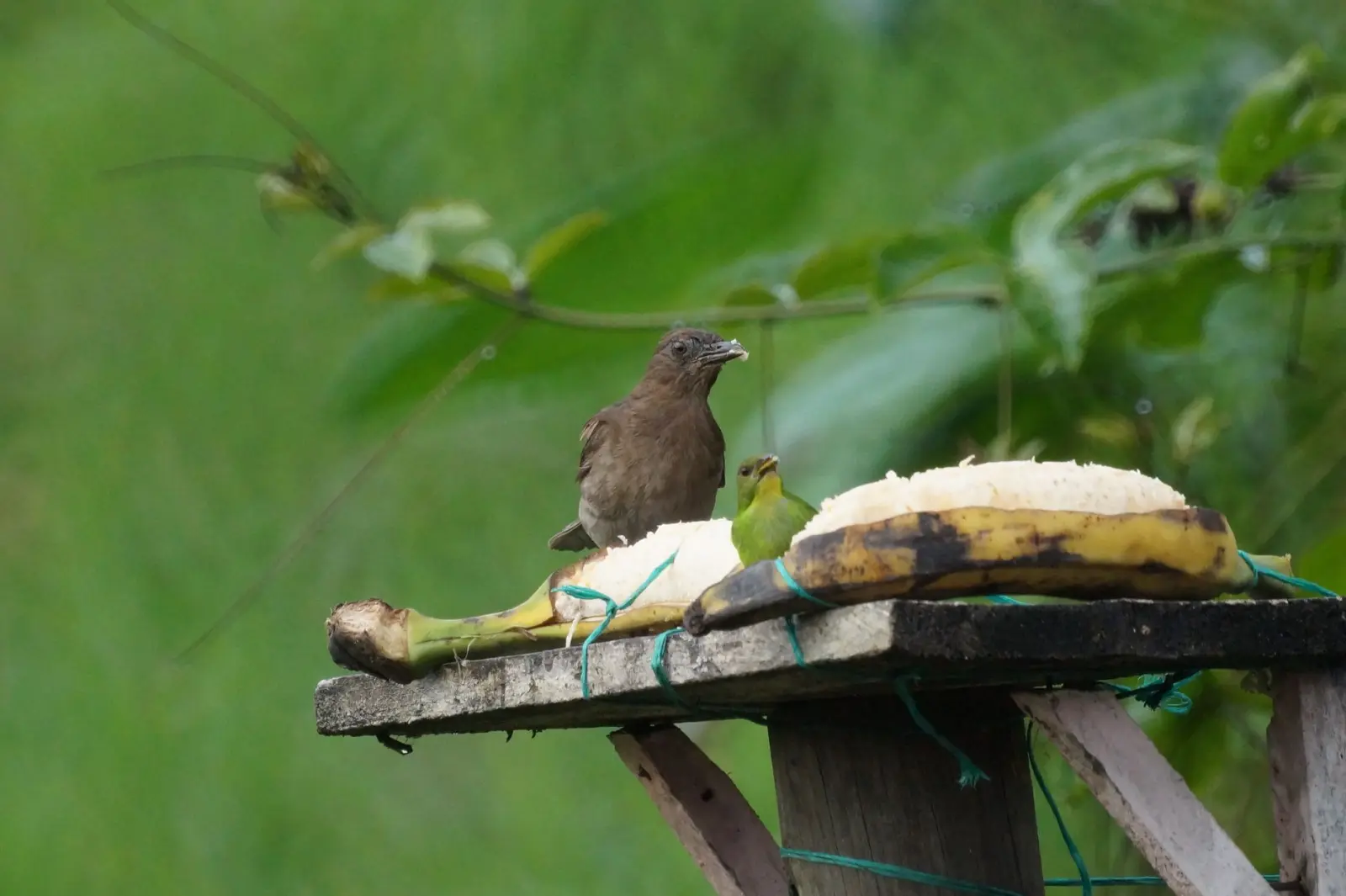
The presence of fruit doesn’t guarantee that a bird will feed on it. Larger, more aggressive species often monopolize fruiting trees during peak season, and smaller birds must adjust their feeding schedules or move to less productive areas. I’ve documented cases where Howler monkeys and macaws effectively exclude smaller tanagers and flycatchers from prime fruiting trees during the height of a mast event. The birds don’t disappear – they shift to secondary fruit sources, often trees that are less nutritionally dense but less contested.
This hierarchical access has real consequences for bird condition and survival. During years when major fruiting events are sparse or poorly timed, smaller species show signs of nutritional stress. Their plumage becomes duller, molt timing shifts, and breeding attempts may fail. Larger species weather these fluctuations more easily because of their size and ability to exploit a broader range of food sources. The seasonal fruit cycle doesn’t affect all birds equally, and understanding which species are most vulnerable during lean periods requires looking beyond simple fruiting calendars.
Behavioral Flexibility Within Constraints
One observation that stands out from field work is how much individual variation exists within species responses to fruiting events. Some birds seem to track fruit availability with precision, while others appear more opportunistic. This variation likely reflects differences in individual experience, age, and social status within flocks. Younger birds or subordinate individuals may not have the knowledge or access to optimal fruiting sites that dominant birds have learned over multiple seasons.
Flocking behavior changes dramatically across fruiting seasons. During periods of abundant, concentrated fruit, mixed-species flocks tend to be larger and more stable. When fruit is scattered, flocks fragment into smaller units or dissolve entirely as birds pursue individual foraging strategies. This isn’t simply about food availability – it’s also about predation risk and information sharing. A large flock moving through the canopy has more eyes to detect predators but also faces more competition at fruiting trees. The balance shifts depending on the abundance and distribution of fruit.
I’ve noticed that birds often remain in suboptimal habitat longer than expected if they’ve already invested energy in defending or learning a territory. A pair of trogons or toucans might stay in an area with declining fruit availability rather than immediately relocating to where fruit is more abundant. This territorial behavior can be costly, but it also reflects the real cost of moving – the energy expenditure and the risk of encountering unfamiliar terrain or established competitors in new areas. The decision to move or stay involves calculations that go well beyond current fruit availability.
Physiological Readiness and Breeding Cycles
The timing of fruiting events has profound effects on breeding cycles, and this relationship shows the depth of adaptation between birds and their food sources. Many rainforest species time their breeding to coincide with peak fruit availability, ensuring that fledglings are raised during periods of abundant food. However, this system is vulnerable to disruption. Shifts in fruiting phenology – caused by climate variability, drought, or other environmental changes – can desynchronize breeding from peak food availability. When this happens, even abundant fruit may come too late to support breeding attempts.
I’ve observed breeding failures in years when fruiting patterns shifted just a few weeks earlier than historical norms. The birds initiated breeding on schedule, but by the time nestlings required intensive feeding, fruit availability had already peaked and begun declining. The birds had to work harder to find sufficient food, and fledgling survival dropped noticeably. This suggests that the birds are responding to photoperiod and accumulated weather patterns rather than directly tracking fruit availability, which makes sense from an evolutionary perspective but also reveals a potential vulnerability in the system.
Molt timing also shifts in response to fruiting patterns. Many species undergo their primary molt during or immediately after periods of peak fruit availability, when energy demands can be met by abundant food. In years when fruiting is poor, molt may be delayed or compressed into a shorter timeframe, which affects feather quality and potentially impacts flight performance and survival. The physiological demands of molt and breeding both compete for resources, and the timing of fruiting events influences how birds manage these competing needs.
Long-Term Patterns and Variability
Looking across multiple years of observation, it becomes clear that rainforest fruiting is not a predictable annual event. Some years produce abundant mast fruiting events that last for weeks; other years see only scattered, short-lived fruiting. This variability shapes bird populations in ways that aren’t immediately obvious. Species that depend heavily on a few key fruit sources face high risk during poor fruiting years. Species with more generalist diets or those that can shift between fruit and insect foraging show more stable populations across variable years.
The birds that seem most resilient are those that maintain flexibility in their responses. They track fruiting events opportunistically but don’t depend entirely on any single food source or timing pattern. They also maintain larger home ranges than strictly necessary during good years, which allows them to respond more effectively when fruiting becomes patchy or delayed. This flexibility comes at a cost – birds with larger ranges expend more energy on movement – but it provides insurance against the unpredictability of tropical fruit availability.
Understanding how rainforest birds respond to seasonal fruit ultimately requires moving beyond simple observation of bird presence at fruiting trees. It requires attention to the timing of physiological events, the constraints imposed by social hierarchies and territorial behavior, and the long-term variability in fruiting patterns that shapes population dynamics. The birds aren’t simply responding to fruit; they’re navigating a landscape of competing demands where fruit availability is just one variable among many.