
Spend enough time walking through a rainforest, and you start to notice something that photographs rarely capture: the sheer desperation for light. The canopy overhead is so dense that the forest floor exists in permanent twilight. This isn’t poetic exaggeration – it’s a measurable reality. Light intensity at ground level in a mature rainforest can be as little as 1 percent of what reaches the top of the canopy. That constraint shapes everything about how plants grow, compete, and survive down there.
The competition for sunlight in a rainforest isn’t a gentle struggle. It’s relentless and structural. Trees don’t grow upward at random – they grow in response to the light available at their location and stage of life. A seedling germinating on the forest floor has almost no chance of reaching the canopy through direct vertical growth. The energy cost would be prohibitive, and it would lose the race to every other plant around it. Instead, rainforest plants have evolved a layered strategy that plays out over decades or centuries.
The Vertical Hierarchy
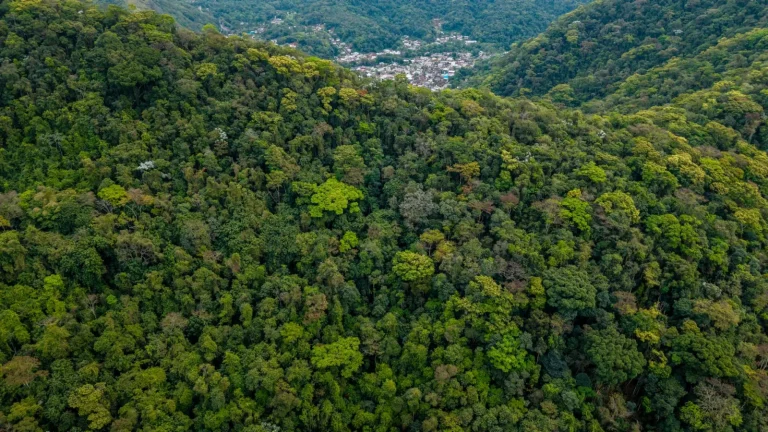
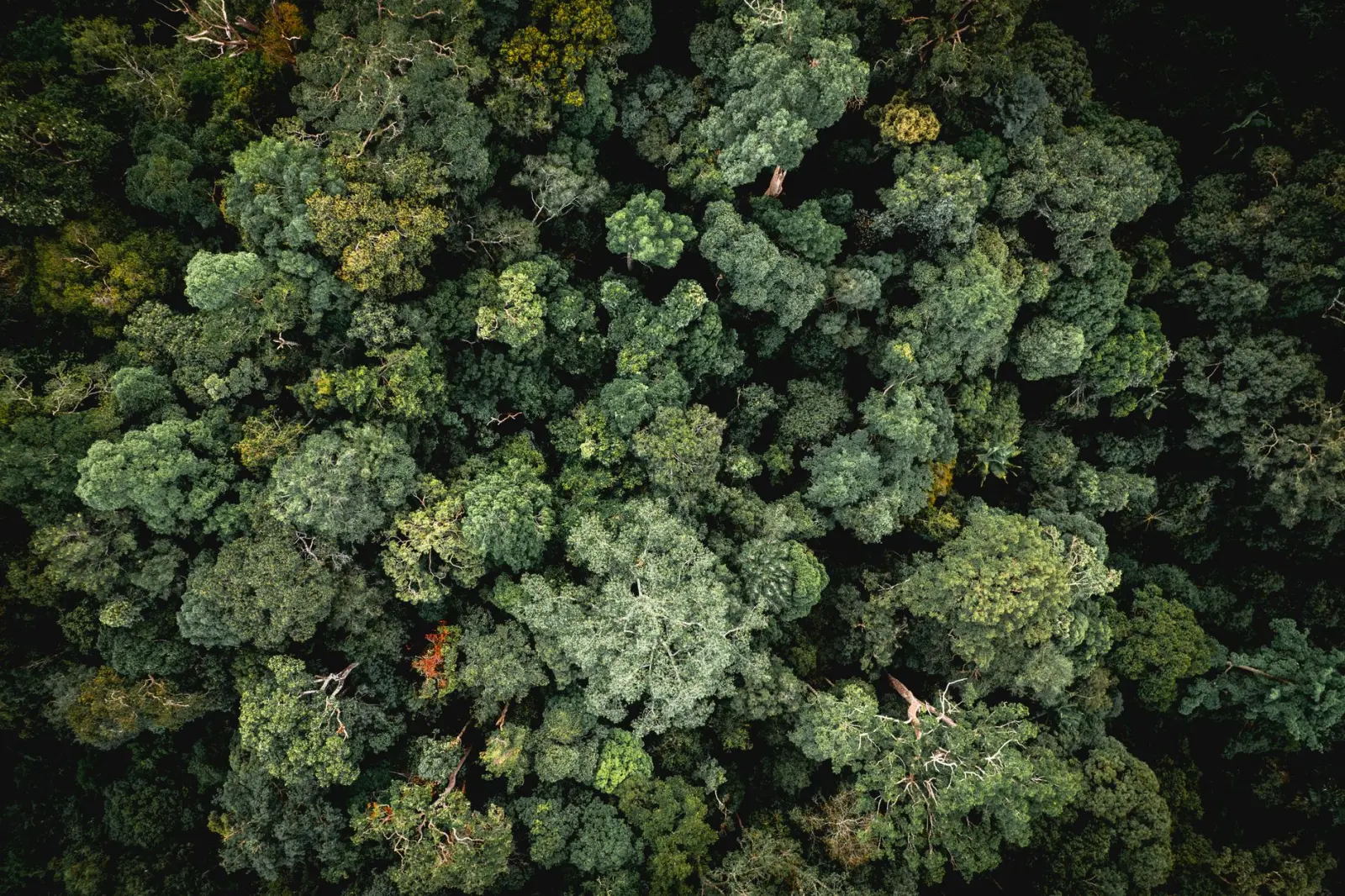
The most obvious feature of rainforest light competition is the canopy structure itself. The emergent layer – those massive trees that poke above everything else – gets full sunlight. Below that is the main canopy, a relatively continuous layer of crowns that intercepts most incoming light. Then comes the understory, where light becomes scarce and sporadic. Finally, the forest floor receives only scattered patches of direct light, mostly where a fallen tree has opened a gap.
This vertical arrangement isn’t accidental. It’s the result of plants competing for position over time. The tallest trees win because they intercept light before it reaches anything below. But getting to that height requires surviving in shade first. Most rainforest trees spend the early decades of their lives in the understory, growing slowly in low light, waiting for an opportunity. That opportunity comes when a larger tree dies or falls, creating a gap in the canopy.
Gap-dependent trees have evolved to recognize this moment. When light suddenly floods a gap, these species respond with rapid growth. Their seedlings can remain dormant or grow very slowly for years, then surge upward once conditions change. Species like certain fig trees and pioneer hardwoods can add several meters of height in a single growing season once a gap opens. This is a high-risk, high-reward strategy. The plant invests heavily in growth, which requires resources it may not have accumulated. But if it succeeds in reaching the canopy before the gap closes, it gains access to abundant light for the rest of its life.
Shade Tolerance and Leaf Strategy
Not all plants can afford to wait for gaps. Some species are shade-tolerant, meaning they can survive and grow slowly in low light indefinitely. These plants have evolved different leaf structures than their gap-dependent neighbors. Their leaves tend to be larger and thinner, with less reinforcing tissue. This maximizes light capture in dim conditions. The chlorophyll concentration is often higher as well, allowing them to extract more energy from the weak light available.
There’s a trade-off embedded in this adaptation. A thin, delicate leaf that works well in shade is vulnerable to damage and water loss if suddenly exposed to full sunlight. Shade-tolerant plants often can’t survive if they’re suddenly transplanted to a sunny location. Their physiology is optimized for one narrow range of conditions. I’ve observed this repeatedly when clearing forest sections – shade-adapted plants that seemed healthy in the understory often wilt and die within weeks of canopy removal.
Leaf angle and orientation also matter more than most people realize. In the understory, plants position their leaves to capture every available ray. Some species have leaves that track the sun throughout the day, or leaves that are arranged in mosaics to minimize overlap and maximize total light interception. In contrast, canopy trees often have leaves that are more randomly oriented because light is abundant and the real challenge becomes avoiding overexposure and heat stress.
Chemical and Structural Defenses
Light competition in rainforests isn’t purely about growth rate or leaf morphology. It also involves chemical warfare. Shade-tolerant plants often invest heavily in defensive compounds – alkaloids, tannins, and other bitter or toxic substances. These reduce herbivory, which is critical because a slow-growing plant in shade cannot afford to lose much leaf tissue. A gap-dependent pioneer, by contrast, often has fewer defenses and more palatable leaves. It can afford to lose some foliage because it’s growing fast enough to replace it.
The structural investment differs too. Shade plants often allocate more resources to root systems and less to woody stem tissue. A thin, flexible stem is lighter and requires less energy to build than a thick, rigid one. In the understory, structural strength is less critical because wind speeds are low. But this creates another vulnerability: shade-adapted plants often topple easily if exposed to wind, which is why clearing forest can cause unexpected cascades of damage among remaining understory vegetation.
Epiphytes and Vertical Niche Partitioning
One adaptation that often goes unnoticed is the use of vertical space itself. Epiphytes – plants that grow on other plants without parasitizing them – are abundant in rainforests. Orchids, bromeliads, ferns, and mosses colonize tree trunks and branches, positioning themselves higher in the canopy where light is better. This is a clever workaround to the competition problem. Instead of competing for soil space and growing upward, these plants hitch a ride on taller neighbors.
The epiphyte strategy works because it partitions the resource (light) without direct competition. An orchid on a branch 30 meters up gets good light without having to build and maintain the woody structure needed to reach that height independently. The host tree provides the infrastructure; the epiphyte provides minimal burden in return. In some rainforests, the biomass of epiphytes rivals that of the trees themselves, and they collectively intercept a significant portion of incoming rainfall and nutrients.
Temporal Patterns and Long-Term Dynamics
Light competition in rainforests plays out across timescales that are easy to underestimate. A gap in the canopy might close over 20 to 40 years as surrounding trees grow into it. A shade-tolerant seedling might spend 50 years or more in the understory before its moment arrives. A pioneer tree that colonizes a gap might live for 100 years before being shaded out by slower-growing but longer-lived species. These overlapping timescales create a forest that looks stable at any given moment but is actually in constant flux.
The species composition of a rainforest at any point reflects not just current light conditions but the history of disturbances – storms, landslides, disease outbreaks – that created gaps years or decades ago. A section of forest that looks uniform often contains trees of wildly different ages and light histories. This temporal heterogeneity is as important as the spatial heterogeneity of light levels. It’s what maintains diversity and prevents any single species from monopolizing the forest.
What strikes me most about rainforest light competition is how thoroughly it shapes everything else. The structure you see – the layering, the leaf sizes, the growth rates – isn’t arbitrary. It’s a direct response to a single constraint: light is scarce and unevenly distributed. Plants have evolved not just to tolerate this condition but to exploit it, finding niches within the shade that allow them to persist. The rainforest isn’t a uniform jungle. It’s a finely stratified system where position, timing, and physiology determine survival.