
The forests around Lake Tinaroo sit in that peculiar zone of Far North Queensland where wet tropics transition into drier country. I’ve spent enough time moving through these trails to recognize the patterns – the way the light changes depending on which side of the lake you’re on, how quickly weather can shift, and what the actual walking experience feels like across different seasons and times of day.
Most people arrive expecting something resembling a manicured national park walk. What they find is messier and more interesting. The terrain isn’t dramatically steep, but it’s rarely flat. The forest floor shifts between compacted earth, root systems that demand attention, and sections where water drainage has carved shallow gullies into the path. Your legs notice this more than your mind does, particularly if you’ve come from walking paved trails elsewhere.
The humidity here is relentless even when it’s not raining. Walking in the early morning before 8 a.m. makes a tangible difference – the air is marginally less thick, and you move with less effort. By mid-morning, the forest has absorbed enough heat that every breath feels weighted. This isn’t a dramatic hardship, but it’s a physical reality that shapes how far you’ll comfortably walk and how long you’ll want to stay out.
What the trails actually offer
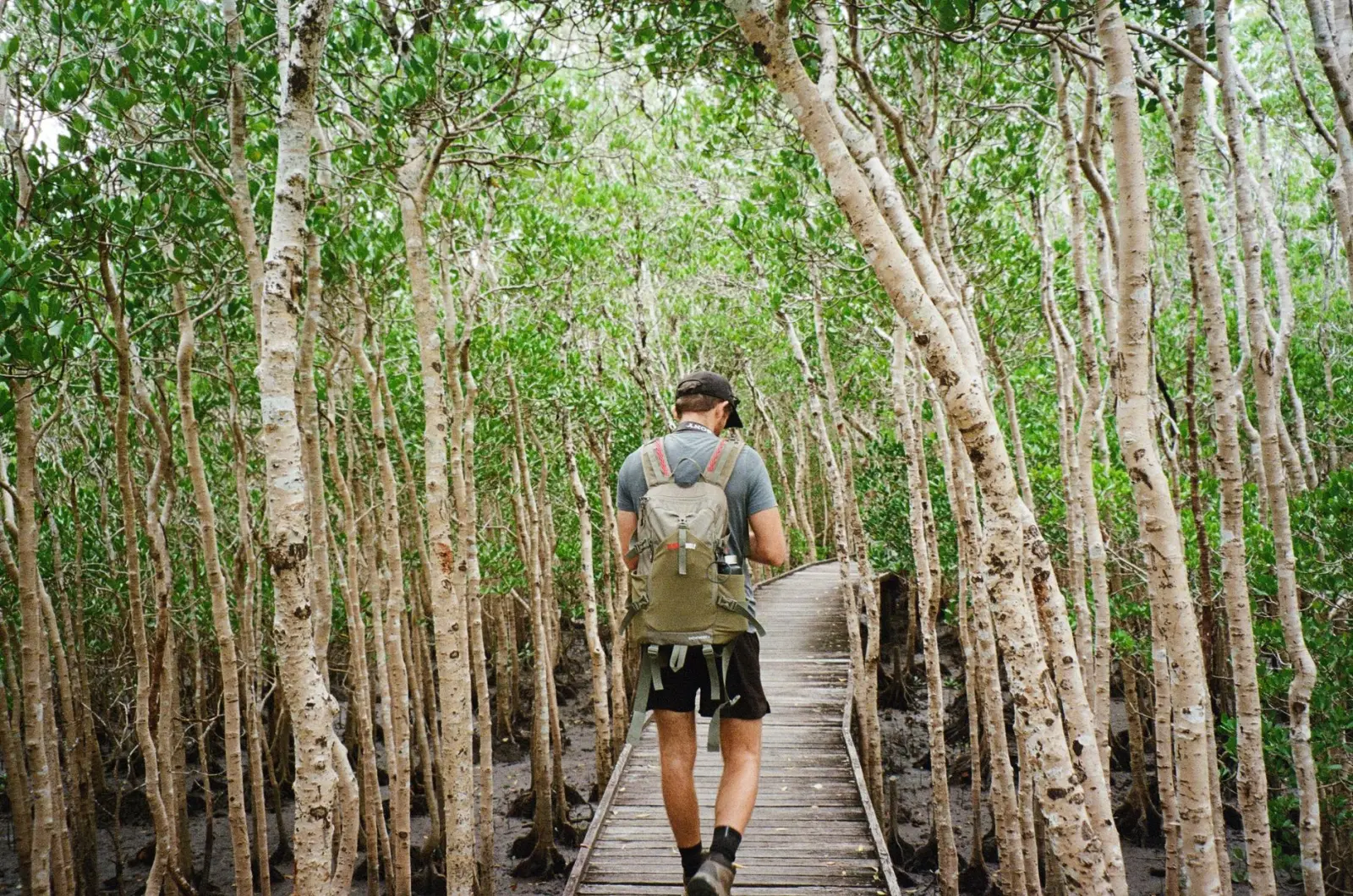
The walking tracks around Tinaroo vary considerably in character. Some sections feel enclosed by vegetation so dense that you’re moving through a tunnel of green. Other stretches open into more spacious forest where you can see further ahead and the canopy feels less oppressive. The lake itself appears intermittently rather than as a constant feature – you catch glimpses through the trees, sometimes for extended stretches, sometimes only briefly.
The water level fluctuates seasonally, and this affects what you see. During the wet season, the lake is fuller and the shoreline vegetation is more lush. In drier months, you’ll notice exposed banks and a different character to the landscape. Neither is objectively better; they’re just different experiences. If you’ve seen photographs from one season, expect something noticeably different if you visit another time of year.
Navigation and practical logistics
The main tracks are reasonably well-marked, but “well-marked” is relative. There are trail markers, but they’re not frequent enough that you can walk without paying attention. This is actually preferable to heavily signed trails – it keeps the environment feeling less managed – but it does mean you need to stay present. If you’re the type to walk while looking at your phone, you’ll miss turns.
The walking loops around Tinaroo typically range from 45 minutes to two hours depending on which sections you combine. Most people underestimate how long they’ll take, partly because the terrain feels gentle and partly because the humidity saps pace without obvious warning. A walk you might complete in 90 minutes on a cool, dry trail elsewhere can stretch to two hours here.
Bring water. The forest offers no reliable water sources that are safe to drink, and the humid environment doesn’t make dehydration obvious until you’re already dealing with it. I’ve seen people turn back halfway through a walk because they ran out of water, and I’ve seen others push through and regret it. A liter is minimum; two liters is more realistic if you’re planning a longer loop.
Wildlife and seasonal patterns
The forest holds wildlife, though you won’t see much of it unless you’re walking quietly and early. Birdlife is constant – you’ll hear far more than you see. Cassowaries are present in the region, but encounters are rare and usually happen when the bird is moving away from you. The real wildlife you’ll encounter is insects. Mosquitoes are present year-round but worse during and after the wet season. Leeches appear after rain and during humid periods. Neither is dangerous, but both are annoying enough to shape your experience.
The wet season, roughly November through March, brings heavier rainfall, higher humidity, and more insect activity. Walking is still possible, but the trails become muddier and slower. Dry season walking, May through September, is notably easier – less mud, fewer insects, and slightly lower humidity. April and October are transitional months where conditions vary unpredictably.
What changes your experience most
Time of day matters more than most people realize. Morning walks feel fundamentally different from afternoon walks, even on the same trail. The light is better, the air is fractionally cooler, and you’re more likely to see wildlife. Walking after 2 p.m. means you’re finishing as the light starts to fade, and the forest becomes noticeably darker under the canopy.
Footwear affects how much you enjoy the walk. Proper hiking boots or trail shoes with grip make a real difference on the root-strewn sections and muddy patches. Casual sneakers work if conditions are dry, but they’re a liability after rain or during humid periods when everything is slick.
The forest around Lake Tinaroo isn’t a destination that transforms you or offers dramatic vistas. It’s a place where you walk through genuine tropical forest, where the environment makes demands on your body and attention, and where the experience is shaped more by practical realities – humidity, insects, terrain, timing – than by scenic payoff. That’s precisely what makes it worth visiting if you’re interested in what walking through this landscape actually feels like rather than what it looks like in photographs.