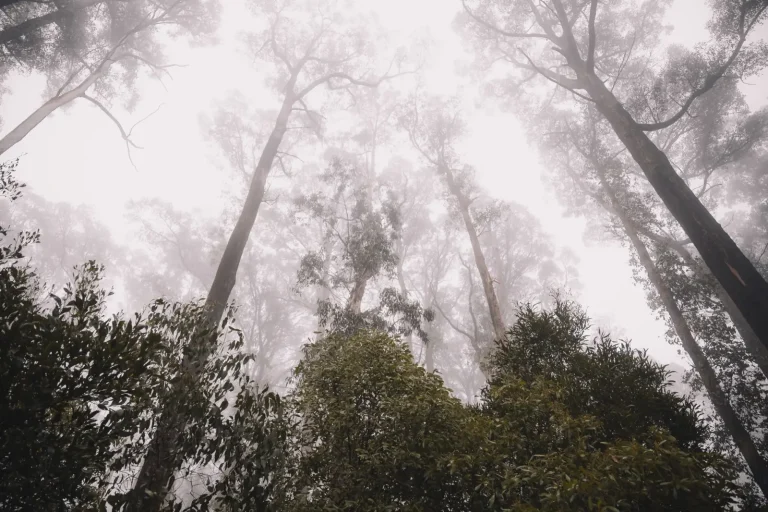

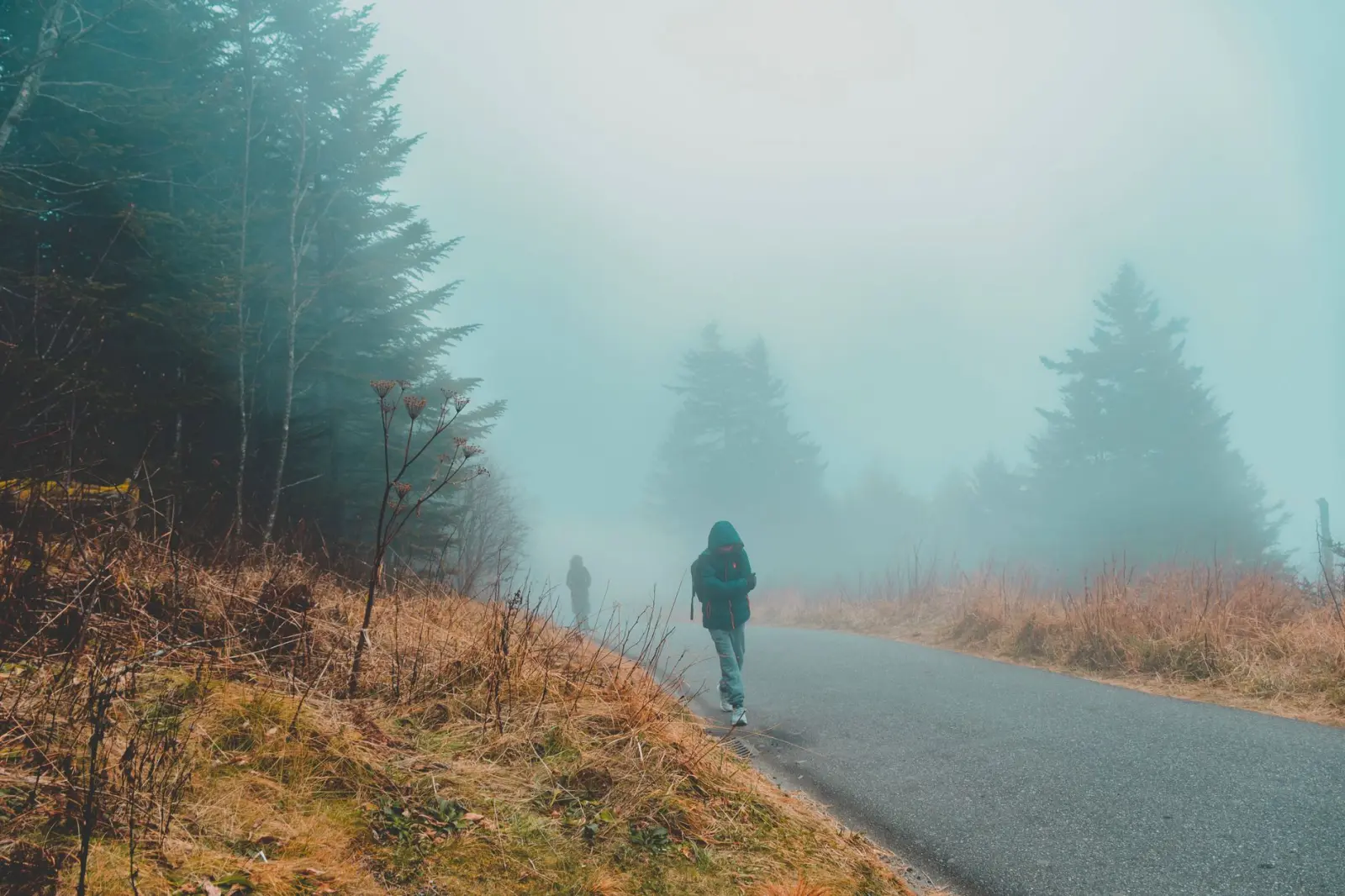
There’s a particular quality to moving through a forest when mist clings to the canopy and reduces your world to perhaps thirty meters in any direction. It’s not dramatic or immediately threatening. It’s simply a different mode of travel than what most people expect when they imagine hiking through mountains. The mist doesn’t roar or surge. It sits. It absorbs sound. It makes the familiar feel provisional.
I’ve spent enough time in these conditions to recognize the moment when a walker’s confidence shifts. Usually it happens without warning, somewhere between the second and third hour of the day. The initial novelty of the muted landscape wears off. The repetition of similar-looking trees, the inability to see the ridge or valley that should be visible, the sense that you’ve been walking in a narrower and narrower tunnel – these things accumulate. Most people handle it fine. Some find it unsettling enough to turn back.
The physical reality is straightforward. Mist in mountain forests typically means cooler air, higher humidity, and often recent or ongoing precipitation. The ground underfoot tends to be softer, sometimes boggy. Roots become more slippery. Loose stones that might be obvious in clear conditions can hide under moss or wet leaves. Your pace naturally slows, even if you don’t consciously decide it should. A trail that takes three hours in clear weather might take four in persistent mist, and that’s assuming you don’t make navigation errors.
Navigation Without Distant Reference Points
The primary challenge isn’t the walking itself. It’s the absence of visual landmarks. When you can see the summit or a distant ridge, your brain maintains a continuous sense of direction and progress. The mist removes that. You rely on the trail, on compass work, on map reading, and on memory of the landscape from previous visits or detailed descriptions. This works fine on well-maintained paths with clear markers. On less obvious routes or at junctions where visibility matters, the margin for error shrinks considerably.
I’ve watched experienced hikers pause more frequently in mist, checking maps and GPS more often than they would in clear conditions. This isn’t hesitation born of fear. It’s the rational response to reduced information. A person who moves confidently through mist is usually someone who has either walked that specific trail many times or who is comfortable with the slower, more deliberate pace that poor visibility demands. There’s no shortcut to either state.
The mist also affects distance judgment. Without distant visual cues, a kilometer can feel like two. The absence of a visible destination makes time stretch. Switchbacks that you can’t see the full extent of feel longer than they are. This psychological effect is real and worth acknowledging. It doesn’t mean you’re lost or in danger. It means your brain is working with less information than it prefers, and it compensates by making the journey feel more effortful.
Timing and Energy Depletion
Mist in mountain forests often comes with specific time patterns. Early morning mist tends to lift as the day warms, usually between late morning and early afternoon. Evening mist descends as temperature drops. The worst conditions are often mid-morning to mid-afternoon on days when the mist is thick and persistent – when it’s neither clearing nor yet settling into a predictable evening pattern. On these days, the mist can feel static, unchanging, which adds to the sense of monotony.
The cognitive load of navigating in mist without clear visual feedback is more draining than the physical exertion. Your eyes work harder to parse shapes in the grey. Your mind stays more engaged with route-finding. By the time you’ve been walking for three or four hours in these conditions, fatigue often feels disproportionate to the actual distance covered. This is one reason why people underestimate how long a misty mountain walk will take. The physical tiredness is manageable. The mental fatigue is what catches most people off guard.
Clothing and Moisture Management
Mist in mountain forests is deceptive regarding moisture. It doesn’t feel like rain, but it soaks through fabric over time. Cotton becomes useless within an hour. Synthetic or wool layers shed moisture better, but they still absorb it. The real problem emerges when you stop moving. Once you’re stationary, the combination of moisture, wind, and cooler air temperature creates rapid heat loss. A person who is comfortable while walking can become uncomfortably cold within minutes of stopping for a break.
Most walkers learn this through experience rather than instruction. You carry a layer you think is excessive. You put it on during a rest stop and realize it was necessary. The next time, you remember. Experienced hikers in misty mountain terrain tend to carry slightly more insulation than they would for the same elevation gain in clear weather, and they’re quicker to add layers during breaks. It’s not about being cautious. It’s about understanding how the conditions actually feel once you’re moving through them.
Sound and Solitude
The mist creates an acoustic environment that’s quite different from open mountain terrain. Sound doesn’t carry far. Voices become muffled. Water sounds – streams, waterfalls – seem to come from indeterminate directions. This has a peculiar effect on the sense of solitude. Even if there are other walkers on the trail, you might not encounter them because visibility is so limited. The forest feels more isolated than it actually is. For some people, this is the appeal. For others, it’s the primary reason they avoid misty mountain walks.
The silence, if you can call it that, is never complete. There’s the sound of your own footsteps, your breathing, the occasional rustle of movement in the undergrowth. But the mist seems to absorb the ambient noise that usually fills a forest. Birds sound distant even when they’re close. The overall effect is quieting, almost meditative, though not in a way that everyone finds pleasant.
Walking through misty mountain forests is fundamentally a different experience than hiking the same terrain in clear conditions. It’s slower, more inward-focused, and requires more deliberate attention to navigation and safety. The conditions are rarely dangerous if you move at an appropriate pace and maintain basic awareness. What they demand is acceptance of a narrower world and a willingness to move through it at the speed the mist imposes rather than the speed you might prefer. That adjustment, more than anything else, determines whether the experience feels manageable or frustrating.