
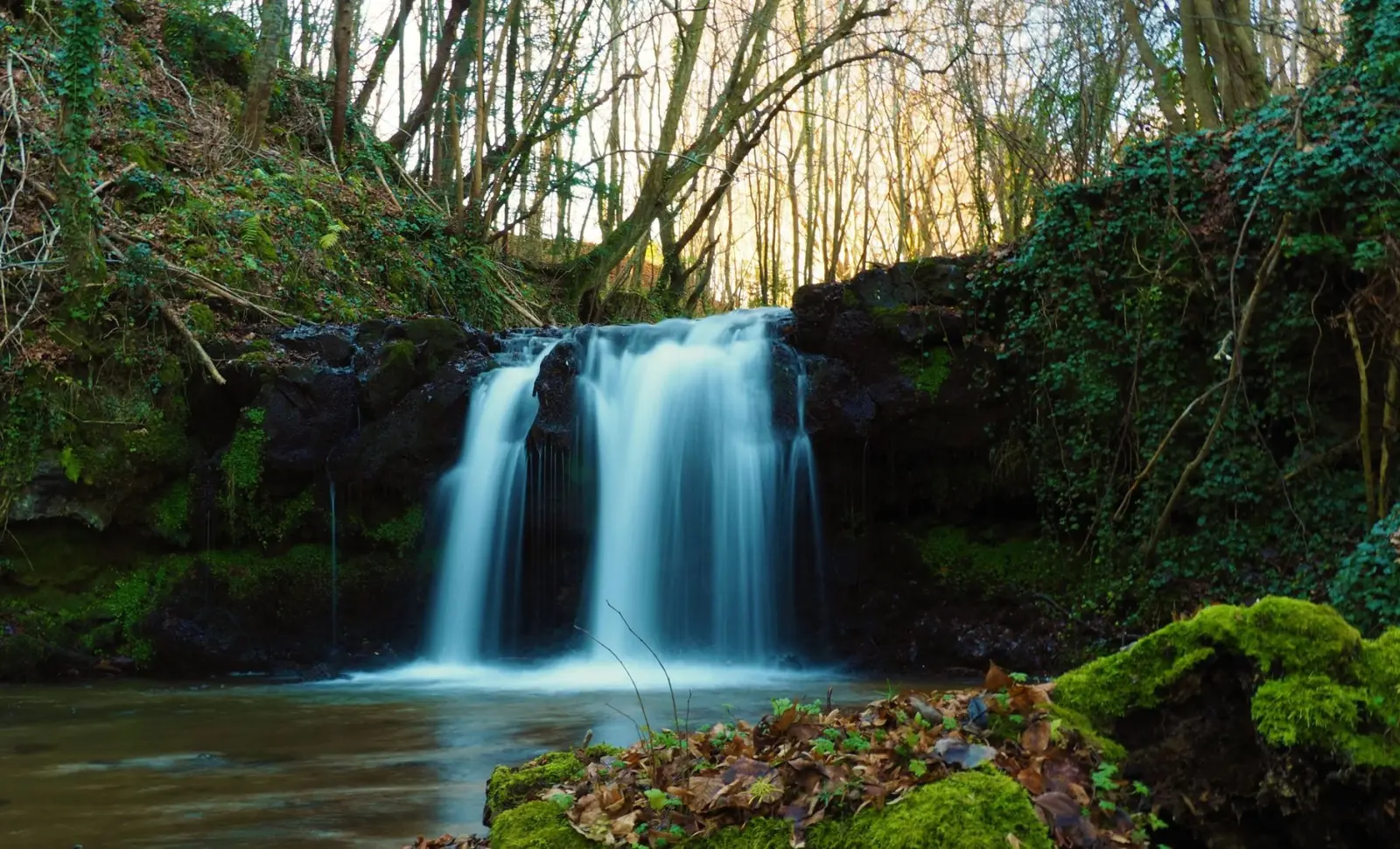
Millstream Falls sits in a pocket of rainforest in Far North Queensland, and the forest around it operates on its own rhythm. I’ve spent enough time moving through these trails to know that the experience rarely matches what people imagine beforehand. The falls themselves are straightforward – they’re there, they’re substantial, and they’re worth seeing. But the forest that contains them is where most visitors either find their footing or realize they came unprepared.
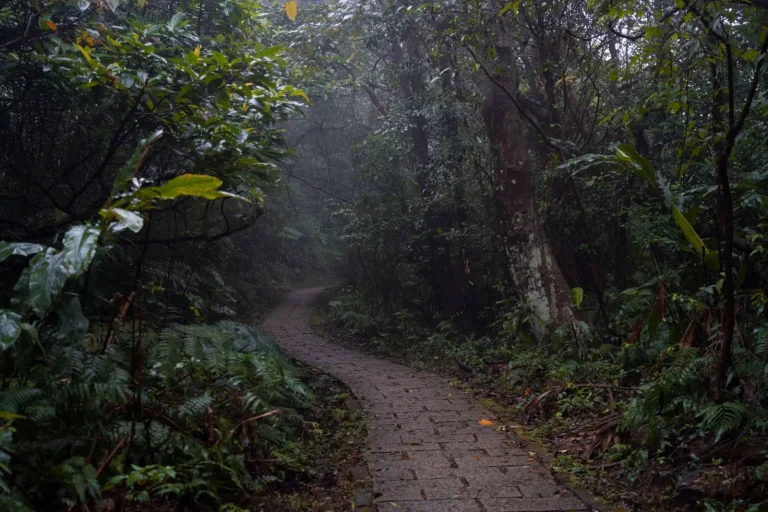
The immediate area around the falls is well-maintained. The main track is wide, graded, and accessible to most fitness levels. You can walk it in runners if you’re careful, though that’s not something I’d recommend. The real forest, though, begins once you move beyond the obvious paths. That’s where the texture of the place becomes apparent.
The Terrain and What It Demands
The forest floor here isn’t uniform. In the wetter sections, you’re walking on compacted leaf matter that can be slippery even when it looks dry. The Queensland rainforest doesn’t drain quickly – water sits in the substrate longer than you’d expect. I’ve watched people lose their footing on what appeared to be solid ground, only because they didn’t account for the moisture held beneath the surface layer. Proper footwear with grip matters more than people think, especially if you’re planning to move off the main track.
The slope varies considerably. Some sections are gentle and almost meditative to walk. Others pitch down sharply toward creek beds, and the descent is steeper than it appears from above. The canopy density changes as you move through different zones of the forest. In the thicker sections, the light drops noticeably, which affects both visibility and your sense of distance. A 200-meter stretch through dense undergrowth can feel longer than it actually is, partly because you’re moving more carefully and partly because the visual markers change constantly.
Rock outcrops are scattered throughout, and they’re often slick. The moisture in this environment means that even sun-exposed rocks retain dampness. I’ve seen people misjudge the grip available on what looks like a dry surface. The rocks also tend to be moss-covered on their undersides and in crevices, which is ecologically interesting but practically means you need to watch where you place your hands if you’re scrambling.
Vegetation and Navigation
The undergrowth here is dense in patches and relatively open in others. It’s not a uniform tangle, which can actually make navigation trickier. You might assume that thick vegetation means you’re off-track, but that’s not always the case. Some of the established routes pass through sections where the canopy is heavy and the ground cover is substantial. At the same time, open areas don’t necessarily indicate a trail – they’re often just natural clearings where the forest structure happens to be less crowded.
Vines and hanging vegetation are part of the landscape. They’re not an obstacle in the way that, say, a fallen tree is, but they do require you to move deliberately. You’ll duck under them, push them aside, and occasionally have to work around them. This slows your pace naturally, which is actually useful because it forces you to move at a speed that’s sustainable in this environment.
The vegetation also changes seasonally. During the wet season, the forest is more lush and the ground is genuinely boggy in places. In drier months, the undergrowth is less aggressive, but the ground can become harder and more slippery in different ways. I’ve found that the “best” time to explore isn’t necessarily the dry season – it’s when the conditions suit your own fitness and experience level.
Water and Creek Crossings
Millstream itself flows through the forest, and there are several smaller creeks that feed into it. Water levels vary dramatically depending on recent rainfall. I’ve crossed creeks that were ankle-deep one week and chest-high the next. If you’re planning to move beyond the main falls area, you need to understand that creek crossings are part of the experience, and they’re not always predictable.
The creek beds themselves are rocky and uneven. The rocks are often smooth from water flow, which makes them slippery. The current, even in what appears to be a shallow creek, can be stronger than it looks. I’ve watched visitors underestimate the force of water that seemed gentle from the bank. The temperature of the water is cold year-round, which affects both grip and your body’s response if you slip.
There are no bridges on the smaller creeks, and wading is the standard approach. Some people remove their shoes for crossings; others prefer to keep them on for ankle support. Both approaches have merit depending on your confidence and the creek’s condition. What matters is making a deliberate choice rather than improvising mid-crossing.
Wildlife and Quiet Observation
The forest is home to birds, reptiles, small mammals, and insects. Most of what you encounter will ignore you completely. The birds are vocal, especially in the early morning, and their calls are often the main sound you’ll hear. Reptiles – snakes, lizards, skinks – are present but encounters are rare if you’re moving steadily and making noise. I’ve spent many hours in this forest without seeing a snake, though I know they’re there.
The insect life is significant. Mosquitoes can be present, particularly near water and in humid pockets. Leeches appear after rain, especially in the wetter months. They’re not dangerous, but they’re persistent and the idea of them bothers people more than the reality. Proper insect repellent is practical, not paranoid.
The larger animals – wallabies, cassowaries in some areas – are shy and typically move away from human activity. You’re more likely to see evidence of them – tracks, scat, disturbed vegetation – than to encounter them directly.
Light, Time, and Pacing
The canopy here is thick enough that light levels drop noticeably as the afternoon progresses. This isn’t because the sun is setting – it’s because the forest itself gets darker as the angle of light changes. By late afternoon, even on a clear day, the forest can feel quite dim. This affects both visibility and your sense of time. People often misjudge how long they’ve been walking because the light conditions don’t change the way they do in open terrain.
Pacing matters. The forest doesn’t reward speed. Moving quickly increases the risk of missteps, and it also means you’re more likely to miss the detail of the place. Most people find that a slower pace – one where you’re actually observing the terrain rather than pushing through it – is more sustainable and more enjoyable.
Time estimation is genuinely difficult here. A walk that should take an hour often takes longer, not because the distance is greater but because the terrain demands more attention. I’ve found it useful to add 30 to 50 percent to any estimated time when moving through forest like this, particularly if you’re not familiar with the specific routes.
The forest around Millstream Falls is accessible and rewarding, but it requires respect for its conditions. The main falls area is straightforward, but moving beyond that demands attention to terrain, water, vegetation, and your own pacing. Most of what catches people off guard isn’t dramatic – it’s the accumulation of small demands that the forest makes on your attention and energy.