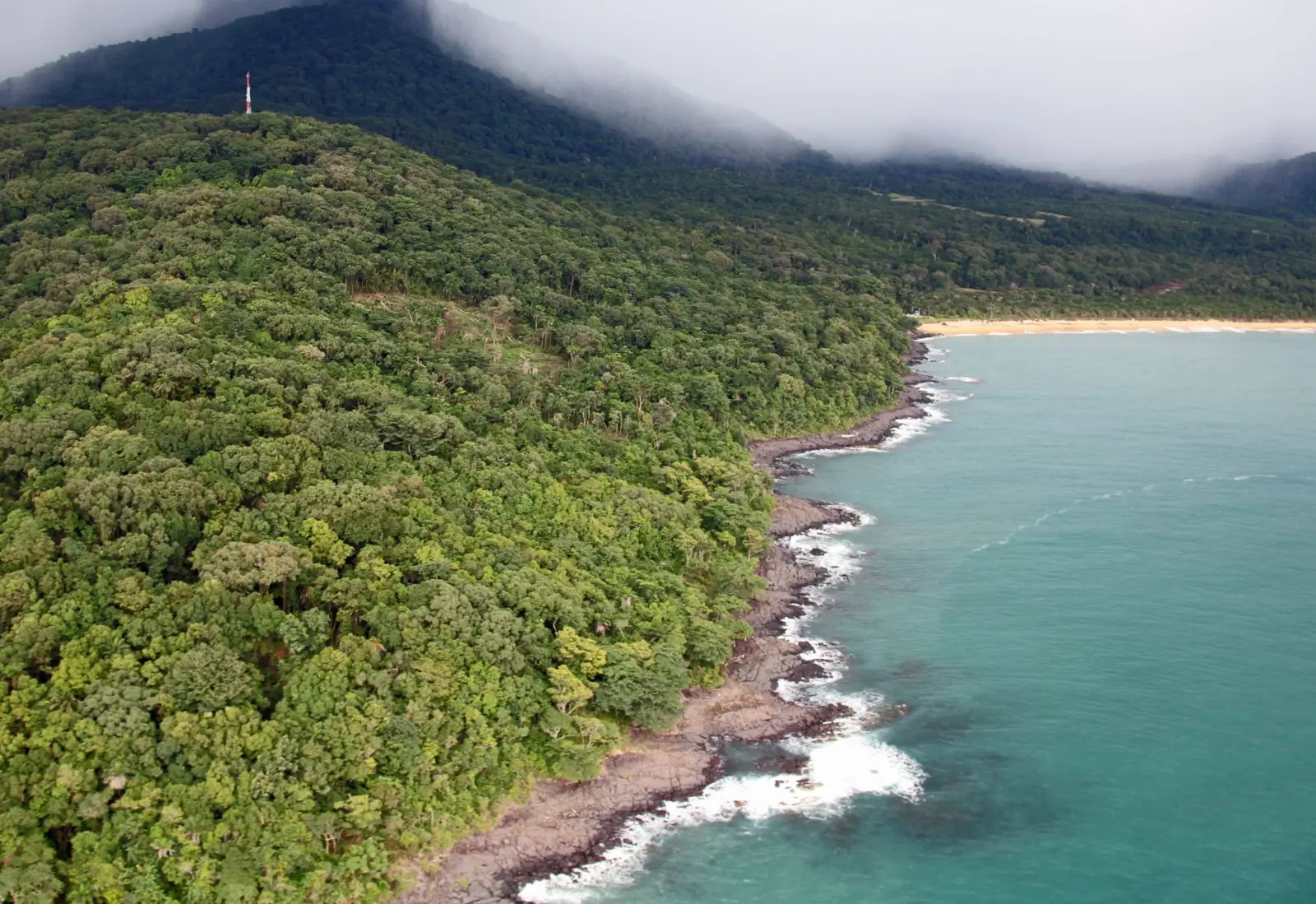
After spending years moving through rainforest systems across Central America and Southeast Asia, the shifts in vegetation become unmistakable once you know what to look for. The change isn’t dramatic or sudden – there’s no clear line where one ecosystem ends and another begins – but the transition from coastal lowland forest to montane rainforest is consistent enough that you can sense it in the air, in the weight of the canopy, and in the species you encounter.
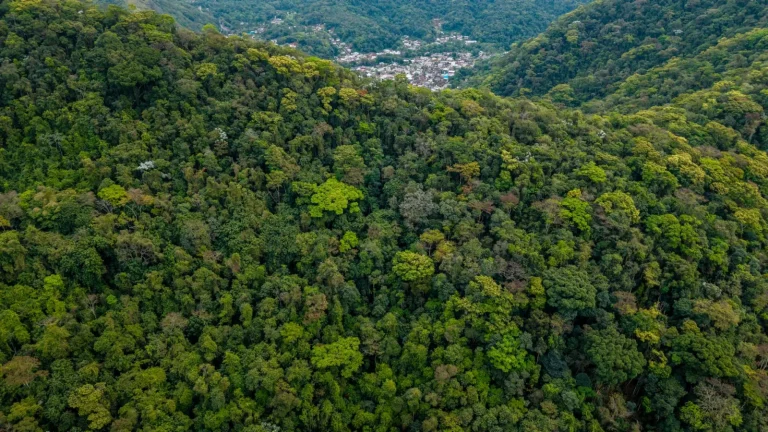
The coastal lowland rainforest operates under different constraints than what sits higher up. Near the coast, the forest floor tends to be wetter, sometimes waterlogged depending on season and local drainage. The canopy is denser and taller, often reaching 40 to 50 meters or more, with emergent trees that break through. The understory is thick and humid, with ferns and palms competing for space. Lianas are abundant – sometimes so thick they form near-solid walls of vegetation. The air feels heavier, not just from moisture but from the density of life packed into that space. Decomposition happens at an accelerated rate, so the soil rarely accumulates deep layers of organic matter.
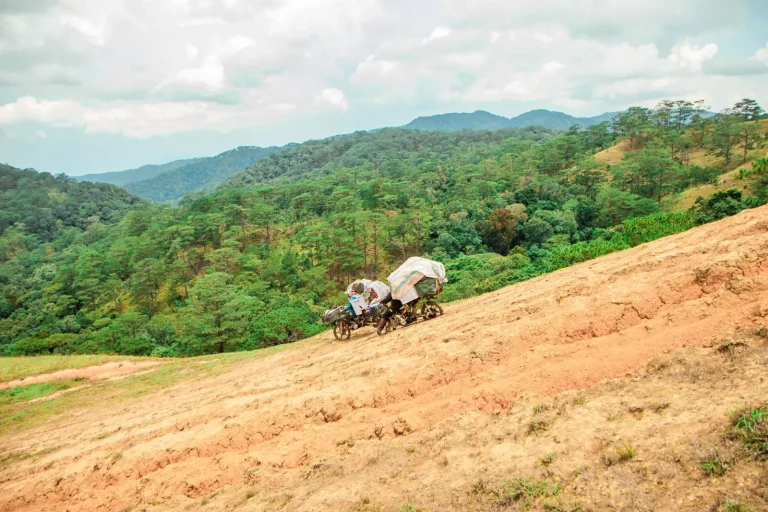
As you move inland and upward in elevation, the first real change you notice is in the canopy structure itself. The forest doesn’t get thinner immediately, but it becomes more layered. The emergent layer becomes less dominant. The main canopy, which was a solid mass at sea level, starts to show more gaps and variation in height. This happens partly because wind exposure increases with elevation, and partly because the resources available to support those massive trees become more constrained. Soil depth matters more as you climb; shallow soils can’t anchor trees as tall.
Where Moisture and Temperature Intersect
The real driver of change isn’t elevation alone – it’s the combination of temperature drop, increased cloud cover, and shifting moisture patterns. For every 100 meters of elevation gain, temperature drops roughly 0.6 degrees Celsius. That sounds minor until you realize that a 1,000-meter elevation gain means a 6-degree shift. That’s significant enough to change which species can establish and thrive.
Around 1,000 to 1,500 meters, the forest transitions into what’s often called cloud forest or montane rainforest. The canopy height drops noticeably – you’re looking at 20 to 30 meters rather than 40 to 50. The trees are often gnarled and twisted, with shorter internodes and smaller leaves. Moss and lichen coverage becomes dramatic. On humid days – which is most days at this elevation – the trees are draped in moss so thick it looks like the forest is draped in green cloth. This isn’t just aesthetic; the moss is actively intercepting moisture from the clouds and mist, adding to the water budget of the ecosystem.
The understory changes character too. Epiphytes – plants that grow on other plants without parasitizing them – become far more abundant. Orchids, bromeliads, and ferns colonize tree trunks and branches. At lower elevations, these exist but are scattered. At 1,500 meters and higher, they’re everywhere, turning the forest into a three-dimensional garden. The ground is softer, boggier in places, because the cooler temperatures slow decomposition and water doesn’t evaporate as quickly.
Species Composition and Density
The mix of species changes dramatically across this gradient. Lowland rainforests near the coast are incredibly diverse in terms of species count – you might find 300 or more tree species in a single hectare. But many of these are relatively uncommon; the forest is a mosaic of rare and scattered species. As you climb, the total species count actually decreases, but the distribution becomes more even. You start seeing the same species repeatedly, which paradoxically makes the forest feel less diverse even though it’s still rich.
Certain plant families dominate at different elevations. In the lowlands, you see a lot of Moraceae (fig family), Fabaceae (legumes), and Sapotaceae (sapodilla family). These are fast-growing, tall trees that compete for light in a dense, competitive environment. Higher up, Lauraceae (laurel family) and Melastomataceae become more prominent. These tend to be slower-growing, more shade-tolerant species. The shift reflects a change from a light-limited, competitive system to one where temperature and moisture are the primary constraints.
Palms illustrate this shift well. In coastal lowlands, palms are abundant and diverse – you’ll see dozens of species, many of them tall and emergent. They’re part of the competitive race for light. As you climb, palm diversity drops sharply. By 1,500 meters, palms become scarce. By 2,000 meters, they’re rare. The cooler temperatures and shorter growing season don’t favor their strategy. Instead, you see more ferns, more woody shrubs, and more herbaceous plants in the understory.
Practical Observations from Movement Through the Forest
Walking through these transitions reveals things that don’t show up in species lists. In the lowlands, the forest floor is often difficult to navigate. The leaf litter is thick and wet, sometimes hiding obstacles. Visibility is low because the understory is dense. Movement is slow and requires constant attention to footing.
As you climb, the forest becomes easier to move through, at least in some ways. The understory opens up slightly. Visibility improves. But the terrain becomes steeper, and the moss-covered ground is slippery. The air gets noticeably cooler, which affects how fast you tire. The humidity remains high, but the temperature drop means your body isn’t working as hard to regulate heat. The light changes too – less direct sunlight penetrates, so the forest feels dimmer even though the canopy is lower and more open.
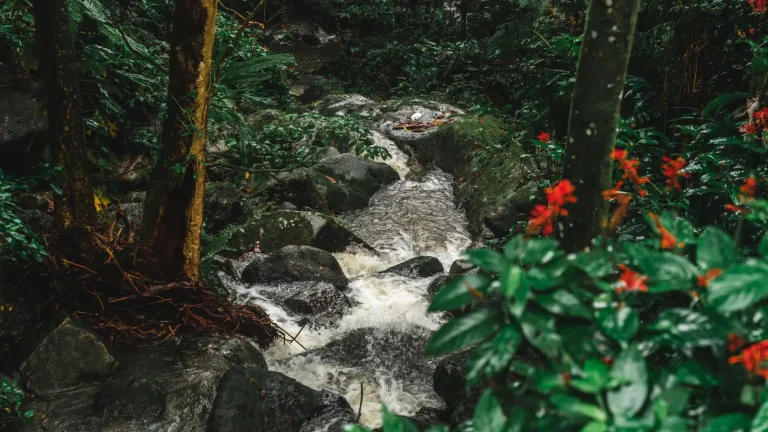
The sound of the forest shifts. In lowland rainforests, there’s a constant hum of insects, birds, and water. Higher up, the soundscape becomes quieter in some ways, louder in others. Fewer large birds, but more small songbirds. The insect chorus is different. Water sounds become more prominent because streams run faster and more frequently at higher elevations.
One detail that often surprises people: the lowland forest, despite being wetter in absolute terms, feels drier in some ways. The heat causes rapid evaporation, and the dense canopy blocks rain from reaching the ground in heavy pulses. Higher up, even though it rains less frequently, the water stays around longer. Streams flow year-round. The soil retains moisture better because of cooler temperatures and slower evaporation.
The transition from coastal to montane rainforest isn’t a boundary you cross – it’s a gradient you move through. The changes accumulate. After a few hours of climbing, you’re in a noticeably different forest. After a full day, you’re in a completely different ecosystem, even though no single moment marked the shift. Understanding this gradient helps explain why rainforests support such different communities at different elevations, and why conservation efforts need to account for these distinct zones rather than treating all rainforest as equivalent.