
After spending considerable time moving through rainforests in Central America and Southeast Asia, tracking animals and observing their movement patterns, I’ve noticed something that doesn’t make it into most wildlife documentaries: navigation in dense rainforest is less about having a map in your head and more about reading an environment that is constantly shifting. The canopy changes seasonally. Fruit trees produce at different times. Flooding patterns alter routes. Animals that survive here aren’t following fixed paths – they’re responding to overlapping sensory information that most terrestrial animals would find overwhelming.
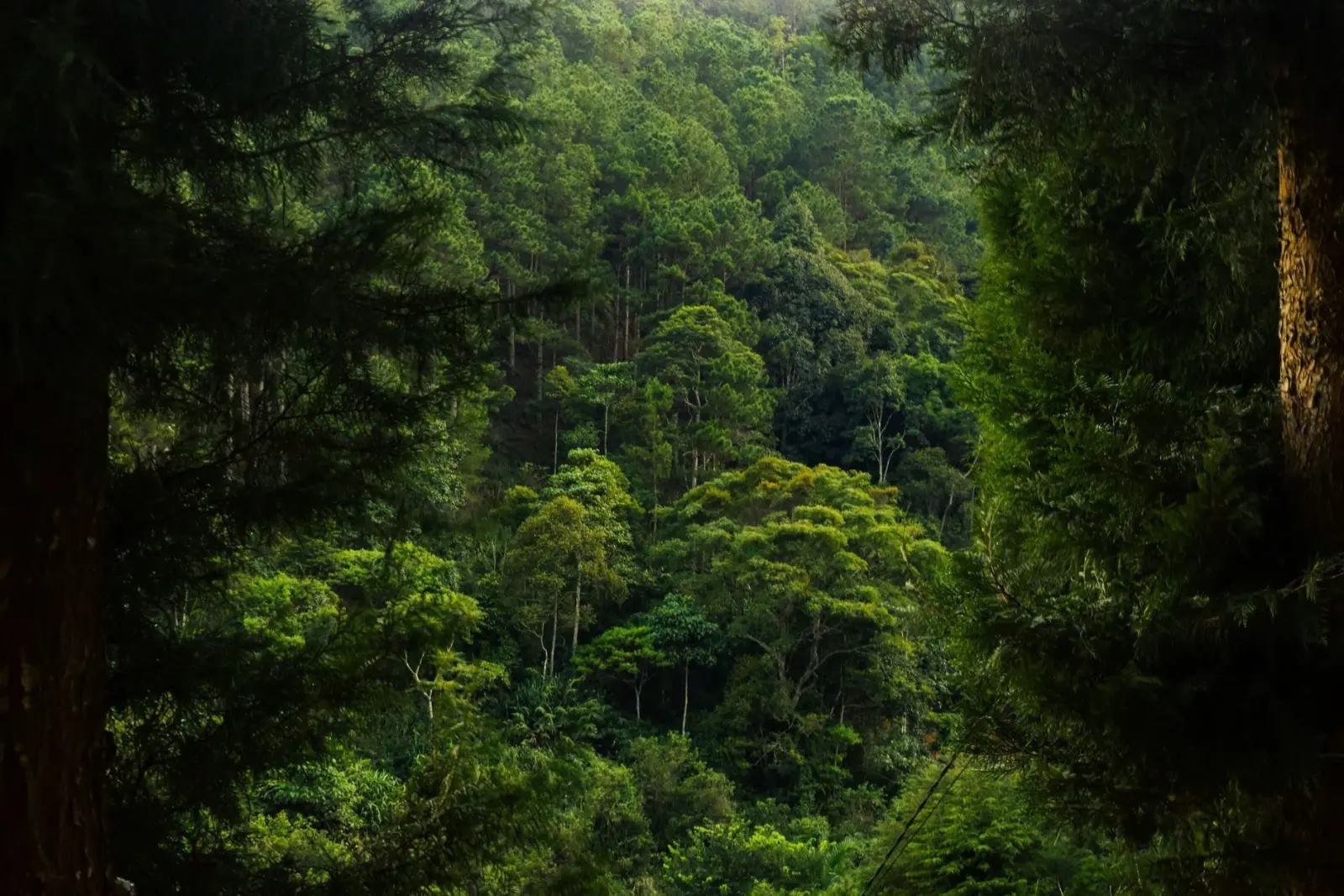
The first thing to understand is that rainforests aren’t uniform. There’s a ground layer where visibility extends maybe ten to fifteen meters on a good day. There’s the understory, a tangle of vegetation between roughly five and twenty meters high where light is scarce and movement is constrained. Then the canopy, which for many animals is an entirely different world with its own routes and landmarks. An animal’s navigation strategy depends almost entirely on which layer it inhabits and how it moves through space.
Scent as a Primary Navigation Tool
Mammals with decent olfactory systems – jaguars, peccaries, forest cats – rely heavily on scent marking and scent trails. What’s interesting is that scent in a rainforest doesn’t behave the way it does in open terrain. Humidity is near-constant, usually between 80 and 95 percent. This means scent particles hang in the air and settle on vegetation differently than in drier climates. I’ve watched jaguars pause at specific trees repeatedly, not because they’re marking territory in the way a temperate predator might, but because those trees are established information hubs. Other animals pass through them. Scent accumulates and gets refreshed.
The density of vegetation actually works in favor of scent-based navigation. Odor molecules don’t disperse as quickly as they would in open air. A peccary can detect a food source – fallen fruit, roots, insects – from a greater distance than you’d expect because the scent trail is contained and concentrated by the surrounding plants. But this only works if the animal knows where to look. That’s where memory comes in. Peccaries in particular follow established routes through their home ranges, routes that are reinforced over months and years. They’re not randomly wandering. They’re moving between known feeding sites, water sources, and shelter areas.
Sound and Acoustic Landmarks
In a rainforest, you’re rarely silent. Water is moving somewhere – streams, dripping from the canopy, the occasional larger water body. Birds are calling constantly, especially during dawn and dusk. Insects create a baseline hum that varies by location and time of day. Animals use this acoustic environment as a navigation aid in ways that aren’t immediately obvious.
Howler monkeys, which I’ve tracked in multiple rainforests, use their calls partly for territorial communication but also as acoustic landmarks. A troop will call from roughly the same location each dawn. Other animals – not just other primates – appear to orient themselves using these calls. The acoustic signature of a particular area becomes familiar. A monkey moving through the canopy at night relies on memory of where it fell asleep and the general acoustic character of different parts of its range. It’s not precise, but it’s reliable enough for an animal that doesn’t need to be anywhere specific, just somewhere safe and within its known territory.
Smaller animals that are nocturnal face a different problem. Many frogs, insects, and small mammals navigate partly by sound but also by the absence of sound. Quiet zones often indicate dense vegetation or shelter. Loud zones might indicate open areas or water. A poison dart frog moving through leaf litter is responding to micro-topography and the feel of the ground, but it’s also listening. The acoustic environment tells it whether it’s in a suitable microhabitat.
Visual Navigation in Limited Light
The canopy blocks somewhere between 95 and 99 percent of sunlight depending on the season and location. Ground-level visibility is genuinely limited. Yet animals still navigate visually, and this is where adaptation becomes obvious. Many rainforest animals have larger eyes than their temperate relatives. Nocturnal species have tapetum lucidum – a reflective layer behind the retina that amplifies available light. But even with these adaptations, visual navigation isn’t about seeing distant landmarks.
What I’ve observed is that animals navigate by immediate visual cues: the shape of a tree trunk, the arrangement of roots, the texture of bark, the presence of specific plants. A jaguar moving through dense vegetation at night is reading the immediate environment in front of it, not planning a route from a mental map of the forest. Its eyes have adapted to work in very low light, but it’s still moving relatively slowly and deliberately, pausing to assess what’s ahead.
Arboreal animals – sloths, tree-dwelling snakes, certain primates – have different visual priorities. They’re navigating three-dimensionally through branches. Their visual system is oriented toward assessing branch thickness, distance, and stability. A sloth moves slowly not because it’s lazy but because it’s making constant visual assessments of whether the next branch will support its weight. The canopy is a highway, but it requires careful reading.
Memory and Spatial Learning
The most underestimated aspect of rainforest navigation is memory. Animals with larger home ranges and longer lifespans – jaguars, some primates, certain birds – develop detailed mental maps of their territories. This isn’t conscious cartography. It’s accumulated experience. A jaguar knows where it caught prey six months ago. It knows which water sources are reliable in dry season. It knows which trails are passable and which are blocked by fallen trees or flooding.
This learned knowledge is passed between individuals in some species. Young jaguars learn routes from their mothers. Primates in stable troops learn the territory from older group members. This cultural transmission of spatial knowledge means that an animal’s navigation strategy isn’t purely instinctive – it’s shaped by what the previous generation learned and where resources were abundant in previous years.
The problem, and this is something I’ve seen repeatedly, is that this learned knowledge can become a liability during unusual events. A severe drought changes where water is available. A windstorm creates new gaps in the canopy. Animals that have relied on established routes sometimes struggle to adapt quickly. Young animals that haven’t yet built extensive spatial memory are more flexible but also more vulnerable.
Layered Navigation and Seasonal Shifts
What ties all of this together is that rainforest animals don’t use a single navigation system. They layer multiple strategies. A jaguar moving through its territory at night is simultaneously using scent information from the ground, listening to the acoustic environment, visually assessing immediate obstacles, and relying on memory of where it has been before. These systems work together, and when one is compromised – heavy rain that washes away scent, unusually quiet night due to weather – the animal can still navigate using the others.
Seasonality adds another layer of complexity. During wet season, water levels rise and some routes become impassable. During dry season, water sources concentrate animals, and navigation becomes more about finding those specific locations. Animals adjust their range and their movement patterns accordingly. A species that ranges widely during wet season might concentrate near permanent water sources during dry season. This isn’t random behavior – it’s a response to changing navigation constraints.
The animals that thrive in rainforests are those that can maintain multiple navigation strategies simultaneously and shift between them as conditions change. They don’t have a single way of finding their way. They have flexibility built into their sensory and cognitive systems. That’s what allows them to persist in an environment where visibility is limited, landmarks shift seasonally, and the path ahead is rarely clear.