

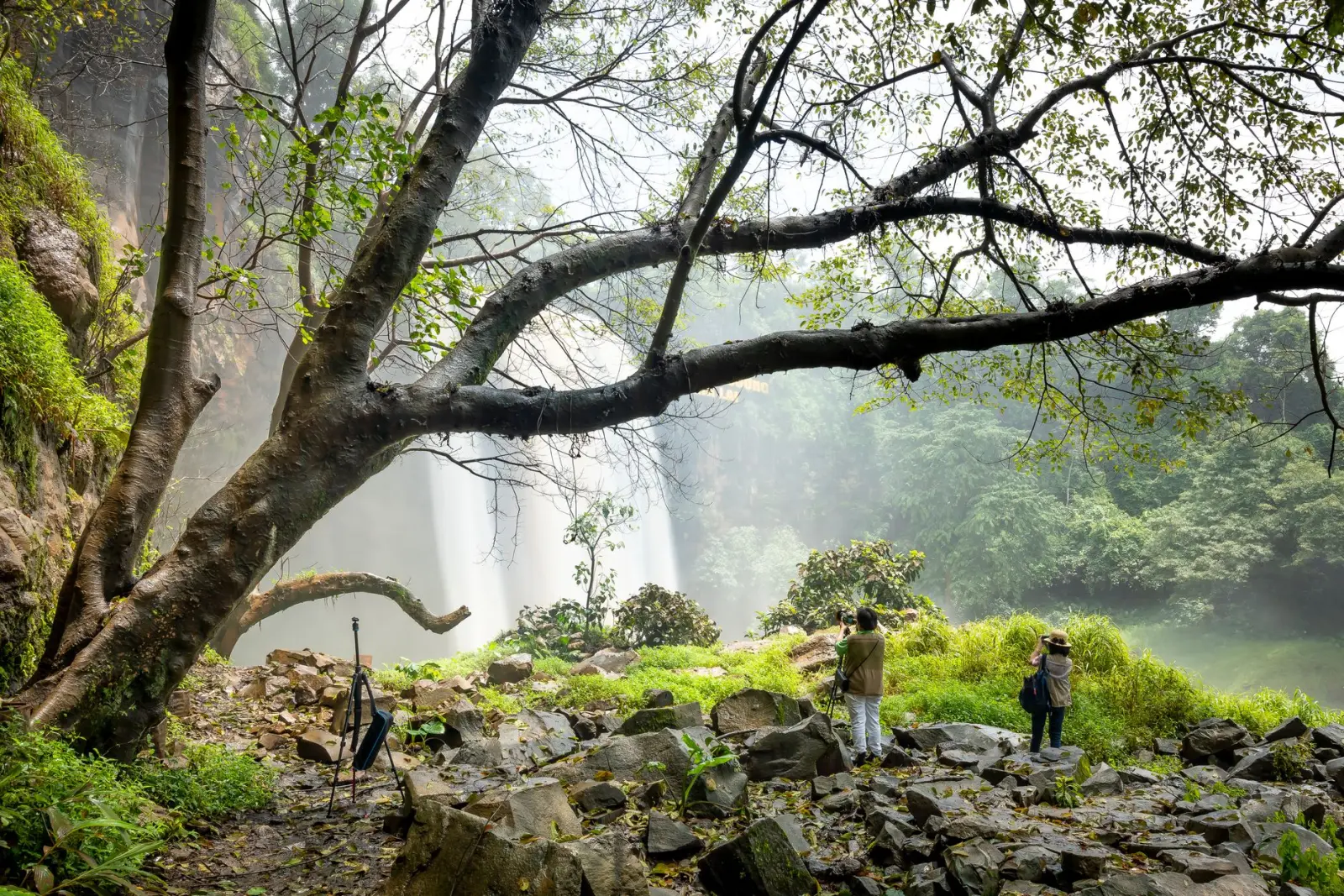
Clamshell Falls sits in a section of forest where the landscape changes noticeably depending on when you visit and how much water has moved through the system. I’ve spent enough time in this area to recognize the patterns – the way certain trails become impassable after heavy rain, how the undergrowth shifts with the seasons, and which routes actually connect where despite what maps might suggest.
The forest around the falls isn’t uniform. You’re moving through a mix of old-growth sections, areas recovering from past logging, and stretches of dense young growth that can feel claustrophobic. The canopy coverage varies enough that your experience of the terrain changes noticeably within a single hike. This matters because it affects footing, visibility, and how quickly you can move through different sections.
Water is the dominant force here. The creek that feeds Clamshell Falls runs year-round, but its volume and behavior shift dramatically between seasons. In winter and early spring, the water moves aggressively, and the forest floor near the creek becomes saturated. Trails that are merely muddy in autumn become genuinely difficult to navigate. The rocks become slick, and what looks like solid ground often isn’t. I’ve watched people underestimate this and end up with twisted ankles or worse.
Understanding Water Crossings
Several trails in this area require you to cross the creek or navigate alongside it. The crossing points change character depending on flow. During low-water periods in late summer, these are straightforward rock-hop situations. When water volume increases, the same crossings become technical. Rocks shift, the current strengthens, and the water temperature drops enough that a fall becomes genuinely dangerous rather than just uncomfortable.
The creek also creates a constant noise that can be disorienting if you’re trying to navigate by sound or if you’re not paying attention to your actual location. I’ve noticed people getting turned around in this forest partly because the water sound masks other environmental cues. The forest floor is also softer and more forgiving near the creek, which means it’s easy to lose track of how far you’ve traveled because your legs don’t tire as quickly on the cushioned ground.
Trail Maintenance and Actual Conditions
The trails here receive sporadic maintenance. Some sections are well-cleared and easy to follow. Others disappear into brush or become ambiguous where multiple informal paths have developed. This isn’t unusual for forest areas, but it’s worth acknowledging because your phone might show a clear line on a map while you’re standing in front of something that looks nothing like a trail.
The most-traveled route to the falls themselves is generally maintained well enough. But side trails and alternate routes are another matter. I’ve seen people follow what they assumed was a trail only to realize they were following a game path or a drainage channel. The forest doesn’t always make these distinctions obvious.
Deadfall is a constant presence. Trees come down regularly, and depending on when they fell and how they’re oriented, they either become part of the trail experience or create obstacles. In autumn and winter, fresh deadfall can block previously clear sections. By the following summer, people have usually found ways around them or the trails have been cleared. This cycle repeats.
Seasonal Shifts in Accessibility
Summer is when most people explore this area, and for good reason. The trails are drier, the water is lower, and the overall experience is less physically demanding. You can move faster, and the risk of slipping or getting stuck is lower. The downside is that the forest is busier, and some of the more subtle features – certain viewpoints, smaller cascades, the way light filters through the canopy – are less distinctive when everything is dry and the vegetation is at full density.
Spring brings energy to the forest. The water is high, the new growth is visible, and there’s a sense of movement and change. But this is also when the trails are most compromised. I’ve found that spring hiking here requires more patience and more careful footing. You’re not moving efficiently, but the landscape is genuinely dynamic in a way that makes the slower pace feel appropriate.
Fall is interesting because the forest is transitioning. Some trails dry out earlier than others depending on aspect and drainage. The undergrowth starts to thin, which can actually make navigation easier in some spots because you can see further. But this is also when the forest floor becomes deceptive – leaves cover obstacles, and what looks like solid ground might be a hole or a root.
What Tends to Go Wrong
Most problems I’ve observed in this area stem from underestimating distance or time. The forest is dense enough that visibility is limited, which makes it hard to judge how far you’ve actually traveled. People often think they’re closer to the falls than they actually are, or they underestimate how long it takes to cover a given distance. This leads to people pushing on when they should turn back, or arriving at the falls with less daylight remaining than they’d prefer.
The second common issue is footwear. People show up in trail runners or shoes designed for dry conditions and find themselves struggling on wet, rooty terrain. The forest around Clamshell Falls is genuinely technical in places. Good grip and ankle support matter more than most people expect.
Navigation is the third area where things go sideways. The forest doesn’t have many obvious landmarks. The creek is a useful reference, but relying on it alone can lead you downstream when you meant to go upstream, or vice versa. I’ve seen people follow the sound of water with confidence, only to realize they’ve drifted away from their intended route.
Finally, people often underestimate how much energy the forest demands. The ground is uneven, the footing is uncertain, and your legs are working harder than they would on a maintained trail. By the time people reach the falls, they’re often more tired than expected, which affects their judgment about whether to explore further or turn back.
Moving Through the Forest Effectively
The most practical approach is to move slowly and deliberately. This isn’t a place where speed is rewarded. Watching your footing, checking your location against a map or GPS periodically, and stopping to listen to the forest rather than just pushing forward all make a difference. The forest will tell you things if you’re paying attention – changes in the sound of water, the smell of the air, the way the light shifts – but only if you’re moving slowly enough to notice.
Bring more water than you think you need. The creek is there, but treating it without proper filtration is risky, and stopping to filter water takes time. It’s easier to carry extra than to spend time processing water in the field.
The forest around Clamshell Falls rewards patience and attention. It’s not a place where you can zone out and let your feet carry you. But if you move with intention and respect the conditions, it’s a genuinely interesting piece of landscape – complex enough to feel like exploration, close enough to civilization that you’re not dealing with serious wilderness logistics. That balance is what keeps people coming back.



