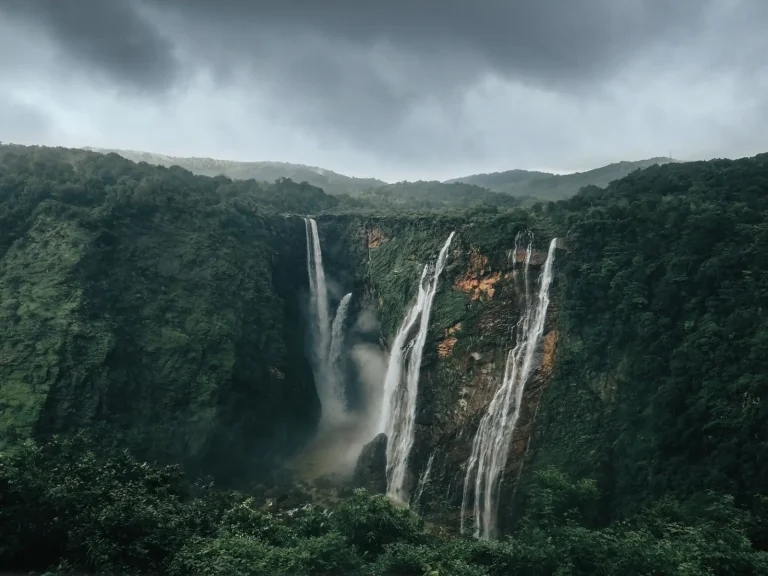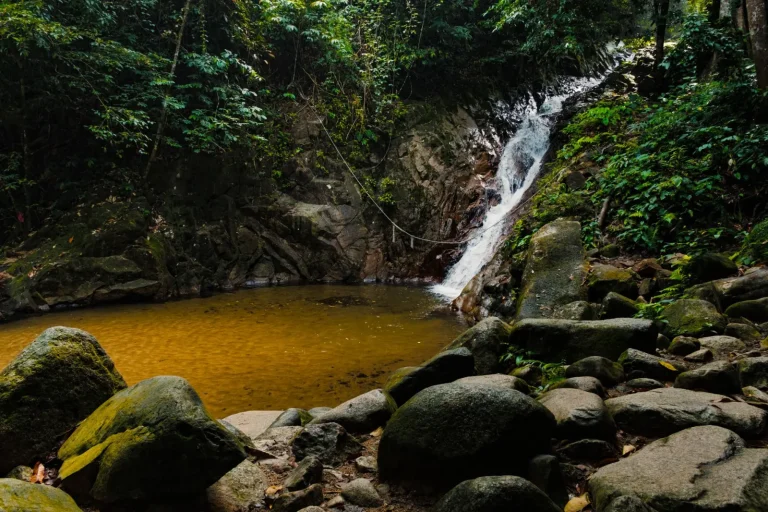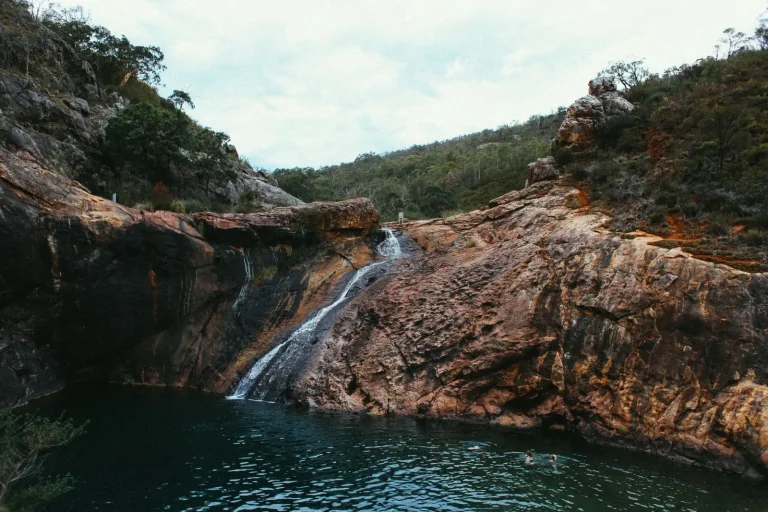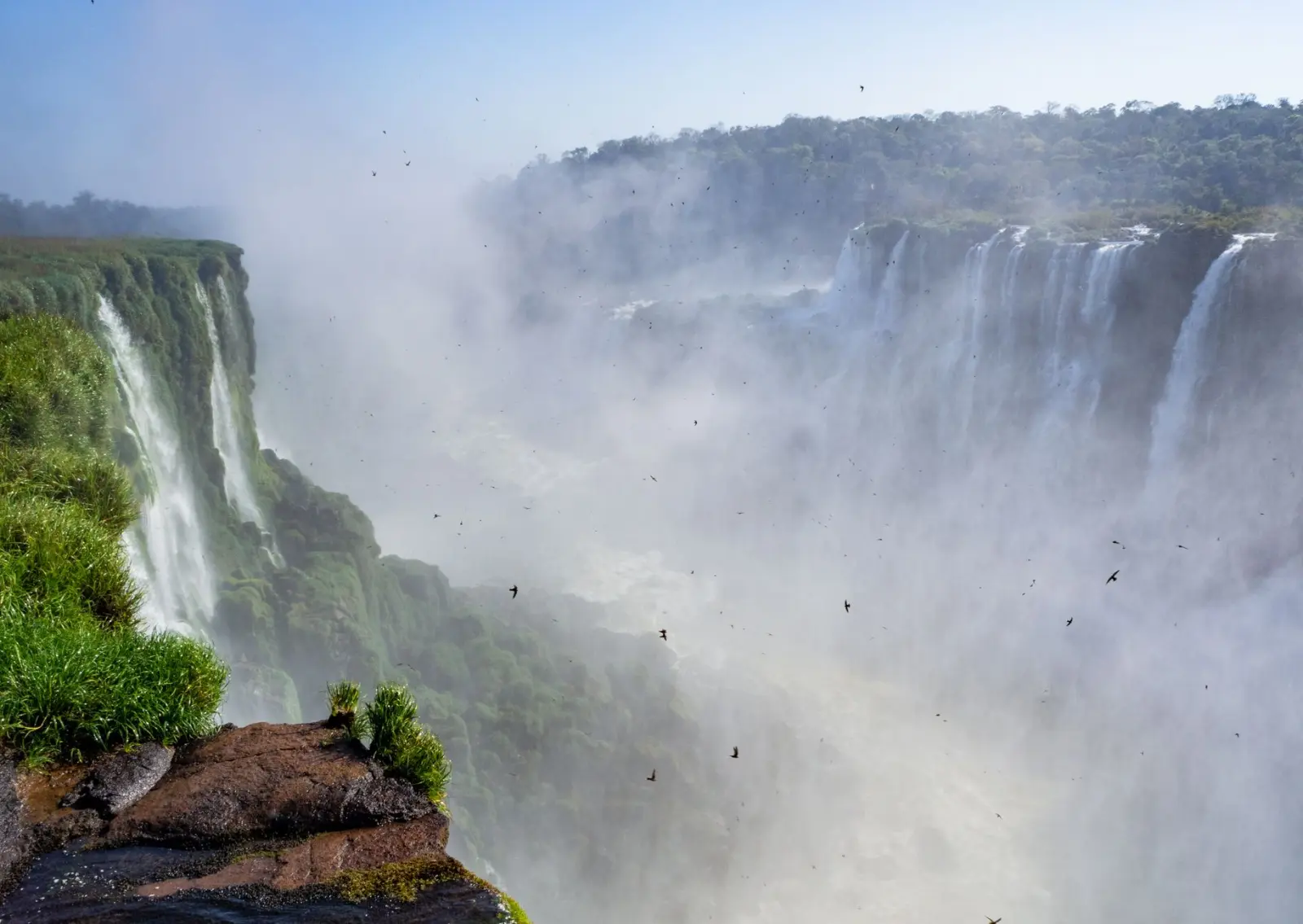
Spend enough time near waterfalls – really near them, not just photographing from a distance – and you start noticing patterns that seem almost improbable. The roar of falling water masks a constant hum of activity. Insects swarm in clouds near the mist. Birds nest in the spray zone. Fish congregate in specific pools. Ferns and mosses carpet every available surface in shades of green you rarely see elsewhere. This isn’t random clustering. Waterfalls function as ecological concentrators, pulling together the physical and chemical conditions that allow life to flourish at densities far exceeding the surrounding landscape.
The fundamental reason is straightforward: waterfalls oxygenate water in ways that few other natural processes can match. When water drops from height, it breaks into droplets, tumbles over rocks, and churns violently at the base. This mechanical action forces atmospheric oxygen into the water column at rates that still water cannot achieve. Trout and other oxygen-demanding fish don’t settle randomly in streams. They position themselves in the plunge pools below falls and in the rapids downstream, where dissolved oxygen concentrations spike. I’ve watched anglers spend entire days fishing flat sections upstream, catching nothing, while a 50-meter stretch below a modest cascade holds enough fish to make a morning worthwhile. The difference isn’t luck. It’s chemistry.
Nutrient Cycling and Water Velocity
Waterfalls also disrupt sediment patterns in ways that redistribute nutrients. As water accelerates over a drop, it scours the streambed below, creating deeper pools and exposing fresh substrate. This physical disturbance prevents the stagnation that occurs in slow-moving water. Organic matter – fallen leaves, insect bodies, plant debris – doesn’t accumulate in a single location. Instead, it gets transported, broken down, and redistributed across a wider area. Bacteria and fungi colonize these materials rapidly in the oxygen-rich environment, converting them into forms that aquatic plants and invertebrates can use. The result is a more efficient nutrient cycle than what you find in placid sections of the same stream.
The spray zone around a waterfall creates its own microclimate. Mist carries water and nutrients into the air, depositing them on rocks, soil, and vegetation far beyond the immediate streambed. Mosses and liverworts exploit this constant moisture, growing in dense mats that would be impossible in drier areas. These bryophytes, in turn, trap sediment and organic matter, building up soil in crevices and on vertical surfaces. Over time, this creates pockets of rich substrate where ferns establish themselves, followed by small shrubs and eventually trees. I’ve seen cliff faces that would otherwise be bare rock transformed into vertical gardens simply because of the persistent mist from a nearby fall. The spray zone becomes a transitional habitat – neither fully aquatic nor fully terrestrial – that supports species found nowhere else in the region.
Habitat Diversity Within Small Spaces
One of the most striking features of waterfall ecosystems is the sheer range of microhabitats packed into a small area. Within a 100-meter radius of a substantial fall, you can find fast-moving rapids, slow backwater pools, splash zones, dry rock faces, saturated soil banks, and spray-dampened vegetation. Each microhabitat supports its own community. Mayfly nymphs cling to rocks in the fastest current. Dragonfly larvae hunt in the quieter pools. Caddisfly larvae build cases from sand grains in moderate flow. Aquatic snails graze on algae in the slower sections. Terrestrial insects shelter under overhanging vegetation. This spatial heterogeneity means that a waterfall system can support dozens of species in the same footprint where a uniform stream section might support half that number.
The diversity extends to the predator-prey relationships that stabilize these communities. Where there is abundant invertebrate life, there are birds. Dippers hunt in the rapids. Kingfishers perch on rocks, waiting for fish. Swallows snatch insects from the air above the falls. Herons and egrets work the quieter pools. Mammals come to drink and hunt – otters in particular favor waterfall pools because the concentrated prey makes efficient hunting possible. I’ve observed otter activity increase dramatically around falls compared to other sections of the same river system. The abundance of food in a small area reduces the energy cost of feeding, allowing populations to reach higher densities than they could elsewhere.
Seasonal Dynamics and Flow Variability
Waterfalls also create temporal complexity that supports biodiversity. During high water, the falls become more powerful, increasing aeration and scouring. The expanded spray zone floods areas that are normally dry, creating temporary habitats for amphibians and insects with aquatic larval stages. During low water, the falls weaken, but the reduced flow concentrates prey species into smaller areas, making them easier for predators to find and exploit. This oscillation between conditions prevents any single species from dominating completely. Specialists adapted to high-flow conditions coexist with specialists adapted to low-flow conditions because the environment cycles between both states.
The physical structure of a waterfall also influences which species can persist. Vertical drops create barriers that some fish cannot navigate, leading to reproductive isolation and the evolution of distinct populations above and below the fall. This can drive speciation – the formation of new species – over evolutionary time. More immediately, it means that populations above and below a fall experience different selective pressures and may develop different traits. I’ve collected fish specimens from above and below the same waterfall and noticed measurable differences in body morphology, even when the species name was identical. The barrier imposed by the fall, while permeable to some organisms, is selective enough to matter ecologically.
Waterfalls are not uniform features. A 10-meter cascade in a small stream creates very different conditions than a 100-meter plunge in a major river. The smaller fall might support a few thousand invertebrates and a handful of fish species. The larger fall might support orders of magnitude more life. But in both cases, the principle holds: the waterfall concentrates the conditions necessary for life – oxygen, nutrients, water, habitat diversity – in ways that the surrounding landscape cannot. This is why waterfall ecosystems consistently support biodiversity levels that seem disproportionate to their area. It is not that waterfalls create life from nothing. Rather, they gather the scattered resources of the broader watershed and concentrate them in a way that allows more organisms to thrive in less space. Understanding this helps explain why waterfall regions remain ecological priorities worth protecting, even when the surrounding landscape has been heavily modified by human activity.