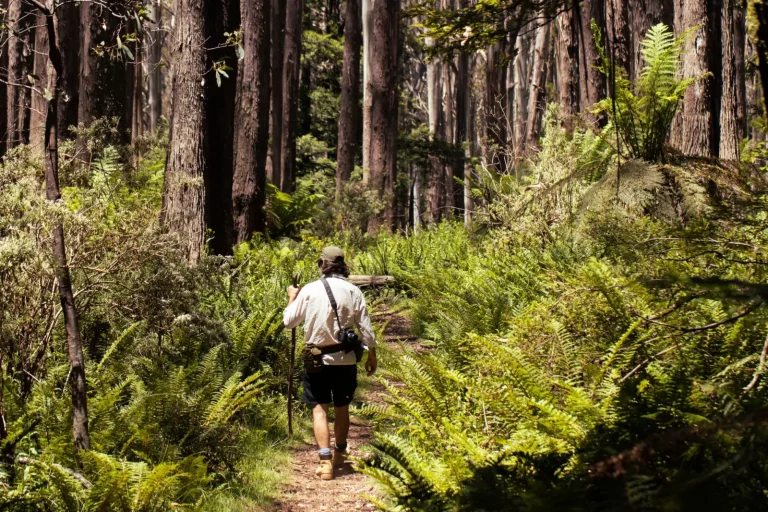
Minyon Grass sits in a particular pocket of northern New South Wales where the landscape shifts between open grassland and dense subtropical rainforest. The forest around it isn’t uniform, and that matters more than most people realize when they start exploring. I’ve spent enough time moving through this country to know that what looks accessible from a distance often requires a different approach once you’re actually on the ground.
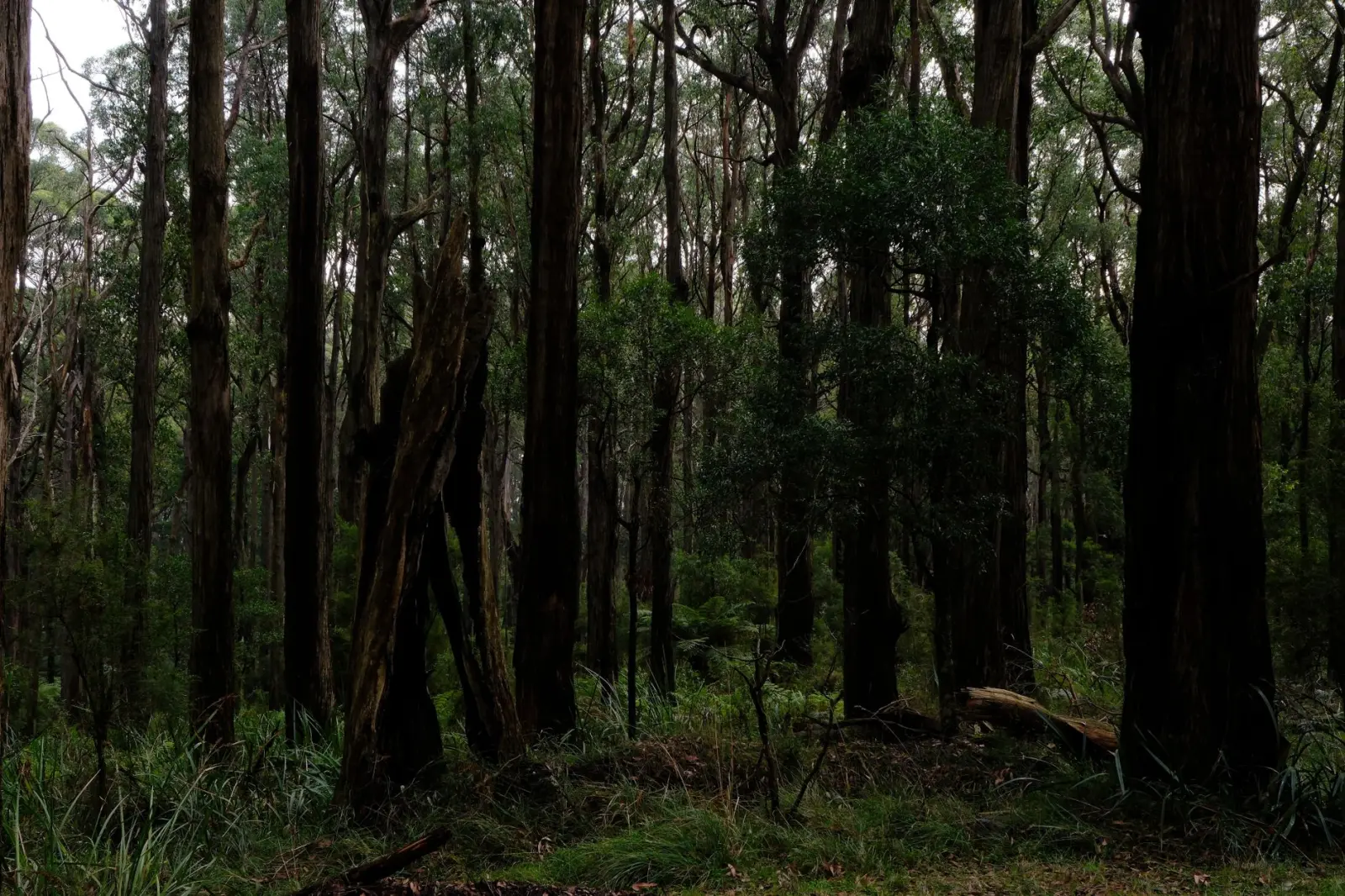
The forest composition changes depending on which direction you head from the grass itself. Move south and west, and you’re dealing with tall eucalyptus mixed with rainforest understory – the kind of growth that looks open from above but becomes surprisingly dense at ground level. The canopy closes in quickly, and the temperature drops noticeably. Head north or east, and the transition is more gradual, with patches of open woodland interspersed with thicker scrub. This variation means your pace and energy expenditure shift significantly depending on your route.
Terrain and Movement Reality
Walking through this forest isn’t a simple matter of following a clear path. The ground is uneven, with root systems that have been establishing themselves for decades. Fallen logs are common, and they’re not always obvious until you’re close to them. The soil itself tends to be soft in wetter sections and surprisingly hard-packed in drier areas, which affects your footing and how quickly fatigue sets in. I’ve noticed that people often underestimate how much energy is required simply to maintain balance and awareness over this kind of terrain.
The understory vegetation varies seasonally. In warmer months, the regrowth after any disturbance can be thick enough to slow movement considerably. Lawyer vine and similar species create natural obstacles that don’t show up on any map. In cooler months, visibility improves, but the ground becomes more slippery where moisture lingers. Neither condition is dangerous in itself, but both demand a different rhythm of movement and attention.
Water and Drainage Patterns
The forest around Minyon Grass has several creeks and drainage lines that flow toward the Minyon Falls area. These aren’t permanent watercourses everywhere, but they become relevant quickly after rain. The drainage lines also create natural corridors through the forest, and they’re often easier to follow than trying to maintain a straight bearing through dense growth. However, following water downhill can lead you away from where you actually want to be, so navigation requires some thought rather than just instinct.
Seasonal water availability changes the character of exploration significantly. In dry periods, the forest feels more open and movement is faster, but water sources become scarce. In wet periods, the forest is lusher and more visually interesting, but movement slows and route-finding becomes more deliberate. I’ve found that people who visit only once often get a skewed impression of what the forest is actually like most of the time.
Wildlife and Seasonal Patterns
The forest supports a range of fauna that you’ll encounter or evidence of, depending on timing and how quietly you move. Lyrebirds are present and their calls can be disorienting if you’re not expecting them. Reptiles are common – snakes, lizards, and goannas – but they’re generally more interested in avoiding you than engaging. The key observation is that wildlife activity is heavily influenced by time of day and season. Early morning and late afternoon bring more visible activity. Summer tends to be quieter in the middle of the day due to heat.
Ticks are a practical concern in this forest, particularly in warmer months. They’re not everywhere, but they’re present enough that awareness matters. The standard precautions – checking yourself regularly, wearing appropriate clothing – are worth the minor inconvenience. Insects like mosquitoes and midges can be present depending on recent rainfall and time of year, though they’re not usually a major problem in the open forest areas.
Access and Navigation Considerations
Getting into the forest around Minyon Grass requires some planning. There are established entry points, but they’re not always obvious if you’re unfamiliar with the area. The main access tends to be from the Minyon Grass area itself or from the Minyon Falls approach. Once you’re in the forest, navigation relies on a combination of landmarks, terrain features, and map reading. GPS is useful, but the canopy can affect signal, and relying solely on it is risky.
The time required to cover distance is often longer than people anticipate. A kilometer through this forest doesn’t take the same amount of time as a kilometer on open ground or a maintained trail. Factors like slope, vegetation density, and ground conditions all compress your pace. I’ve observed that experienced bushwalkers typically plan for slower movement and build in buffer time for navigation decisions.
The forest around Minyon Grass rewards patience and observation. It’s not a place where speed or rigid planning works particularly well. The landscape changes character depending on where you are, what season it is, and how much recent weather has affected conditions. Understanding that variation – and accepting that each visit will feel somewhat different – is probably the most useful insight for anyone planning to explore it properly.