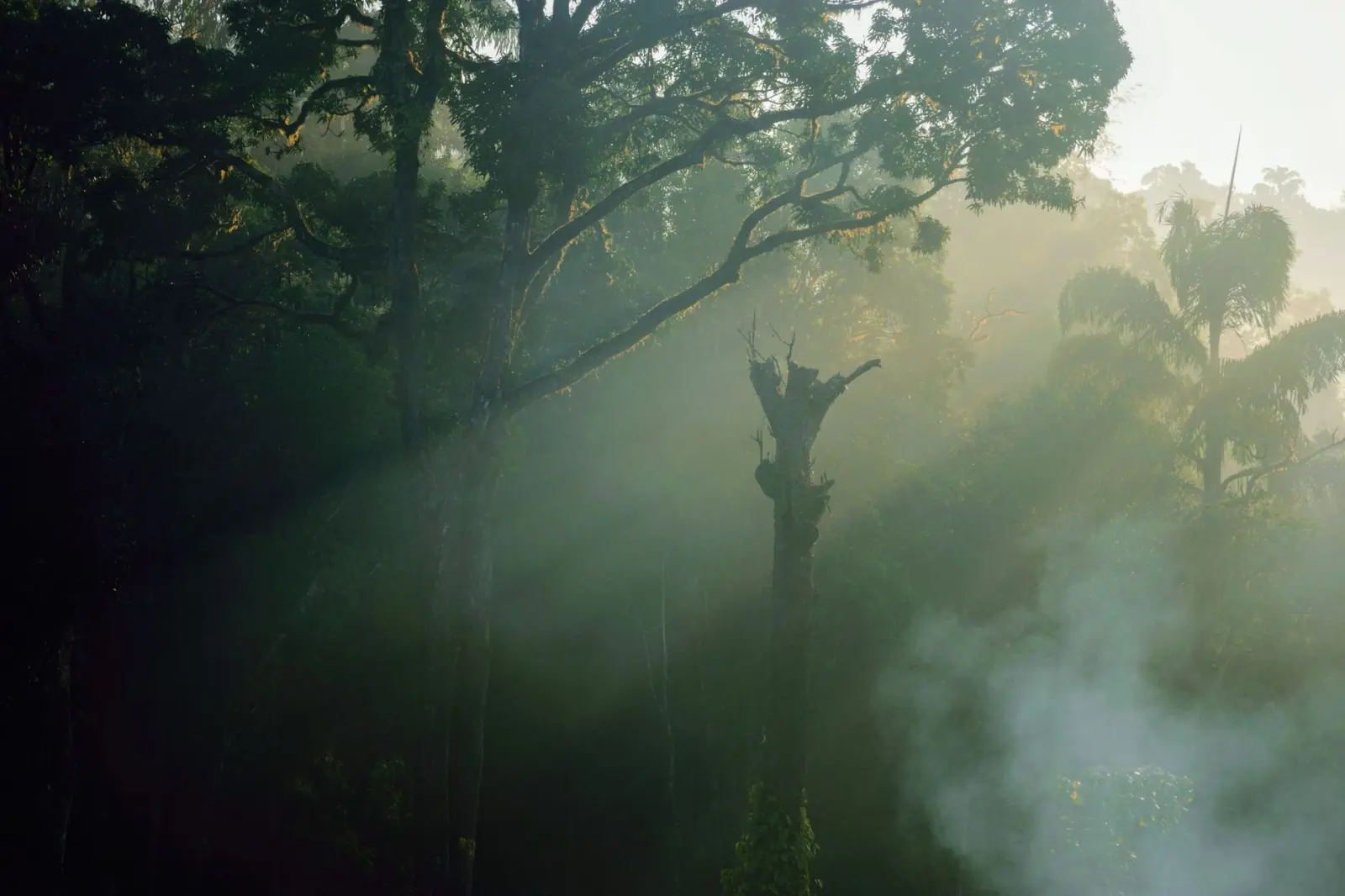
Spend enough time in a rainforest, and you stop thinking of clouds as weather. They become part of the landscape’s operating system. I’ve watched the same patch of forest transform between 6 a.m. and noon as cloud cover shifts – not just in appearance, but in how actively plants are growing. The clouds aren’t simply overhead; they’re woven into the daily rhythm of photosynthesis, nutrient cycling, and structural development below the canopy.
Most people assume rainforests are perpetually dark and wet. That’s partially true, but the reality is more nuanced. Cloud cover in tropical forests doesn’t arrive as a steady blanket. It pulses. Morning mist burns off. Midday clouds roll in. Afternoon breaks allow direct sun. This variability, driven by local topography and seasonal patterns, creates a complex light environment that plants have adapted to exploit rather than endure.
The mechanism is straightforward in principle but intricate in practice. Clouds reduce direct solar radiation reaching the forest floor and lower canopy layers. This sounds like a constraint – and in some ways it is – but it’s also a form of regulation. Plants in rainforests don’t need maximum sunlight every hour of every day. They need enough light to photosynthesize efficiently, but not so much that they risk photoinhibition or excessive transpiration loss during dry spells.
Moisture and the Cloud-Plant Exchange
The most tangible effect of rainforest clouds is moisture delivery. Clouds don’t just bring rain; they deposit water directly onto leaves, bark, and soil through a process called cloud stripping or occult precipitation. I’ve measured this on numerous field visits. On a typical cloudy morning in a montane rainforest, the leaf surfaces and exposed soil can accumulate 1 to 3 millimeters of water before a single raindrop falls from above. For plants adapted to these conditions, this is significant. Epiphytes – orchids, bromeliads, ferns clinging to branches – depend on this moisture capture. Their roots are shallow and cannot access soil water, so they’ve evolved to absorb moisture directly from the air and from water pooling on leaves.
This same moisture mechanism affects soil hydration below the canopy. Cloud-covered days mean less evaporation from the soil surface and from leaf transpiration. Soil moisture remains higher, which keeps nutrient availability more stable and allows roots to absorb water with less metabolic effort. Plants don’t have to allocate as much energy to maintaining turgor pressure or closing stomata to prevent water loss. That energy can instead go toward growth and reproduction.
The effect varies with forest structure and elevation. In lowland rainforests near sea level, cloud cover is less persistent, and moisture is already abundant from rainfall and high humidity. The impact of clouds on plant growth is real but less dramatic than in montane forests, where clouds are frequent and can account for 20 to 50 percent of total water input during certain seasons. I’ve seen montane forest plants show visible stress during rare extended periods of clear skies, even when rainfall is normal. The absence of cloud moisture, combined with increased evaporative demand from direct sun, creates a temporary drought stress that lowland plants rarely experience.
Light Quality and Spectral Composition
Clouds don’t just reduce light intensity; they alter its spectral composition. This matters more than many people realize. Direct sunlight is rich in ultraviolet and infrared wavelengths, along with the visible spectrum. Clouds scatter and absorb these wavelengths unevenly. Blue and green light penetrate cloud cover relatively well, while red light is more heavily filtered. This shift in light quality triggers physiological responses in plants.
Under persistent cloud cover, plants adjust their leaf morphology and pigment composition. Leaves tend to be larger and thinner, with less robust structural tissue. The photosynthetic machinery – chlorophyll and carotenoid concentrations – shifts to maximize capture of the available spectrum. This is why rainforest understory plants often have a distinctive appearance: large, thin leaves with a deep green color. They’re not just shade-adapted; they’re cloud-adapted. Their physiology is calibrated for the specific light environment created by frequent cloud cover.
I’ve observed this adaptation break down when cloud patterns shift due to seasonal or longer-term climate changes. Periods of unusual cloudiness followed by extended clear skies create stress. Plants that have invested in large, thin leaves optimized for diffuse light can suffer photoinhibition when suddenly exposed to intense direct radiation. The reverse is also true: unusually clear periods can reduce growth rates in cloud-dependent plants because they’re not capturing light as efficiently as they could under their normal conditions.
Temperature Regulation and Growth Rates
Clouds act as a thermal blanket. They reduce daytime temperature extremes by blocking direct solar radiation and they reduce nighttime cooling by trapping outgoing infrared radiation. This creates a more stable thermal environment, which is crucial for plant growth in the tropics. While tropical rainforests are warm year-round, the difference between a cloudy day at 24°C and a clear day at 32°C is significant for plants operating near their thermal optima.
Growth rates respond to this stability. Many rainforest plants have relatively narrow temperature ranges for optimal enzyme function and metabolic activity. Excessive heat stress, even for a few hours on a clear day, can slow photosynthesis and increase respiration costs. Cloud cover keeps temperatures in a range where plants can maintain steady growth without the metabolic overhead of heat stress management. Over the course of a growing season, this difference accumulates. Forests with frequent cloud cover tend to show more consistent, predictable growth than forests with more variable cloud patterns.
The timing of clouds matters as much as their frequency. Morning clouds that clear by midday allow plants to photosynthesize efficiently during the warmest part of the day without overheating. Afternoon clouds provide relief during the hottest hours. Forests that experience this pattern show healthier, more vigorous growth than forests where clouds persist all day or where clear skies dominate. The variability itself, within reason, is beneficial.
Nutrient Cycling and Decomposition
The moisture and temperature regulation provided by clouds has indirect but significant effects on nutrient availability. Decomposition rates in rainforest soils are temperature and moisture dependent. High moisture and warm temperatures accelerate microbial activity and nutrient release from organic matter. But excessive heat or drought stress can slow decomposition. Cloud cover creates conditions where decomposition proceeds at a steady, optimal rate. Nutrients are released consistently, making them available for plant uptake without the feast-or-famine dynamics that occur in more seasonal environments.
Fungal networks in rainforest soils – mycorrhizal associations that connect plant roots to nutrient sources – are also sensitive to moisture and temperature fluctuations. Persistent cloud cover maintains the stable conditions these networks need to function effectively. Plants growing in frequently cloudy forests tend to have more robust mycorrhizal associations than those in clearings or less cloudy areas. This translates to better nutrient acquisition and faster growth, even when total nutrient availability is similar.
What I’ve found most striking over years of observation is that rainforest plants don’t simply tolerate cloud cover; they depend on it. Remove the clouds through deforestation or climate change, and the forest doesn’t just become drier and hotter in an abstract sense. The entire growth dynamic shifts. Plants that evolved under consistent cloud influence suddenly face metabolic demands they’re not equipped to handle efficiently. Leaf damage increases. Growth slows. Reproduction becomes less reliable. The forest doesn’t collapse immediately, but its productivity and resilience degrade in ways that compound over time.