
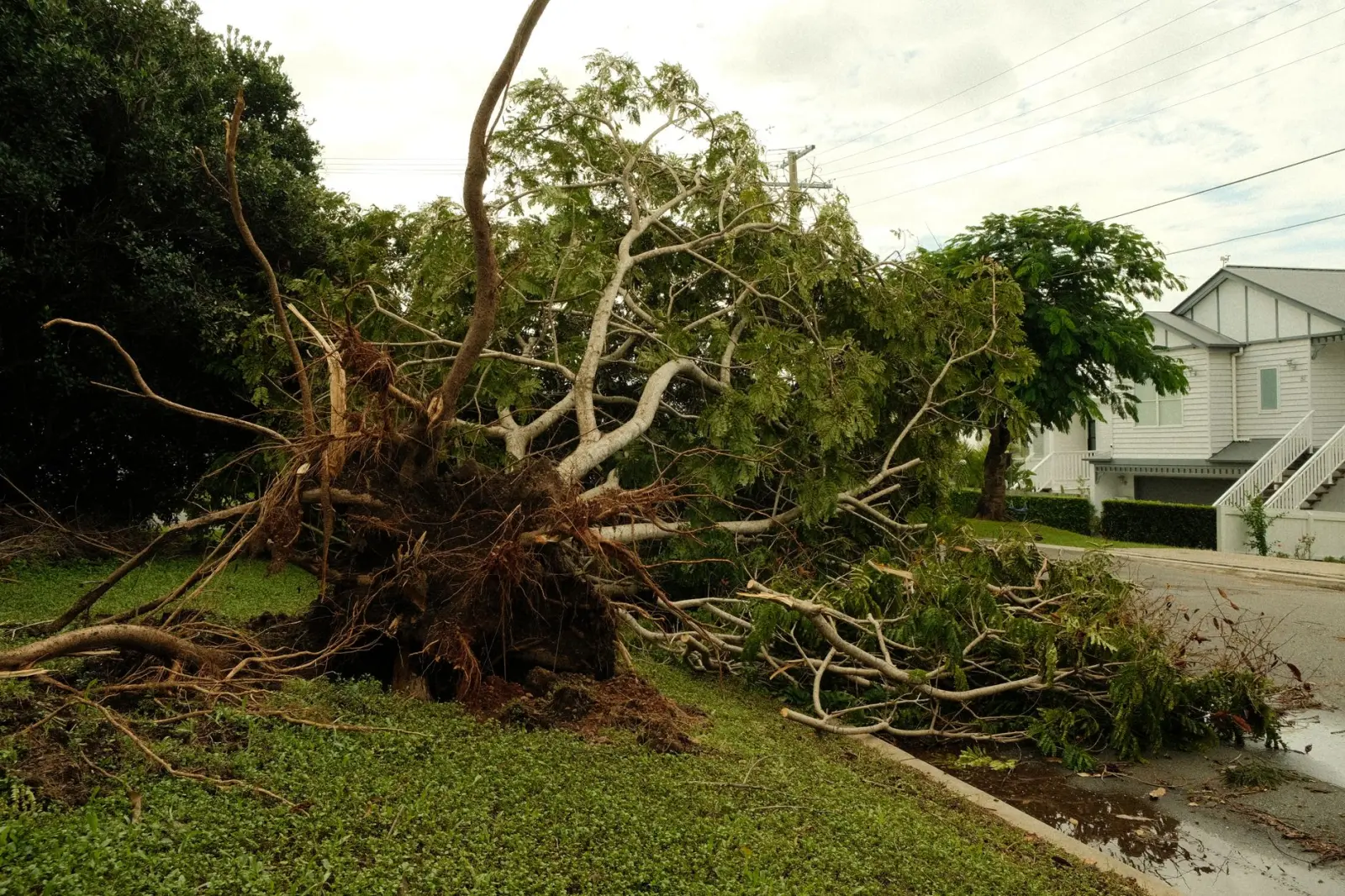
After spending years moving through tropical rainforests in the Pacific and Indian Ocean regions, you develop a certain awareness of what a cyclone-struck forest looks like. It’s not subtle. The landscape bears unmistakable scars – vast sections of canopy simply gone, massive trees snapped at the trunk or uprooted entirely, their root systems exposed like pale wounds in the soil. The first time you walk through one of these areas weeks or months after a major event, the scale of destruction is disorienting. What was a dense, three-dimensional maze of vegetation becomes suddenly open, almost skeletal.
The immediate physical impact is straightforward enough. Cyclones bring wind speeds that exceed what most tropical trees have evolved to withstand. A Category 4 or 5 system generates forces that don’t just bend branches – they snap mature hardwoods that have stood for centuries. The damage isn’t uniform. Trees on ridges and exposed slopes take the worst of it, while those in valleys and protected ravines may emerge relatively intact. Soil composition matters too. Trees rooted in shallow, waterlogged soils are far more likely to topple than those anchored in deep, well-drained earth. After heavy rainfall preceding or accompanying the cyclone, the ground becomes saturated, and root anchorage fails even in relatively modest winds.
The Canopy Opens Up
What strikes you most in the weeks following a major cyclone is the sudden abundance of light reaching the forest floor. In an undisturbed tropical rainforest, the canopy is typically so dense that the understory exists in perpetual twilight. A cyclone changes this dramatically. Hundreds of trees come down, creating gaps that can span several hectares. Sunlight floods into spaces that haven’t seen direct rays in decades. This isn’t an abstract ecological shift – it’s immediately visible and tangible. The forest floor, previously a dark tangle of decomposing matter and shade-tolerant vegetation, suddenly becomes exposed and hot.
This light influx triggers a cascade of responses in the remaining vegetation. Pioneer species – fast-growing, light-demanding plants that were suppressed in the shade – suddenly have the conditions they need to flourish. Lianas that were barely visible before begin climbing rapidly over the fallen logs and remaining standing trees. Herbaceous plants and shrubs that were dormant as seeds in the soil germinate in massive numbers. Within months, what looked like a devastated wasteland becomes a dense, almost impenetrable thicket of secondary growth. The forest doesn’t stay open for long. Nature abhors a vacuum, and a cyclone-created gap is filled with remarkable speed.
Species Composition Shifts
The longer-term effect of cyclone disturbance is a fundamental change in which species dominate the forest. This is where the real reshaping happens. In the absence of major disturbance, tropical rainforests tend toward a stable composition dominated by shade-tolerant, slow-growing species with dense wood and small seeds. These are the trees that can persist in low-light conditions and live for centuries. A cyclone disrupts this equilibrium violently. The shade-tolerant species that dominate the old-growth forest are often the ones most vulnerable to wind damage – their wood may be dense, but their crowns are large and their roots, adapted to stable soil conditions, don’t always survive the mechanical stress of a major storm.
In their place, light-demanding species establish themselves. These are typically faster-growing trees with lighter wood, smaller crowns, and more flexible branches. They can’t compete in shade, but they thrive in the open conditions created by the cyclone. Over the following decades, if another major cyclone doesn’t strike, these pioneer species gradually shade out and are replaced by slower-growing, more shade-tolerant species. The forest gradually returns to a composition more similar to what existed before. But if cyclones strike frequently – every 20 or 30 years rather than every century – the forest never has time to fully recover. It remains locked in a state of perpetual early-to-mid succession, dominated by pioneer and early-successional species rather than the shade-tolerant climax species.
Soil and Nutrient Dynamics
What often gets overlooked in discussions of cyclone impact is what happens to the soil itself. When large trees fall, they expose mineral soil that has been protected from direct weathering. The massive root systems that are torn from the ground create depressions that collect water and organic matter. Fallen logs decompose, and their nutrient content gradually becomes available to new vegetation. In the short term, there’s actually a pulse of nutrient availability as dead organic matter breaks down rapidly in the warm, wet conditions of the tropics. This nutrient flush supports the explosive growth of pioneer vegetation in the months and years following the cyclone.
But there’s a cost. The exposure of bare soil increases erosion, particularly on steep slopes. Nutrients that would have cycled slowly through the intact forest system are washed away in heavy rains. In areas where cyclones are frequent and intense, this can lead to a net loss of soil fertility over time. The forest doesn’t just change in composition – it becomes impoverished. I’ve seen forests in regions hit by multiple major cyclones within a few decades where the soil has visibly degraded, becoming shallower and less productive. The recovery becomes slower with each successive disturbance.
Wildlife and Habitat Restructuring
The reshaping of the forest structure has profound consequences for the animals that depend on it. Species adapted to dense, closed-canopy conditions – many arboreal mammals, certain bird species, and countless insects – suddenly lose their habitat. The immediate aftermath of a cyclone can be catastrophic for these populations. But the opening of the canopy also creates opportunities. Species that prefer more open, edge-like conditions move in. The diversity of the forest doesn’t necessarily decline, but its composition changes. Some species become locally extinct while others expand their range into areas they previously couldn’t occupy.
The fallen logs themselves become important habitat. They provide shelter for ground-dwelling animals, substrate for fungi and epiphytes, and feeding opportunities for insects and their predators. A forest full of fallen timber is structurally complex in ways that a standing forest isn’t. This complexity supports different ecological communities than what existed before. Over time, as the logs decay and new vegetation grows up around them, the habitat gradually transitions back toward what it was, but the process takes decades.
Cyclones are not anomalies in tropical rainforests – they’re part of the system’s evolutionary history. Many rainforest species have traits that reflect adaptation to periodic major disturbance. But the frequency and intensity of cyclones appears to be changing in some regions, and this is altering the balance. Forests that evolved under one disturbance regime may not adapt well to a different one. The reshaping that follows a cyclone is not simply a return to an earlier state – it’s a transition to a different forest altogether, shaped by the specific conditions of that particular storm and the time it takes for recovery.