After spending years observing rainforest canopies, you notice something that initially seems chaotic but follows a pattern once you start paying attention. Trees don’t all drop and regrow leaves at the same time. Some shed in clusters while others maintain a constant turnover. The mechanism behind this isn’t mysterious – it’s hydraulic pressure, chemical signaling, and a plant’s ability to read its environment with remarkable precision.
The process begins underground, in the roots. A rainforest tree’s root system works continuously to absorb water and minerals from soil that is often saturated and nutrient-poor. This water moves up through the xylem, creating positive pressure. When conditions are right – when soil moisture is adequate and the tree has accumulated enough stored energy – this pressure builds to a point where it can force open the buds at branch tips. The buds themselves are tightly wrapped in protective scales, but when hydraulic pressure increases, these scales separate and new leaves begin to emerge.
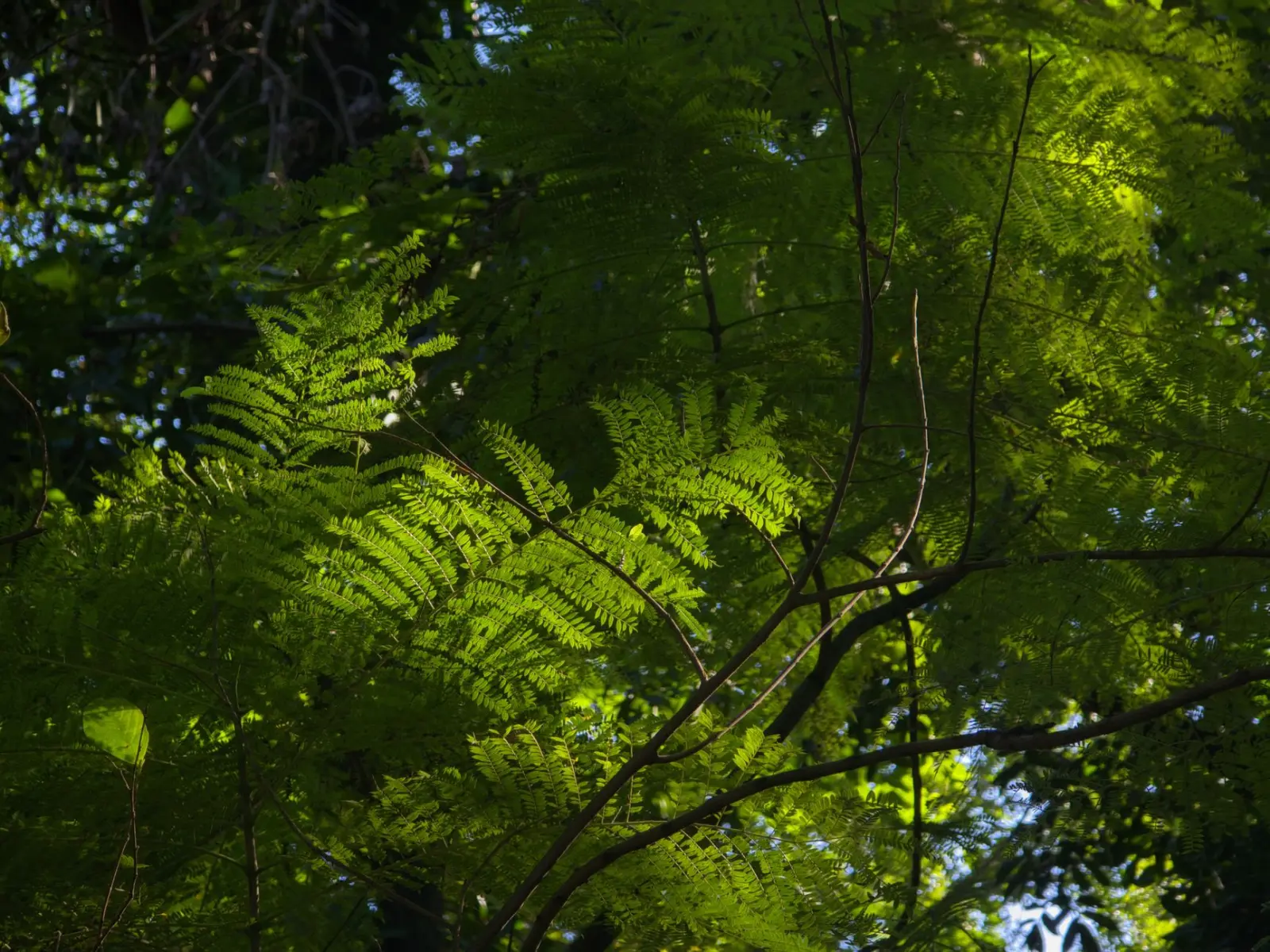
What’s often overlooked is that this isn’t a sudden event. The emergence of new leaves happens gradually over days or weeks, depending on the species and environmental conditions. You’ll see the pale, crumpled leaves first – they’re soft and vulnerable at this stage. They unfold slowly as cells expand and fill with water. The color shifts from reddish or pale green to the darker, waxy green of mature foliage. This transition period matters because young leaves are more susceptible to herbivory and photoinhibition, so trees time this flush carefully.
Hormonal Triggers and Seasonal Cues
The chemical signals driving leaf flushing are primarily auxins and gibberellins, hormones that regulate cell division and elongation. But what triggers the release of these hormones? In temperate forests, day length and temperature are the main cues. In rainforests, the picture is more complex. While temperature remains relatively constant year-round, water availability fluctuates. During wetter months, soil moisture increases, allowing roots to absorb more water and minerals. This abundance signals the tree that conditions favor growth.
Dry seasons matter too, though not always in the way you’d expect. Some rainforest trees actually flush new leaves as the dry season approaches, not after it ends. This seems counterintuitive until you consider the strategy. By growing new foliage before water becomes scarce, the tree maximizes the time it has to photosynthesize and build reserves. The new leaves are more efficient at capturing light and managing water loss than older, weathered foliage. Other species do the opposite – they wait until the rains return to invest in new growth. The variation reflects different evolutionary strategies for survival in a competitive, resource-limited environment.
The Role of Stored Resources
A detail that often gets overlooked is that new leaf production is expensive. It requires carbohydrates, nitrogen, phosphorus, and other nutrients. Trees don’t pull these from thin air. They draw from reserves stored in the trunk, branches, and roots during periods of surplus. This is why you sometimes see a tree flush new leaves even when external conditions don’t seem ideal – it’s spending down reserves accumulated months earlier.
The timing of leaf flushing is therefore a balance between three factors: water availability, stored energy, and the tree’s assessment of whether growth will pay off. A tree that flushes leaves during a drought is taking a risk. If the dry spell intensifies, those new leaves may wilt and die, wasting the resources invested. Trees have evolved to be conservative about this. They read multiple environmental signals – soil moisture, day length, light intensity, even volatile chemicals released by neighboring plants – before committing to a flush.
Species Variation and Canopy Dynamics
In a single rainforest hectare, you might observe a dozen different leaf-flushing patterns simultaneously. Some trees maintain a steady leaf turnover, shedding and regrowing leaves continuously throughout the year. Others have distinct flush periods, dropping most of their foliage within a few weeks and then growing it back in a synchronized burst. Emergent canopy trees often flush differently than understory species. The taller trees, exposed to stronger light and wind, tend to have less predictable flush timing because they’re responding to more variable microclimatic conditions.
The ecological consequence of this variation is significant. When multiple species flush simultaneously, the canopy suddenly becomes dense and productive. Herbivores respond to this abundance, and predators follow the herbivores. Seed production and fruiting often align with leaf flushes, creating pulses of resources through the forest. Timing your observations or research around these pulses makes a difference in what you see and what you conclude about forest productivity.
One practical observation worth noting: a tree that fails to flush new leaves when it should is often signaling stress. Drought, root damage, pest pressure, or disease can suppress the hormonal cascade that triggers growth. In field work, a tree with persistently old, damaged foliage is worth investigating. It may be declining, or it may be in a holding pattern, conserving resources until conditions improve. The distinction matters if you’re assessing forest health or monitoring individual tree performance.
The mechanics of leaf production in rainforests reveal something fundamental about how these ecosystems function. They’re not static or seasonal in the way temperate forests are. They’re dynamic, with growth happening continuously but unevenly across species and time. Understanding this helps explain why rainforests maintain such high productivity and species diversity. Trees aren’t competing on a level playing field – they’re each reading their own microenvironment and responding independently. The result is a forest that never looks the same twice, yet operates with underlying consistency.