
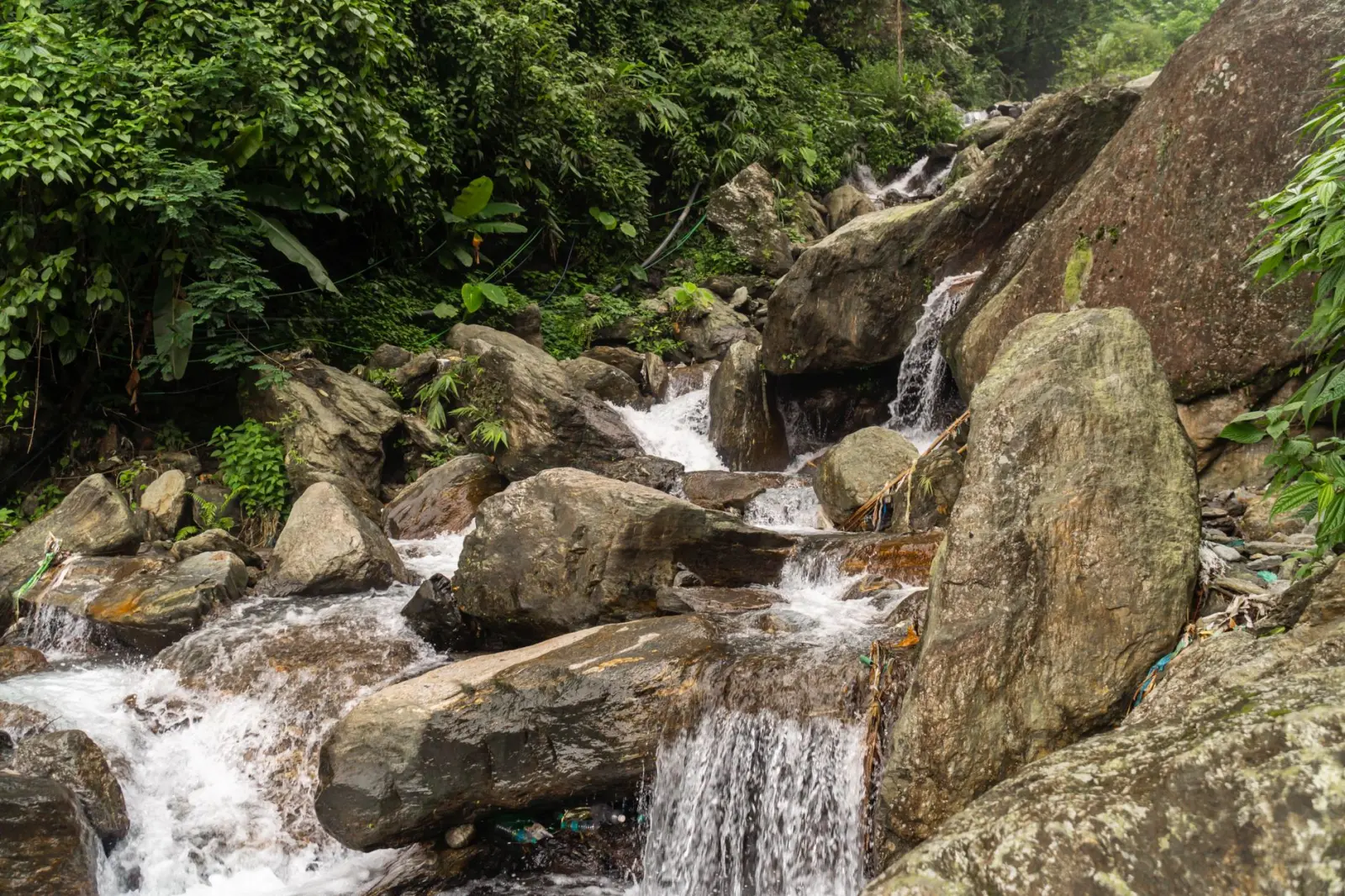
Spend enough time wading through rainforest streams and you start noticing patterns in where fish actually position themselves. It’s not random. The fish you see clinging to rocks in fast water aren’t fighting against the current so much as exploiting it. After years of observing these systems, what becomes clear is that survival in fast-flowing water comes down to a few physical and behavioral realities that most fish species have solved through very different approaches.
The most obvious adaptation is body shape. Fish in rapid streams tend to be flattened – compressed side to side or dorsoventrally – rather than the rounded bodies you see in slower water. This flattening reduces the frontal profile that meets the current. A fish with a streamlined, almost disc-like body experiences less drag and requires less energy to hold position. The Amazonian otocinclus, for instance, has a body that’s almost pancake-like when viewed from above. This isn’t incidental. The shape lets them nestle into crevices and behind rocks where water pressure is lower, and they can maintain that position for hours without exhaustion.
Suction and grip mechanisms matter far more than most people realize. Many rainforest stream fish have developed specialized mouths that function like suction cups. Plecos and other loricariids use their underslung, disc-like mouths to attach directly to rock surfaces. This isn’t just for feeding – though they do scrape algae – it’s a positioning tool. Once attached, the fish is essentially anchored. Water flows around them rather than pushing them downstream. I’ve watched these fish hold position on exposed rocks in currents that would sweep an unattached fish away in seconds.
Finding the Quiet Zones
What often gets overlooked is that fast-water fish don’t actually spend all their time in the fastest current. They use the stream’s topography strategically. Behind every rock, in every eddy, along the stream bottom where friction slows water movement – these are the refuges. Fish dart into fast water briefly to feed or move, then retreat to calmer pockets. The current itself creates these low-pressure zones, and fish have learned to read the water like a map. I’ve seen small tetras and gobies spend the majority of their day in water so slow it’s almost still, emerging only when feeding opportunities arise.
Fin placement and muscle development reveal another layer of adaptation. Stream fish typically have larger pectoral fins positioned lower on the body than their still-water cousins. These fins act like hydrofoils, generating downward force that pins the fish against the substrate. Combined with a powerful tail that can generate quick bursts of movement, this setup allows rapid repositioning without exhaustion. The energy cost is real, but it’s manageable because these fish aren’t constantly fighting. They’re working in pulses.
Behavioral Timing and Current Reading
Activity patterns shift with water conditions. During high water – after heavy rain – many stream fish become less active. They conserve energy by staying in the slowest water available, sometimes barely moving for hours. When the current drops even slightly, they become more active, more willing to forage in faster zones. This isn’t learned behavior so much as an instinctive response to energy availability. A fish expending calories to hold position in fast water needs to feed more frequently to offset that cost. When the current is gentler, the math changes.
Size matters in ways that aren’t always obvious. Smaller fish face greater challenges in fast water because they have less muscle mass relative to their body surface. A small tetra experiences proportionally more force from a given current speed than a larger fish does. This is why you often see size segregation in streams – larger individuals occupy the fastest sections while juveniles cluster in slower areas. As they grow, they gradually move into faster water. I’ve tracked this in the same populations over seasons, and the pattern holds consistently.
Schooling behavior in fast water serves a different function than it does in still water. In rapids, schools often break apart or form loose aggregations rather than the tight formations you see in lakes. This reduces competition for the best low-current positions and allows each fish more flexibility to respond to sudden changes in water pressure. When a large pulse of water moves through – common in streams fed by afternoon rain – scattered fish can react independently rather than getting swept away as a unit.
Sensory Adaptation to Turbulent Water
The lateral line system, that row of sensory organs running along a fish’s side, becomes more sophisticated in stream species. These fish can detect minute pressure changes caused by water movement around obstacles. This sensory input helps them navigate in water that’s often cloudy and where vision alone isn’t reliable. In murky conditions, the lateral line essentially lets them “feel” the current and locate the safest passages. Blind fish in caves use this same system, but stream fish combine it with vision to build a more complete picture of their environment.
Gill structure also adapts. Stream fish often have gill filaments that are more densely packed than those of slow-water species. This increases the surface area for oxygen extraction. Fast water is typically well-oxygenated, but the constant movement and the energy demands of holding position mean these fish need efficient oxygen uptake. The investment in gill complexity pays off through improved metabolic efficiency.
What strikes me most, after years of observing these systems, is how specialized these adaptations are. A fish perfectly suited for fast water is often poorly equipped for still water, and vice versa. Move a stream species into a slow aquarium and it becomes lethargic, prone to infection, and generally stressed. The fast water isn’t just the environment – it’s part of the fish’s physiology. These aren’t fish that happen to live in rapids. They’re fish that require rapids to function properly. Understanding that distinction changes how you think about stream conservation and why removing barriers or altering flow patterns affects these populations so profoundly.