I’ve spent enough time in the high-altitude rainforests of southeastern Australia to notice what most visitors miss: the damage that snow and frost inflict happens quietly, over weeks and months, not in dramatic fashion. When winter settles into places like the Dorrigo Plateau or the upper reaches of the Dandenong Ranges, the cold doesn’t announce itself with fanfare. It arrives as frost on a clear night, then again the next morning, and the morning after that. By August, when the worst of it passes, you can see the cumulative toll if you know where to look.
The rainforests here aren’t adapted to sustained freezing. That’s the fundamental issue. These are subtropical and warm-temperate systems that have evolved under conditions where frost is rare, brief, and geographically limited. When it does occur – and it occurs more frequently at higher elevations – the forest’s physiology struggles. Plants that thrive in stable, mild conditions suddenly face temperatures dropping below zero Celsius for hours at a time, multiple nights in succession.
How Frost Damages Plant Tissue
Frost kills plant cells through a straightforward mechanism: water inside the cell freezes, expands, and ruptures the cell walls. This happens first in the leaves and young stems, which are most exposed and contain the highest water content. I’ve watched it happen in real time. A healthy green leaf on a subtropical palm or broad-leafed shrub will show blackening or browning within hours of a severe frost. The damage isn’t always immediate to the eye, but by the next day, the leaf tissue has collapsed.
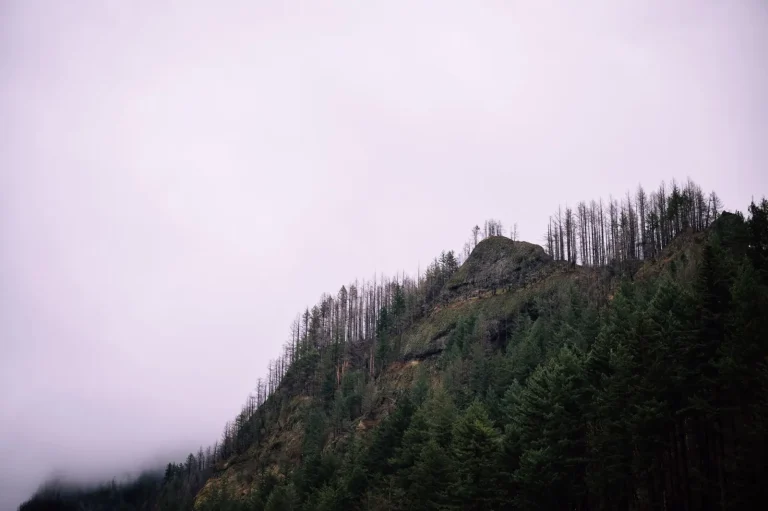
What makes Australian rainforest plants particularly vulnerable is that many of them don’t harden off for winter the way temperate species do. Trees like the Coachwood or various Acacia species in these forests don’t accumulate sugars in their sap or withdraw water from their cells in preparation for cold. They’re simply not programmed for it. So when frost arrives, the damage is often severe. I’ve seen entire canopy sections of mature trees killed by a single hard frost event, with the dead wood remaining visible for years.
The damage isn’t uniform across the forest. Frost settles in low-lying areas where cold air pools. Gullies and valleys experience harder frosts than ridgelines. This creates a patchwork of damage – some areas relatively spared, others devastated. The understory plants in frost pockets often bear the brunt. Tree ferns, which are iconic rainforest plants, are particularly susceptible. Their fronds blacken and die back, and while the plant may survive if the crown isn’t killed, recovery takes years.
Snow Load and Structural Damage
Snow is less common than frost in most Australian rainforests, but when it does fall – and it does, occasionally, even at relatively low elevations during exceptional winters – it causes immediate, visible damage. The weight of wet snow accumulating on branches and foliage can snap limbs cleanly. I’ve seen this in the Lamington Plateau after heavy snow events: branches hang down broken, sometimes for seasons before falling.
The structural damage from snow matters more than it might initially seem. A broken branch isn’t just a minor wound. It opens the tree to disease, creates an imbalance in the canopy structure, and can affect the tree’s ability to photosynthesize effectively. In a dense rainforest where light is already limiting, losing a significant portion of canopy can set a tree back considerably. Young trees and saplings are most at risk – they lack the structural strength of mature wood and can be bent over or snapped entirely by snow load.
The Cascade Effect on Forest Composition
What I’ve observed over years of visiting these forests is that repeated frost and occasional snow events gradually shift the species composition. Plants that can’t tolerate cold begin to disappear from higher elevations. The subtropical species retreat downslope. Hardy species – often those with tougher, smaller leaves and slower growth – gradually become more dominant. This isn’t dramatic in a single year, but over decades, it’s significant.
The ferns suffer disproportionately. Tree ferns are an essential structural element of rainforest understory, providing habitat, shelter, and contributing to the forest’s moisture dynamics. When frost repeatedly kills back their fronds, the plants weaken. Some don’t recover. I’ve walked through sections of rainforest where tree ferns were once abundant and found them thinned out, replaced by more frost-hardy shrubs and smaller plants.
Epiphytes – orchids, ferns, and mosses that grow on trees – face particular stress. Their roots are exposed to air, with no soil insulation. Frost can kill them outright. Lichens and mosses, which are critical for nutrient cycling and water retention in rainforests, also suffer. After a hard frost, you can see the damage on tree trunks where the lichen cover has browned and died.
Animal Impacts and Habitat Loss
The animals that depend on rainforest structure feel the effects indirectly but significantly. When frost kills understory plants or damages the canopy, habitat becomes less dense, less protective. Small mammals and birds that rely on thick vegetation for shelter and food sources face harder conditions. Insects, which form the base of many rainforest food chains, are directly killed by frost. A severe frost event can reduce insect populations dramatically, with cascading effects up the food chain.
I’ve noticed that after particularly harsh winters, bird activity in the understory seems noticeably reduced in the following months. The food sources haven’t recovered yet, and the shelter is diminished. Recovery takes time – sometimes years for the vegetation to regrow sufficiently to support the previous level of animal activity.
The soil itself changes subtly. Frost heaving – the expansion of soil as water freezes – can disrupt the delicate structure of rainforest soil, which is often rich in organic matter and relatively shallow. Repeated freeze-thaw cycles compact soil and can damage fine root systems. This affects nutrient availability and water infiltration, further stressing the plants trying to recover from frost damage.
Timing and Seasonal Patterns
The worst damage typically occurs in late winter, around July and August in the Southern Hemisphere. By this point, the forest has been exposed to multiple frost events, and plant reserves are depleted. A late frost in August or early September can be particularly damaging because plants are beginning to push new growth, and that tender new tissue is extremely vulnerable.
Years with particularly cold, clear winters – when high-pressure systems settle over the region and temperatures plummet on consecutive nights – produce the most visible damage. Cloudy winters, paradoxically, are less damaging because cloud cover traps heat and prevents temperatures from dropping as far. This is why some years stand out in memory as “frost years” while others pass with relatively little visible impact.
What I’ve come to understand is that snow and frost in Australian rainforests aren’t catastrophic events that destroy the forest outright. They’re chronic stressors that reshape the ecosystem gradually. The forest adapts, but the adaptation means a shift toward more cold-hardy species, a thinning of certain plant types, and a reduction in the structural complexity that makes rainforests so productive. The damage is real, measurable, and persistent – it just doesn’t announce itself loudly.