
After spending years moving through rainforests at different elevations – from lowland basins to high mountain slopes – the physical transformation becomes impossible to miss. It’s not subtle. A rainforest at 200 meters looks fundamentally different from one at 1,500 meters, and the difference isn’t just about temperature or moisture. The entire structure of the forest shifts. Trees shrink. Leaves change shape and texture. The understory becomes denser or thinner depending on where you are. These aren’t random variations. They follow predictable patterns tied directly to elevation, and understanding them matters if you’re trying to navigate, study, or simply make sense of what you’re seeing.
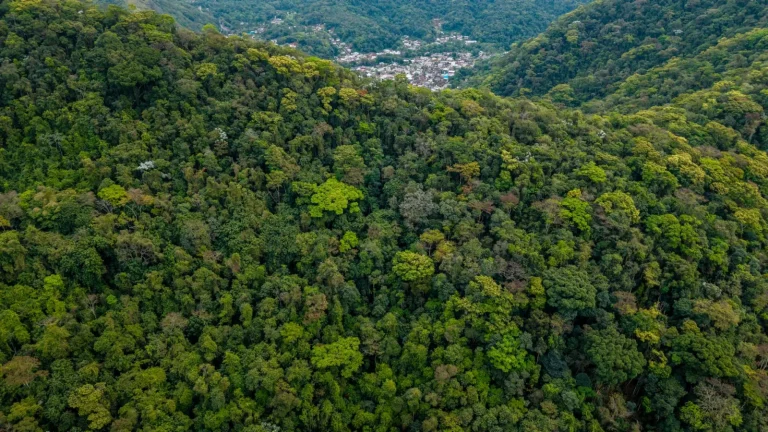
The most immediate change occurs in canopy height. Lowland rainforests typically reach 40 to 50 meters, sometimes higher. As elevation increases, this ceiling drops steadily. By 1,000 meters, you’re looking at canopies 25 to 35 meters tall. At 2,000 meters, trees rarely exceed 15 to 20 meters. This isn’t because the trees are younger or the forest is degraded. It’s a direct response to environmental stress. Higher elevations bring cooler temperatures, stronger winds, thinner air, and shorter growing seasons. Trees allocate energy differently under these conditions. They grow slower and don’t invest in reaching extreme heights. The payoff isn’t there.
Why Wind and Cold Matter More Than You’d Expect
Wind exposure increases dramatically with elevation, and it’s a genuine constraint. Tall trees in exposed mountain positions face mechanical stress that shorter trees simply don’t experience. A 40-meter tree swaying in mountain winds loses branches, suffers cambial damage, and expends energy on structural reinforcement rather than growth. Shorter, stockier trees are more stable. Over evolutionary time, this selects for reduced height. Cold compounds the problem. Photosynthesis slows in cooler air. Nutrient uptake from soil becomes less efficient. The growing season shortens – sometimes by weeks or months compared to lowland areas. Trees respond by investing less in vertical growth and more in root systems and wood density.
Leaf morphology changes in ways that are immediately visible once you know what to look for. Lowland rainforest leaves tend to be large, thin, and broad – sometimes 20 to 40 centimeters long. They’re optimized for capturing diffuse light in a shaded environment where photosynthetically active radiation is limited. Higher up, leaves become noticeably smaller and thicker. This isn’t random. Smaller leaves reduce water loss in cooler, windier conditions. Thicker leaves have denser tissue, which provides structural support and protection against UV radiation that increases with altitude. The leaf margin changes too. Lowland leaves often have drip tips – elongated points that shed water quickly. Mountain leaves tend toward entire or slightly serrated margins. These adaptations reflect different survival priorities at different elevations.
Density and Composition Shift with Altitude
The density of vegetation changes in ways that catch travelers off guard. Lowland rainforests are often relatively open at ground level, with a high canopy and sparse understory. You can sometimes move through them without constant bushwhacking. Mountain rainforests are frequently the opposite – dense, tangled, difficult to traverse. This happens because reduced canopy height means less total leaf area overhead, so more light reaches the forest floor. That extra light drives understory growth. Shrubs, small trees, and herbaceous plants proliferate. The forest becomes a wall of vegetation from ground to canopy. This makes movement slower and more exhausting, even though the forest is technically “smaller.”
Species composition changes systematically with elevation, though the exact transition points vary by region and mountain range. Lowland rainforests are dominated by large-fruited trees – figs, palms, legumes – that support frugivorous animals. As you climb, these gradually disappear. Small-fruited species become more common. Epiphytes – orchids, bromeliads, lichens, and mosses – increase dramatically. At lower elevations, epiphytes are present but scattered. By 1,500 meters, they can cover 30 to 50 percent of branch surface area on mature trees. This creates a visibly different forest aesthetic. Branches look fuzzy and alive with growth. The canopy becomes a three-dimensional ecosystem where plants grow on plants.
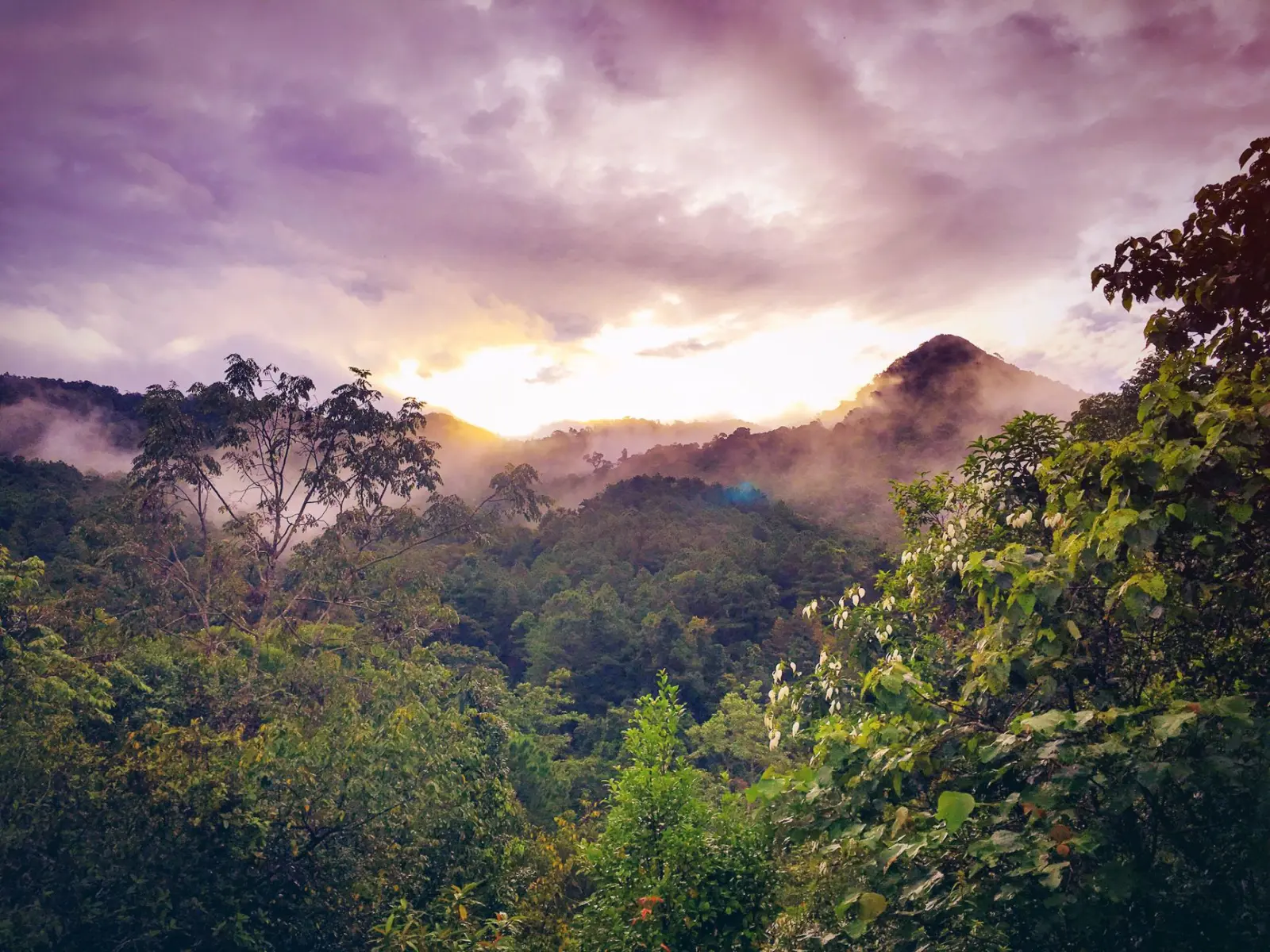
Moisture availability seems counterintuitive but matters enormously. Higher elevations receive more total precipitation, but the form changes. Lowland rainforests receive rain from convective storms – intense, short-duration events. Mountain rainforests experience more persistent cloud cover and mist. This means constant moisture input, but less intense rainfall. The forest doesn’t need to handle the same drainage challenges. Soils stay saturated longer. Waterlogging becomes a concern that doesn’t exist at lower elevations. Plants adapt by developing shallow root systems and aerenchyma – air-filled tissue that helps roots function in wet soil. This affects tree stability and growth patterns in ways that aren’t immediately obvious but shape the entire forest structure.
Soil and Nutrient Cycling Under Altitude Stress
Soil composition and nutrient availability change with elevation in ways that directly influence vegetation. Lowland rainforest soils are often heavily weathered, leached, and nutrient-poor despite the lush vegetation above. Nutrients cycle rapidly through living biomass. Mountain soils tend to be younger, less weathered, and sometimes more nutrient-rich – but they’re also colder, which slows decomposition. Organic matter accumulates. Litter layers become thicker. Nutrient cycling slows overall, even if absolute nutrient content is higher. This creates a paradox: mountain forests sometimes have more nutrients in soil but less available to plants because decomposition and nutrient release happen more slowly.
The transition between elevation zones isn’t sharp. There’s no line where lowland forest ends and montane forest begins. Instead, there’s a gradual ecotone – a transition zone that might span 200 to 500 meters of elevation. Within this zone, you see mixed characteristics. Trees of intermediate height. Leaves that are neither fully lowland nor fully montane in size. Canopy structure that’s transitional. These zones are ecologically important and often biodiverse because they contain species from both adjacent zones. They’re also the most challenging to navigate and predict, because the forest doesn’t follow a single rulebook.
Traveling or working in rainforests at different elevations requires adjusting expectations about what the forest will look like and how it will behave. A lowland rainforest trail that’s relatively open and fast-moving becomes a mountain trail that’s dense, slow, and exhausting at higher elevation. Visibility changes. Navigation becomes harder. The animals you encounter shift – different birds, insects, and mammals dominate at different heights. Water sources behave differently. Streams run faster and colder higher up. Humidity is consistently high at all elevations, but the sensation of moisture and the way it affects equipment and comfort varies significantly. Understanding these patterns isn’t academic. It’s practical knowledge that shapes how you move through and interact with these forests.