The Watagans sit roughly 80 kilometres north of Sydney, a modest range that doesn’t announce itself with dramatic peaks or recognizable names. Most people who walk here come because they’ve heard it’s accessible, close enough for a day trip, and genuinely forested – not the scrubby, fire-prone bushland that dominates much of inland NSW. What they often discover is that accessibility and ease are not the same thing, and the forest itself operates on terms that have little to do with what a map or a tourism website suggests.
I’ve walked these trails in different seasons and different moods, and the consistency I notice is how much the experience depends on what you’re actually willing to accept about the walk itself. The forest doesn’t present as a manicured park with clear sightlines and predictable terrain. It’s dense, often wet underfoot even when it hasn’t rained recently, and the trails themselves vary wildly in condition depending on how much maintenance they’ve received and how much foot traffic they’ve absorbed. Some sections are well-defined and easy to follow. Others require genuine attention to stay oriented, especially if you’re moving quickly or if light is fading.
The Terrain and What It Means for Pace
The Watagans are not steep in the way alpine ranges are steep. The elevation gain across most walks here sits between 200 and 400 metres, which sounds manageable until you’re actually moving through it. The challenge isn’t the gradient so much as the surface beneath your feet. The forest floor is layered with decades of decomposing vegetation, fallen branches, and root systems that have grown across the trail. On dry days, this creates a spongy, uneven walking surface that demands constant micro-adjustments in your step. When wet – and the forest here stays damp longer than you’d expect – it becomes slippery in ways that aren’t immediately obvious. You don’t slide dramatically; instead, your foot loses traction incrementally, and you find yourself working harder to maintain stability than the gradient alone would suggest.
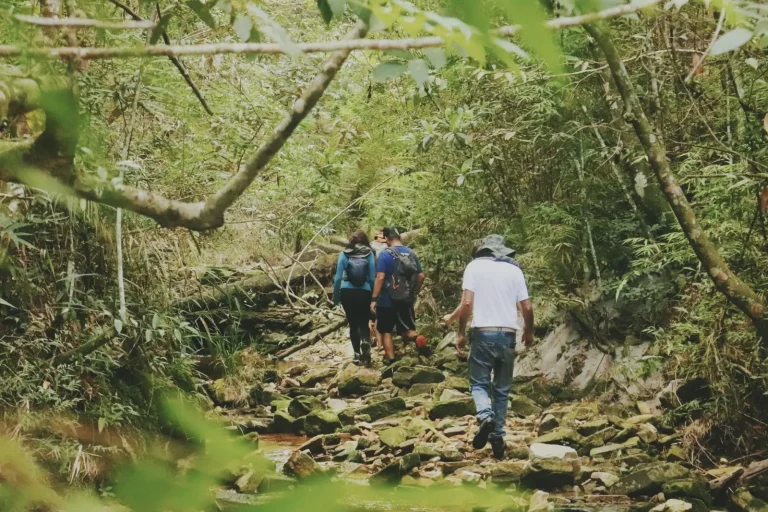
This is where pace becomes a real consideration. Walking at a steady, moderate speed works fine. Trying to move quickly through the forest is where most people encounter problems. I’ve watched experienced walkers slow down significantly once they’re actually on the trail, not because they’re tired, but because the terrain simply doesn’t reward speed. The branches hang lower than you’d expect. Roots cross the path at ankle height. Rocks are often hidden under leaf litter. Moving fast means higher risk of a twisted ankle or a branch to the face, and the risk-to-benefit ratio doesn’t make sense.
Water, Mud, and Footwear Reality
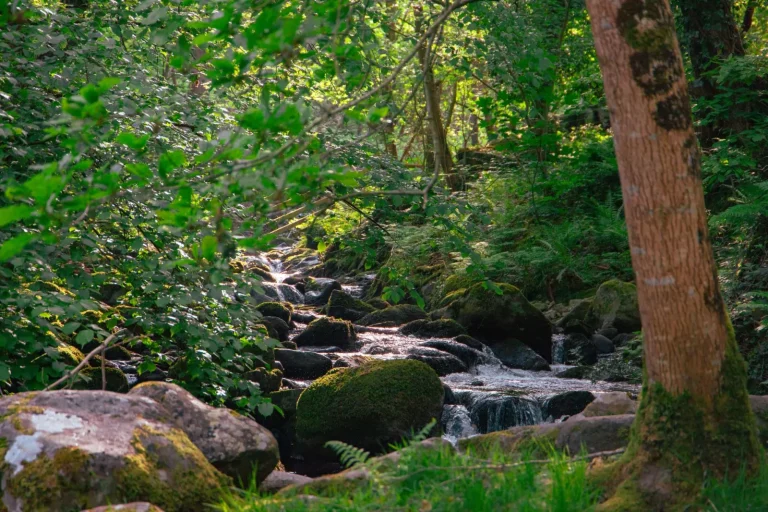
The forest here has water running through it almost constantly. There are creeks and watercourses, some marked on maps and some not, and the ground around them stays perpetually damp. Even on trails that don’t cross water directly, you’ll encounter sections where the earth is soft and muddy, sometimes without obvious reason. This isn’t a seasonal thing entirely – I’ve walked here in dry periods and still found muddy patches that suggest the forest’s water table is simply high.
Footwear matters more than many people realize. Regular hiking boots work, but they need good tread and ankle support, and they need to dry reasonably quickly afterward. I’ve seen people attempt these trails in trail runners or lightweight shoes, and while it’s technically possible, it’s uncomfortable and increases the chance of a foot slipping on wet rock or root. Gaiters are worth considering if you’re walking after recent rain – the mud here has a particular stickiness that works its way into your socks and boot cuffs. It’s not a dealbreaker, but it’s an unpleasant detail that accumulates over a few hours of walking.
Navigation and Trail Condition Variability
The trail network in Watagans is reasonably well-marked by Australian standards, but “well-marked” doesn’t mean obvious at all times. Blazes exist – painted marks on trees – but they’re sometimes spaced far apart, and in sections where the forest is particularly dense, you can lose visual confirmation of the route for stretches of 50 metres or more. This is where a map and compass, or a GPS device, become genuinely useful rather than just nice to have.
Trail condition varies significantly depending on which walk you choose and when you walk it. The main trails that receive regular foot traffic are generally clear and straightforward. Secondary trails, or sections of longer walks that see less traffic, can become overgrown or unclear. I’ve encountered sections where fallen trees block the path, and you have to either climb over them or bushwhack around them. This isn’t dangerous in the way a cliff edge is dangerous, but it does slow you down and requires problem-solving in the moment.
The forest also changes appearance depending on light and season. In summer, when the canopy is thick, the trail can feel quite dark even in the middle of the day. This affects not just visibility but also your sense of time passing. A walk that should take three hours can feel like it’s taking longer because the light conditions make it harder to gauge progress. In winter and early spring, when the canopy is thinner, the same walk feels brighter and more open, even though the terrain is identical.
Timing and the Reality of Distance
Most published walk times for Watagans trails are optimistic. A walk listed as taking two hours will often take closer to two and a half, especially if you’re not intimately familiar with the route. This isn’t because the distance is longer than stated – it’s because the terrain and the need to watch your footing slow you down naturally. If you’re planning a walk that ends with a drive back to Sydney or a meeting in the afternoon, building in extra time isn’t optional.
I’ve noticed that people often underestimate how much energy these walks require, partly because the elevation gain is modest and partly because the forest feels manageable. But the combination of uneven footing, mud, and the need to stay alert creates a kind of fatigue that’s different from what you’d experience on a well-maintained trail. Your legs might not be exhausted, but your concentration will be, and that matters when you’re still navigating terrain that demands attention.
The forest itself is genuinely worth the time and effort. It’s one of the few places within reasonable distance of Sydney where you can walk for hours and feel genuinely surrounded by forest rather than suburban bushland. The trees are substantial, the canopy is real, and there’s a sense of being in an actual ecosystem rather than in a managed park. But that experience comes with the understanding that the forest operates on its own terms, and those terms include mud, uneven footing, and the need to move at a pace that respects the terrain. Once you accept that, the walk becomes what it actually is rather than what you hoped it might be.