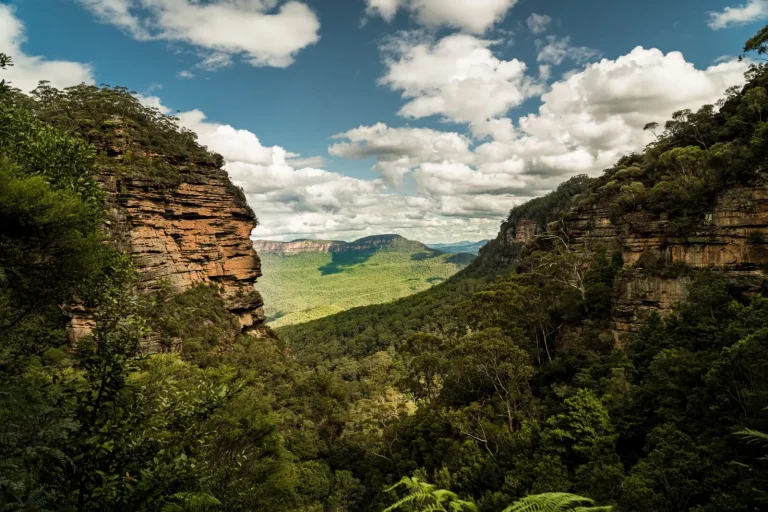

The Blue Mountains valleys look inviting from the ridge viewpoints. That’s the problem. What appears as a gentle descent into forested terrain from above often becomes a sustained, technical descent that catches people unprepared. I’ve walked these valleys dozens of times over the years, and the gap between expectation and reality is where most walkers run into genuine difficulty.
The forest itself changes your sense of distance and time. Once you drop into the valleys proper, the canopy closes overhead, and the switchback trails that seemed straightforward on the map become repetitive and disorienting. Your legs know you’re descending, but the visual landmarks blur together. A valley that looked like a two-hour walk from the rim can easily consume four or five hours of actual movement, especially if you’re carrying water and haven’t accounted for the accumulated fatigue of constant downhill work.
The rock underfoot is the first thing most people underestimate. The Blue Mountains valleys are cut through sandstone that weathers into loose, fractured surfaces. Sections that look stable can shift under weight. Wet rock – and these valleys stay damp even when the ridges are dry – becomes genuinely slippery. I’ve watched experienced walkers lose their footing on what appeared to be solid ground. The trails themselves are often narrow, with drop-offs that aren’t dramatic but are real enough that a slip becomes consequential rather than just embarrassing.
The Physical Reality of Sustained Descent
Most people understand that climbing a mountain is hard. Descending is a different kind of hard, and it’s often worse. The Blue Mountains valleys demand constant downhill hiking, sometimes for hours. Your quads take a pounding that climbing never quite matches. Knees suffer more on descent than ascent, and the repetitive impact accumulates. By the time you’ve been walking for three hours on a consistent downslope, your legs aren’t just tired – they’re compromised. Your balance suffers. Your reaction time to obstacles slows. This is when mistakes happen.
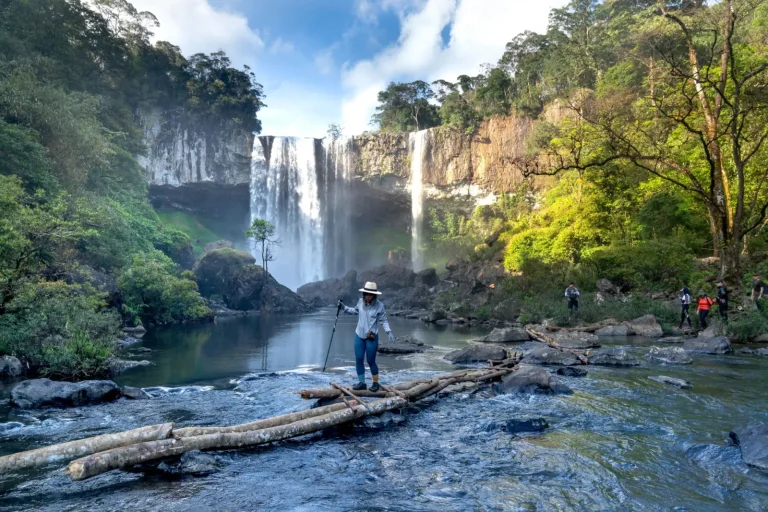
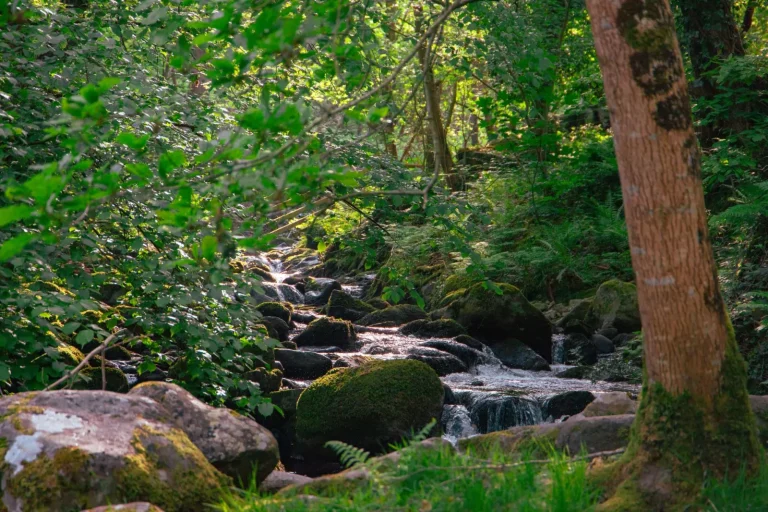
The water situation in the valleys is straightforward but requires planning. Creeks run through most valleys, and the water is generally safe to drink untreated, though I’ve never relied on that assumption. The issue isn’t availability but timing. If you’re descending from the rim, you might not reach reliable water for an hour or more. On a warm day, that matters. The valleys don’t have the wind exposure of the ridges, so heat builds. You feel the temperature differently down there – heavier, more persistent. Dehydration creeps up quietly.
Navigation and the Disorientation Factor
The marked trails in the Blue Mountains valleys are generally well-maintained, but “well-maintained” is relative. The trails are there, but the forest is dense enough that losing visual confirmation of the path happens regularly. You’ll be walking what feels like the right direction, the trail will fade or branch, and suddenly you’re uncertain. It’s rarely a crisis – the valleys aren’t vast, and you can usually backtrack or find your way out – but the psychological weight of that uncertainty adds fatigue. Doubt is exhausting.
I’ve noticed that walkers who bring GPS or detailed maps move with more confidence, even when the trail is clear. That confidence matters. It reduces the mental load. Without it, you’re constantly second-guessing, which means you’re walking slower and working harder mentally while your body is already depleted. Some sections of valley floor can look similar for long stretches. Landmarks that seemed distinctive from above become indistinct once you’re among them.
The time of year affects the valleys more than the ridges. Spring brings water runoff that can make creek crossings genuinely difficult. Summer heat concentrates in the valleys, and the humidity makes exertion feel heavier. Autumn is generally the most forgiving, though leaf litter can obscure the trail surface and hide loose rock. Winter rain leaves the rock slick and the air cold enough that you need to keep moving to stay warm, but the reduced vegetation makes navigation easier.
What People Consistently Miss
Most walkers underestimate the time required. The valleys demand slower movement than ridge walking. The terrain is more technical. Your body is working harder. A reasonable estimate is to add 50 percent to whatever time you think a valley walk will take. That’s not pessimism – that’s accounting for the actual conditions. I’ve seen walkers who completed a ridge walk in three hours attempt a valley descent and still be walking six hours later, genuinely surprised by the duration.
The exit is where fatigue becomes critical. Once you’ve descended into a valley, you have to get out. That means climbing back up. On a ridge walk, you can turn around at any point and retrace your steps at roughly the same pace. In a valley, the exit is always uphill. If you’ve misjudged your energy or time, you’re now climbing when you’re depleted. This is when people make poor decisions – pushing too hard, moving carelessly, taking risks they wouldn’t take at the start of the day.
Footwear matters more in the valleys than on ridge walks. Grip is essential. Ankle support is valuable. I’ve seen people in trail runners handle the terrain fine, and I’ve seen people in expensive hiking boots slip on the same rock. The difference is usually experience with how to place your foot and how much you trust your footwear. New boots on a valley walk is a poor choice. The repetitive downhill impact will punish your feet and legs in ways that flat or uphill terrain doesn’t.
The valleys are quieter than the ridges. There’s less wind, less exposure, and less sense of openness. For some walkers, this is peaceful. For others, it’s claustrophobic. The forest canopy blocks views. You’re walking through a green tunnel for hours. This affects how people experience fatigue. On a ridge, you can see your progress. In a valley, progress is measured by time passing, not by visual landmarks receding. The psychological toll of that is subtle but real.
After years of walking these valleys, the most reliable observation is this: they demand respect for their ordinariness. They’re not dramatic peaks or exposed ridges. They’re forested terrain that looks manageable from above. That appearance is misleading. The valleys require the same preparation and caution you’d give to any serious mountain walk, even though they lack the obvious intimidation factor. The walkers who struggle most are often the ones who underestimated the simplicity of the landscape and overestimated their ability to move through it quickly. The valleys don’t punish arrogance dramatically. They just quietly extract their cost in time, fatigue, and accumulated strain.