
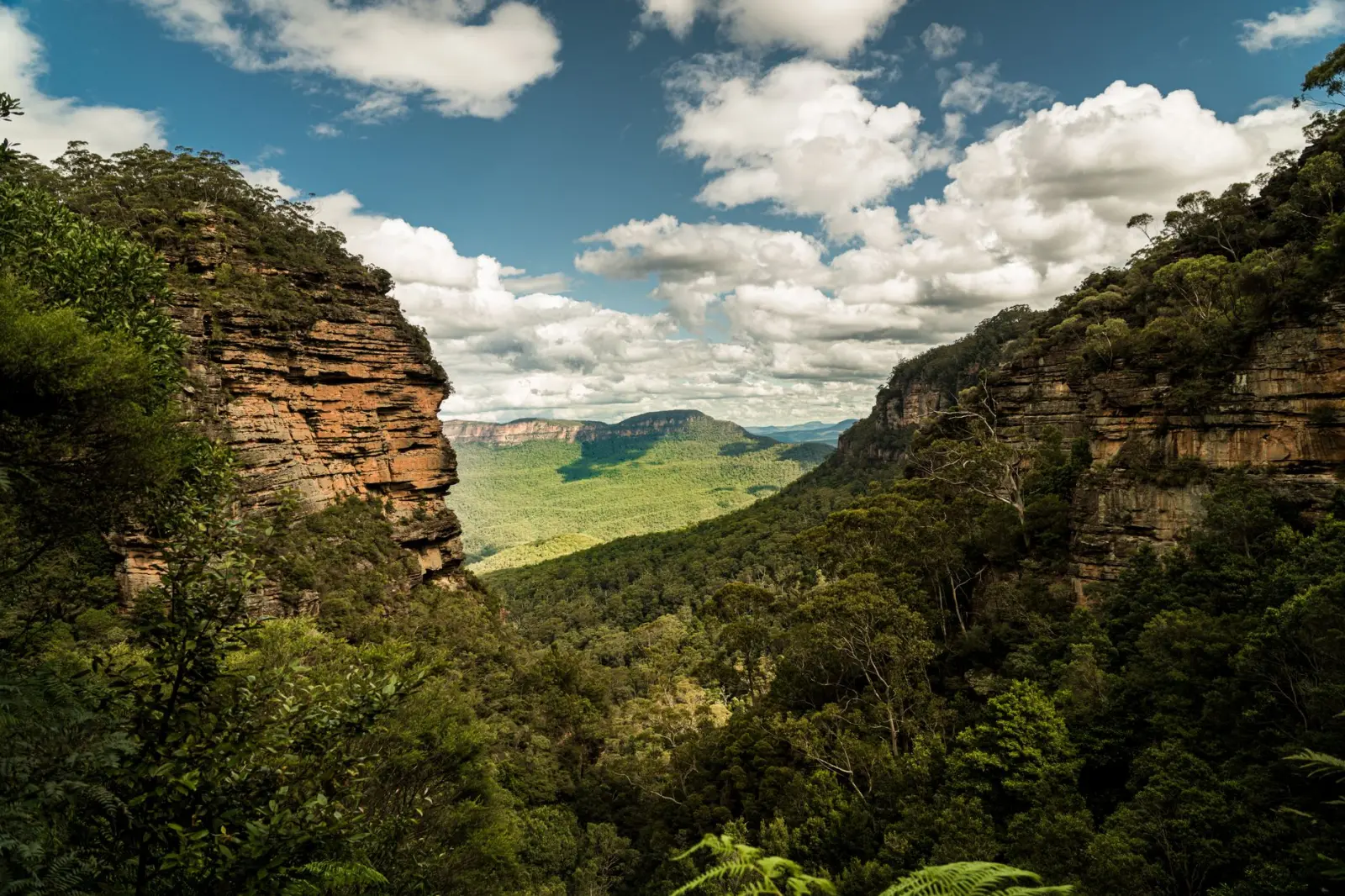
The gullies that cut through the Blue Mountains rainforest are deceptively inviting from a distance. They appear as dark green lines on maps, promising water access and shelter, but the reality of moving through them is something most people underestimate until they’re already committed to the descent. I’ve spent enough time in these spaces to recognize the patterns – the way people move through them, what catches them off guard, and why some gullies demand far more respect than others.
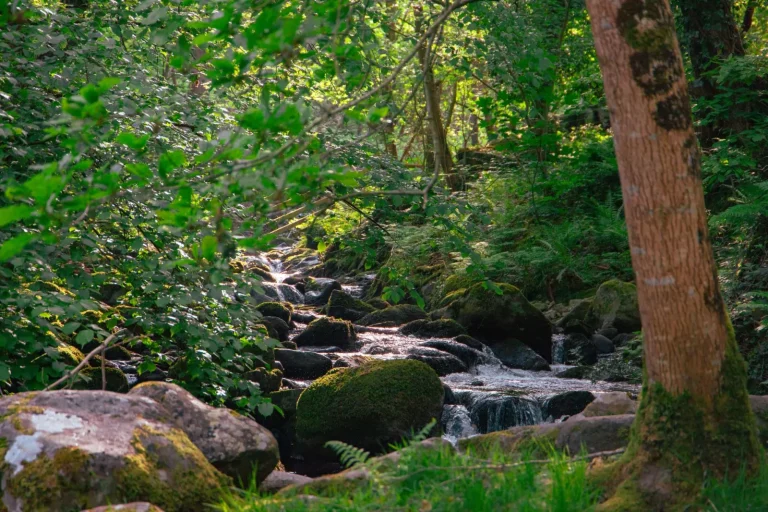
What strikes you first when you actually enter one of these gullies is the change in light and temperature. The canopy closes in within a few meters, and the air becomes noticeably cooler and damper. The ground shifts from the relatively stable forest floor to a mix of exposed rock, loose stone, and soil that’s perpetually wet from seepage and spray. This isn’t a minor detail. The footing changes constantly, and your body needs time to adjust to the rhythm of movement. Your pace will be slower than you expect, and that’s not something you can simply push through.
The Physical Reality of Gully Terrain
Gullies in the Blue Mountains aren’t uniform. Some are wide and relatively open, with clear water flow and manageable descents. Others narrow dramatically, with walls that rise steeply on both sides and barely enough space to move sideways. The most challenging ones feature a combination of all these conditions – they open and close unpredictably, and the water flow changes seasonally and even after heavy rain.
The rock itself presents a constant puzzle. Sandstone dominates the region, and it can be remarkably slippery when wet, which is most of the time in these gullies. The texture varies from rough and grippy to smooth and treacherous, often within the same section. Moss and algae growth adds another layer of complexity. I’ve seen experienced hikers lose their footing on what looked like solid stone, simply because a thin layer of growth made it behave like ice underfoot. Footwear matters more here than in most other terrain. Shoes with good tread and ankle support aren’t optional – they’re essential.
Water flow is the gully’s defining feature, but it’s also where many people misjudge conditions. A gully that’s manageable in dry weather becomes a different proposition after rain. Water volume increases rapidly, and the character of the terrain shifts. Rocks that were stable become mobile. The sound of water intensifies, and visibility drops. I’ve seen people caught off guard by how quickly a gully can transform, not from a sudden storm, but from rain that fell upstream hours earlier.
Navigation and Route Finding
Maps are useful for understanding the general layout of gullies, but they don’t capture the practical reality of moving through them. A gully that appears as a simple line on paper might involve scrambling over boulder fields, squeezing through narrow sections, or negotiating small waterfalls. The route isn’t always obvious, and there are often multiple ways through, each with different challenges.
Cairns and markers exist in some gullies, but they’re not reliable. They fade, get moved by water, or were placed by people following a different route than the one you’re taking. Relying on them alone is a mistake. Instead, you need to develop a sense of where the gully is actually taking you. Pay attention to the water flow – it generally points downhill, but in wider sections or areas with multiple channels, the main flow can be ambiguous. Look at the vegetation too. Certain plants indicate areas with consistent water flow or stable ground. Others suggest unstable terrain or seasonal flooding.
Time estimation is consistently wrong for gully travel. People plan as if they’re walking a regular trail, then discover that a section they thought would take twenty minutes actually takes an hour. The reasons accumulate: careful foot placement, route finding, scrambling over obstacles, occasional backtracking when a section proves impassable. Fatigue builds differently in gullies than on open terrain. Your legs work hard, but so do your upper body and core, as you’re constantly stabilizing yourself on uneven ground.
Seasonal and Weather Considerations
The Blue Mountains experience distinct seasonal patterns that directly affect gully conditions. Summer brings higher water levels from snowmelt in the higher elevations and from more frequent thunderstorms. Winter is generally drier, but the cold means wet rock becomes more dangerous – your hands and feet lose grip strength, and hypothermia risk increases if you get soaked. Spring and autumn are often considered ideal, but this varies depending on recent rainfall patterns.
Weather forecasts don’t tell you everything you need to know. A gully might be fine in light rain, but dangerous in heavy rain. The difference between “manageable” and “hazardous” can come down to how much water is flowing and how recently it started. I’ve been in gullies where the water level rose visibly over the course of an hour, not because it was raining where I was, but because of upstream precipitation. This is why local knowledge matters. People who hike these gullies regularly develop an intuition for which ones are safe in which conditions.
Common Mistakes and What They Cost
Underestimating time is the most common error. It leads to people rushing, which increases the risk of slips and falls. It also means you might end up descending in fading light, which makes everything harder and more dangerous. Overconfidence in fitness is another pattern I see repeatedly. Gully terrain doesn’t care how fit you are – it demands specific skills and constant attention. Fatigue compounds these issues. When you’re tired, your foot placement becomes less precise, your decision-making suffers, and your risk tolerance often increases when it should decrease.
Inadequate footwear is surprisingly common. People arrive with trail runners or general hiking boots that don’t provide enough grip or ankle support. Wet sandstone doesn’t forgive this. Similarly, people often carry insufficient water or don’t account for the difficulty of refilling from gully streams without proper filtration. The water is generally clean, but giardia and other pathogens exist in these systems, and treating water on the fly isn’t always practical.
Solo travel in gullies carries specific risks. If something goes wrong – a twisted ankle, a fall, disorientation – help is far away. Mobile phone coverage is unreliable or absent in most gullies. This doesn’t mean you shouldn’t go alone, but it does mean you need to be more conservative in your choices and more honest with yourself about your capabilities and the conditions.
The gullies of the Blue Mountains reward preparation and respect. They’re not inherently dangerous, but they demand attention to detail, realistic time planning, and an honest assessment of conditions before you commit to the descent. The people who move through them safely are the ones who treat each gully as a distinct problem to solve, not as just another section of trail.