
Spend enough time walking through the Blue Mountains and you start to notice a pattern. The gullies – those steep, narrow valleys that cut through the sandstone ridges – almost always fill with ferns. Not just a few scattered fronds, but dense, layered colonies that can make a gully feel like you’ve stepped into a different climate entirely. The ferns aren’t there by accident. They’re responding to a specific set of physical conditions that the gullies create, and understanding why involves looking at how water moves through the landscape and what the rock itself demands of anything trying to grow there.
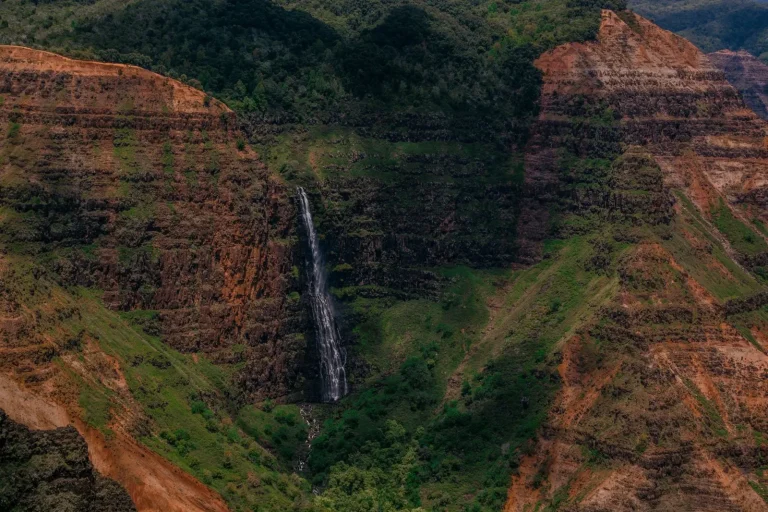
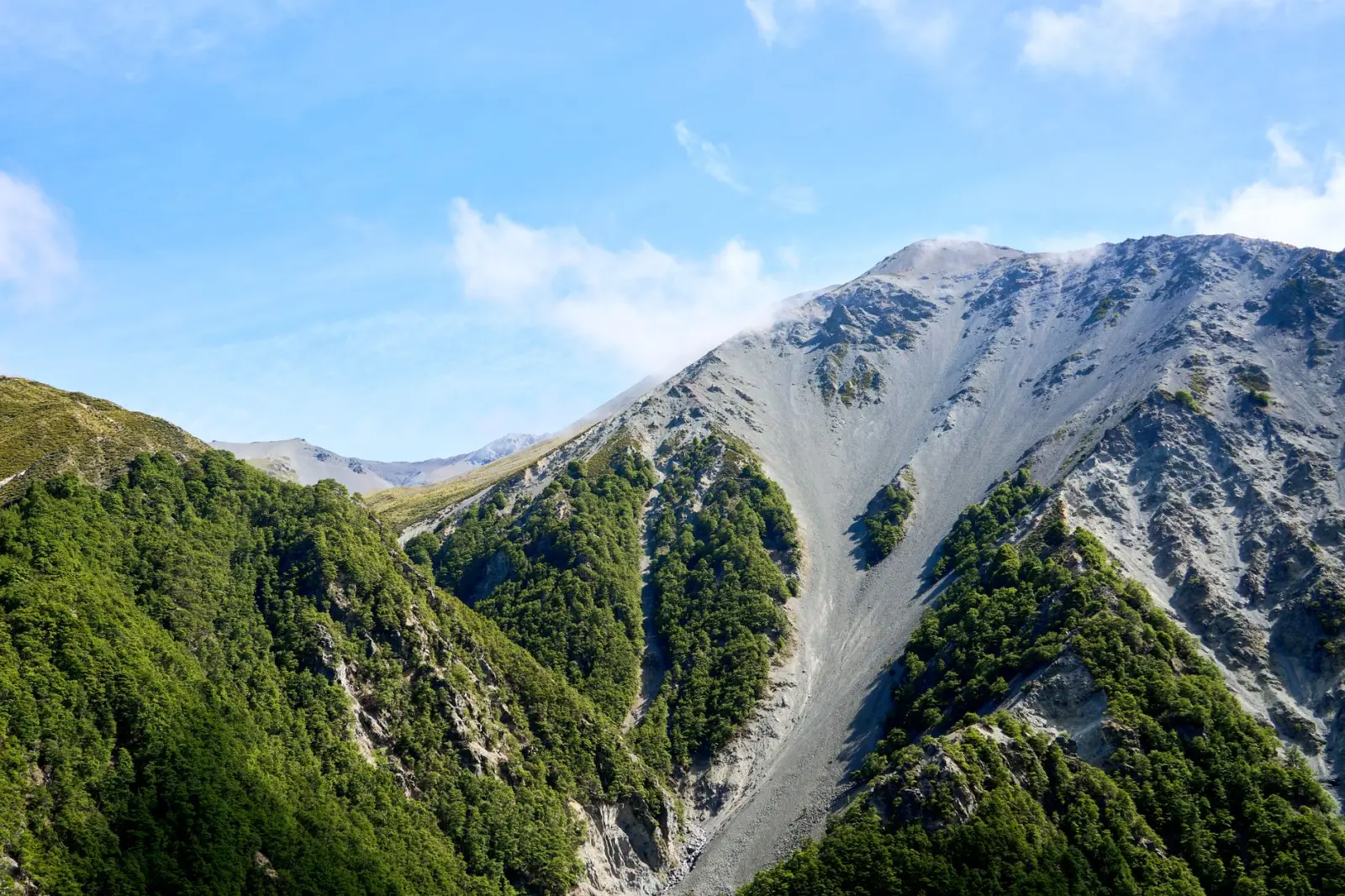
The Blue Mountains sit on a sandstone plateau that’s been carved by water for millions of years. That carving process is ongoing. Every time rain falls on the ridges, it has to go somewhere, and gravity pulls it downslope. Over time, water finds the easiest paths downward, and those paths become gullies. The sandstone erodes faster than you might expect because it’s porous and fractured. Water seeps into the rock, freezes in winter, expands, and breaks pieces away. The result is a landscape of deep, narrow valleys with steep sides and a permanent or semi-permanent stream running along the bottom.
Water and Moisture: The Primary Driver
What makes a gully different from the open ridgeline is water availability. On the exposed ridges, rain runs off quickly. The soil is thin, drainage is fast, and moisture stress is constant. In a gully, the situation inverts. Water concentrates. It flows downslope from the entire catchment above, funneling into the valley floor. The sides of the gully act like channels, directing water toward the center. Even during dry periods, the gully floor stays damp because water moves through the sandstone from higher elevations and emerges as seepage or small springs along the gully walls.
Ferns are not drought-tolerant plants. They need consistent moisture at their root level and humidity in the air around their fronds. A gully provides both. The narrow, steep sides create a sheltered microclimate where air movement is restricted and moisture lingers. On a humid day – which is most days in the Blue Mountains – water condenses on the rock faces and drips continuously. On dry days, the gully stays cooler and damper than the open ridge, simply because less direct sun reaches the floor and less wind passes through to evaporate moisture.
Shade and Temperature Regulation
The geometry of a gully creates shade that’s almost impossible to replicate elsewhere on the plateau. The walls rise steeply, sometimes nearly vertically. In many gullies, the walls are high enough that direct sunlight only reaches the floor for a few hours a day, or not at all in the deepest sections. This matters enormously for fern survival. Ferns evolved in forest understories where they rarely saw direct sun. The fronds are thin and delicate, designed to capture light efficiently in low-light conditions, not to withstand the intense UV exposure and heat stress of open ground.
The shade also moderates temperature swings. A gully floor experiences far less temperature variation than an exposed ridge. In summer, the rock and soil stay cooler because direct sun doesn’t heat them as intensely. In winter, the gully is slightly warmer because the surrounding rock mass absorbs and slowly releases heat. For a fern, this stability is valuable. It means less physiological stress from temperature extremes and a longer growing season.
Soil Development and Nutrient Availability
On the open ridges of the Blue Mountains, soil is thin and often acidic, with low nutrient content. The sandstone bedrock doesn’t weather quickly, and what little soil forms tends to be blown or washed away. In a gully, soil accumulates. Water carries fine particles – silt, clay, organic matter – downslope and deposits them on the gully floor. Fallen leaves, dead wood, and other plant material collect in the gully and break down there, enriching the soil with organic matter and nutrients.
The constant moisture in a gully accelerates decomposition. Fungi and bacteria work faster in wet conditions, breaking down organic matter and making nutrients available to plants. Over time, a gully floor develops a richer, deeper soil layer than the surrounding ridges. This soil supports not just ferns but also mosses, liverworts, and other moisture-loving plants. The ferns benefit from this nutrient-rich substrate, and their own decomposing fronds add to the organic layer, creating a self-reinforcing cycle.
Rock Type and Water Behavior
The sandstone of the Blue Mountains has specific properties that influence how water moves through it and how gullies form. It’s relatively soft compared to granite or basalt, which means it erodes readily. But it’s also porous, which means water doesn’t just flow over the surface – it soaks in. This combination creates conditions where gullies can be both deep and wet. Water seeps through the sandstone from the ridgetop, emerges partway down the gully walls as seepage or small springs, and continues flowing downslope.
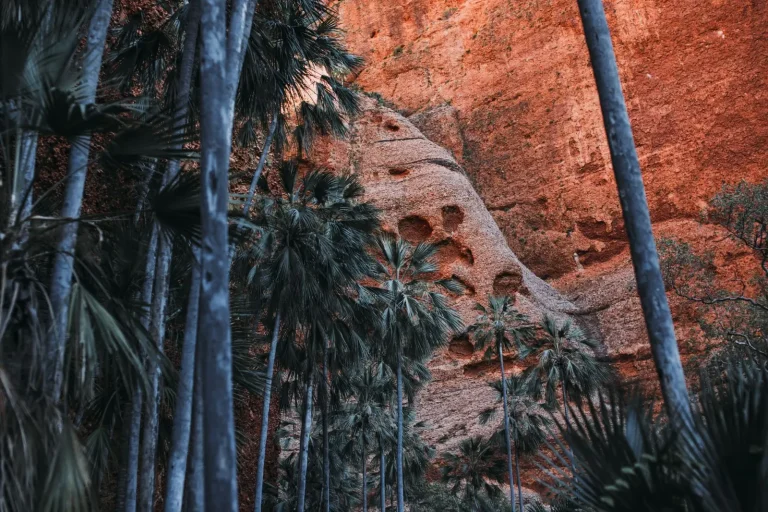
The walls of sandstone gullies also weather in a particular way. The rock fractures along natural planes, creating vertical or near-vertical faces. These faces provide stable substrate for ferns to establish. Many fern species in the Blue Mountains grow directly from the rock face, their roots finding purchase in cracks and crevices. The rock itself stays damp because water is constantly seeping through it, and this damp rock surface is ideal for fern spores to germinate and for young ferns to establish.
The specific mineral composition of Blue Mountains sandstone also matters. It’s relatively low in nutrients, which is why ridge-top soils are poor. But the gully floor, enriched by accumulated organic matter and weathering of the rock, eventually develops enough nutrient availability to support dense plant growth. The pH tends to be slightly acidic, which is within the tolerance range of most fern species.
Ecological Reinforcement
Once ferns establish in a gully, they reinforce the conditions that favor their own growth. Their fronds intercept moisture from mist and fog, directing it to the soil. Their decomposing fronds add organic matter and nutrients. Their root systems stabilize soil and rock, reducing erosion. Over time, other moisture-loving plants establish – mosses, liverworts, shade-tolerant shrubs. These plants further stabilize the gully environment, reduce evaporation, and create a microclimate that becomes increasingly favorable for ferns.
This is why fern-filled gullies in the Blue Mountains often feel like distinct ecological zones. You step from the open, windswept ridge into a gully and suddenly you’re in a cooler, damper, more densely vegetated space. The difference isn’t just visual. The air feels different, the soil feels different, the light quality is different. All of these differences stem from the interplay between the gully’s physical structure and the specific properties of sandstone, water, and the plants that have adapted to thrive in these conditions.
The ferns aren’t there because someone planted them or because they prefer gullies for aesthetic reasons. They’re there because a gully is one of the few places on the Blue Mountains plateau where the combination of moisture, shade, soil depth, and nutrient availability reaches the threshold needed for fern survival. The gully creates the conditions; the ferns respond. Understanding this relationship helps explain not just why ferns fill gullies, but why the Blue Mountains landscape looks the way it does.