
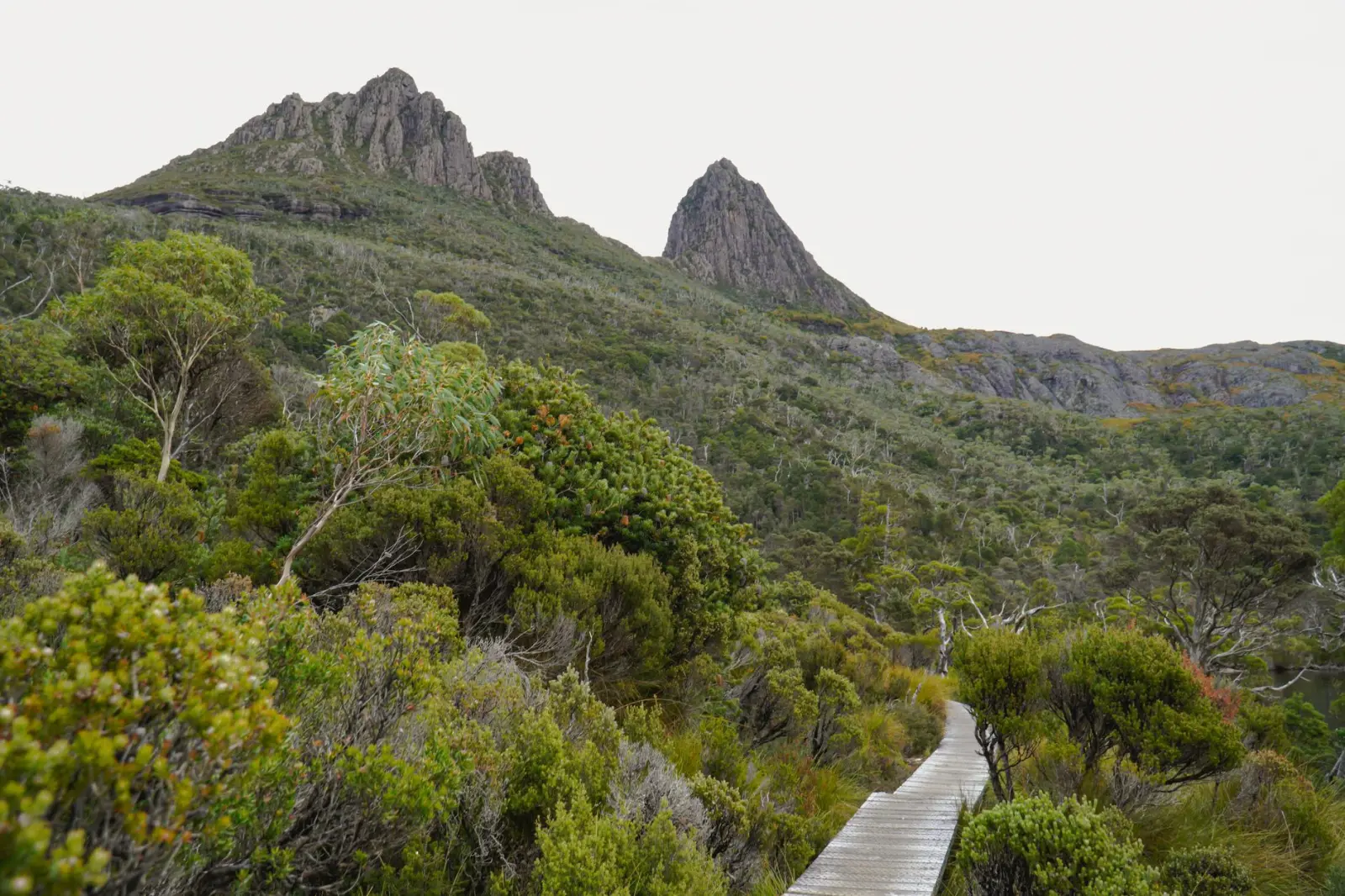
The rainforest edge at Cradle Mountain sits in a zone where two systems collide. The wet, dense forest gives way to alpine moorland and button grass plains, and the transition is never clean. After multiple seasons walking these boundaries, I’ve found that most visitors arrive with assumptions shaped by promotional photography rather than the actual experience of moving through this landscape.
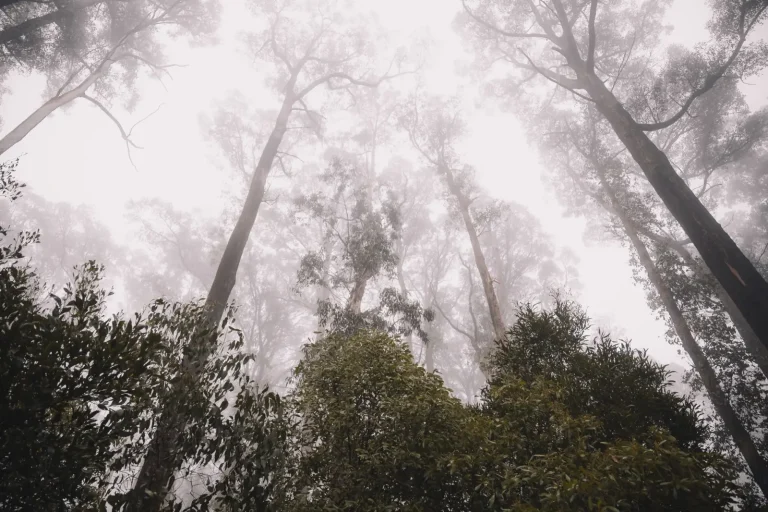
The first thing that strikes you is how quickly conditions change. You’ll be in dappled light beneath tall eucalypts and tree ferns, and within fifty metres the canopy opens, visibility expands, and wind becomes a factor. That wind isn’t incidental. At the rainforest edge, it’s funneled by the terrain and intensified by the exposure above. On days when the lowlands feel calm, the edge can be genuinely uncomfortable. I’ve turned back groups more than once because the wind made footing uncertain on wet rock, not because of rain or cold alone, but because the combination of exposure and moisture created conditions where a slip wasn’t a minor inconvenience.
The Ground Beneath You
The soil and substrate change dramatically as you approach the edge. Inside the dense forest, the ground is soft – moss, leaf litter, and decomposing wood create a spongy surface that absorbs impact. This changes your gait naturally; you move more carefully, step placement becomes instinctive. The moment you transition toward the open, the ground hardens. You encounter more exposed rock, button grass tussocks that catch your boot, and sections where the earth is compacted and slick even when it looks dry.
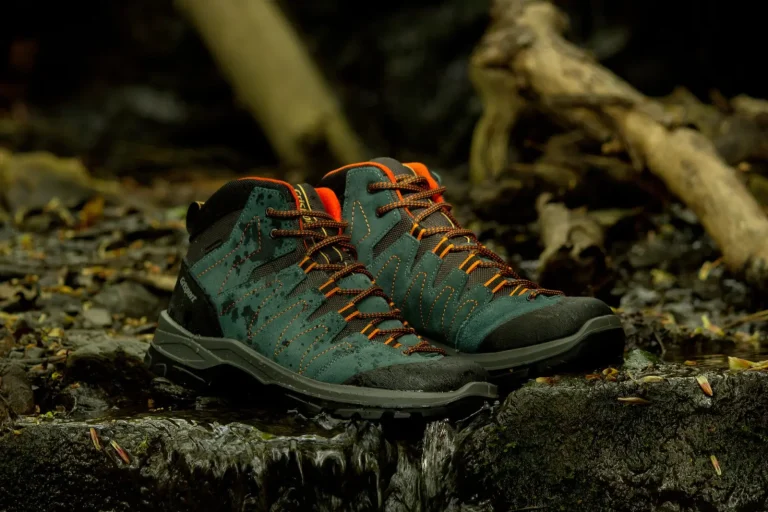
Button grass plains are deceptive. From a distance they look like a uniform carpet. Up close, walking across them is a negotiation with uneven tussocks that twist ankles if you’re not deliberate. The grass itself holds water like a sponge. I’ve seen people arrive in morning sunshine and find their boots soaked within an hour, not from rain but from the ground itself. The water table is high, and the vegetation stores moisture. If you’re planning to spend significant time at the edge, gaiters aren’t optional – they’re functional.
Visibility and Navigation
The rainforest edge is where navigation becomes genuinely important. The established trails are marked, but the boundary itself is subtle. You can be walking in what feels like open country and suddenly the forest thickens around you. Mist and low cloud are common, particularly in the afternoon and early morning. When visibility drops, the landscape becomes confusing quickly. The moorland looks uniform, but there are subtle ridges and valleys that aren’t obvious until you’re in them. I’ve watched experienced walkers become disoriented not because they were careless, but because the terrain offers fewer visual anchors than they expected.
The trails that follow the edge – particularly sections toward Wombat Pool and along the Enchantment Ridge approach – are well-maintained, but maintenance here means something different than on lower-elevation tracks. Rocks are regularly moved, but the underlying surface is still unstable in places. Tree roots cross the path. Sections that were solid last month may be waterlogged this month. The forest encroaches constantly. Branches that were head-height last season hang lower now. This isn’t a complaint about trail conditions; it’s simply the reality of maintaining a path in a place where the vegetation is actively trying to reclaim it.
Timing and Light
The angle of the sun at the rainforest edge matters more than it does in the valley. The forest itself provides shelter and diffused light, but once you’re at the margin, you’re exposed to direct sun on clear days and rapid cooling once cloud moves in. Early morning light is often clear and sharp, but the air temperature is lower. By midday, cloud frequently builds around the peak. The light quality shifts from bright to grey within an hour. I’ve noticed that walkers who start late in the day often find themselves navigating the return journey in poor light, and the edge is not the place to be doing that.
Fatigue is a factor that’s easy to underestimate. The physical demand of walking at the rainforest edge isn’t extreme, but it’s relentless. Your attention has to be constant because the ground is uneven and the exposure is real. Your legs work harder on button grass than on a smooth path. Your core is engaged because you’re balancing on uneven terrain. By the time you’ve walked for three hours at the edge, most people are genuinely tired, and that’s when mistakes happen – a misplaced step on wet rock, a moment of inattention on a tussock.
Weather and Microclimate
The rainforest edge has its own microclimate. The forest moderates temperature and wind, but the edge itself is exposed. Rain that falls as mist inside the forest becomes actual rain at the boundary. Wind that’s barely noticeable in the shelter of the trees becomes a factor immediately. I’ve experienced conditions where the forest was relatively pleasant but stepping into the open meant putting on a rain jacket and adjusting my pace. The reverse happens too – you can be struggling in wind and rain at the edge, step back into the forest, and find relative shelter.
The seasonal variation is significant. In summer, the edge is more forgiving. The ground dries out more quickly, light lasts longer, and conditions are generally more stable. Winter transforms the experience entirely. Frost can make rock treacherous. Low cloud is more persistent. Wind is stronger. I’ve walked these trails in all seasons, and winter requires a different approach – more time, more caution, and realistic assessment of turnaround times. Many visitors don’t account for how much slower winter travel actually is.
The rainforest edge at Cradle isn’t a technical climbing environment, but it’s not a casual walk either. It’s a place where attention, timing, and realistic expectations matter. The landscape rewards careful movement and penalizes assumptions. Once you’ve spent time there and understood how it actually behaves, rather than how it appears in photographs, the experience becomes more grounded and genuinely satisfying.