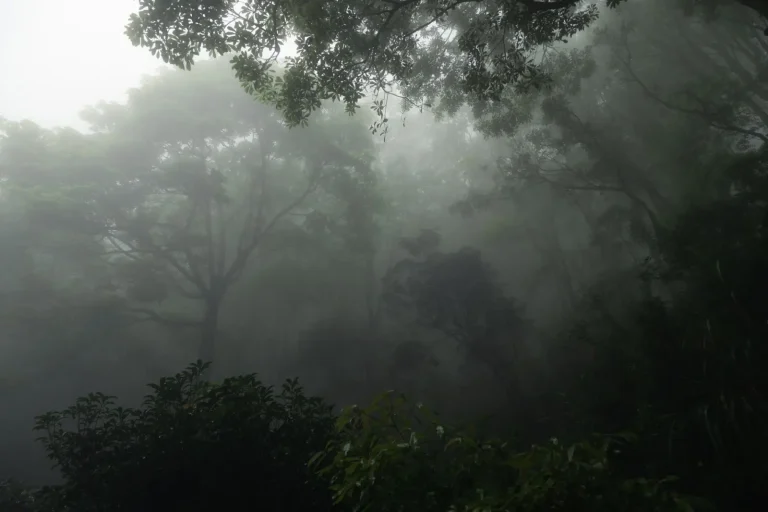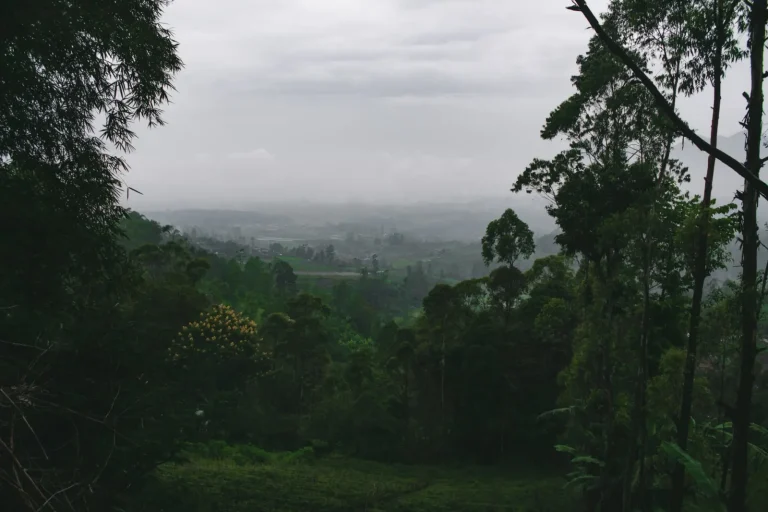

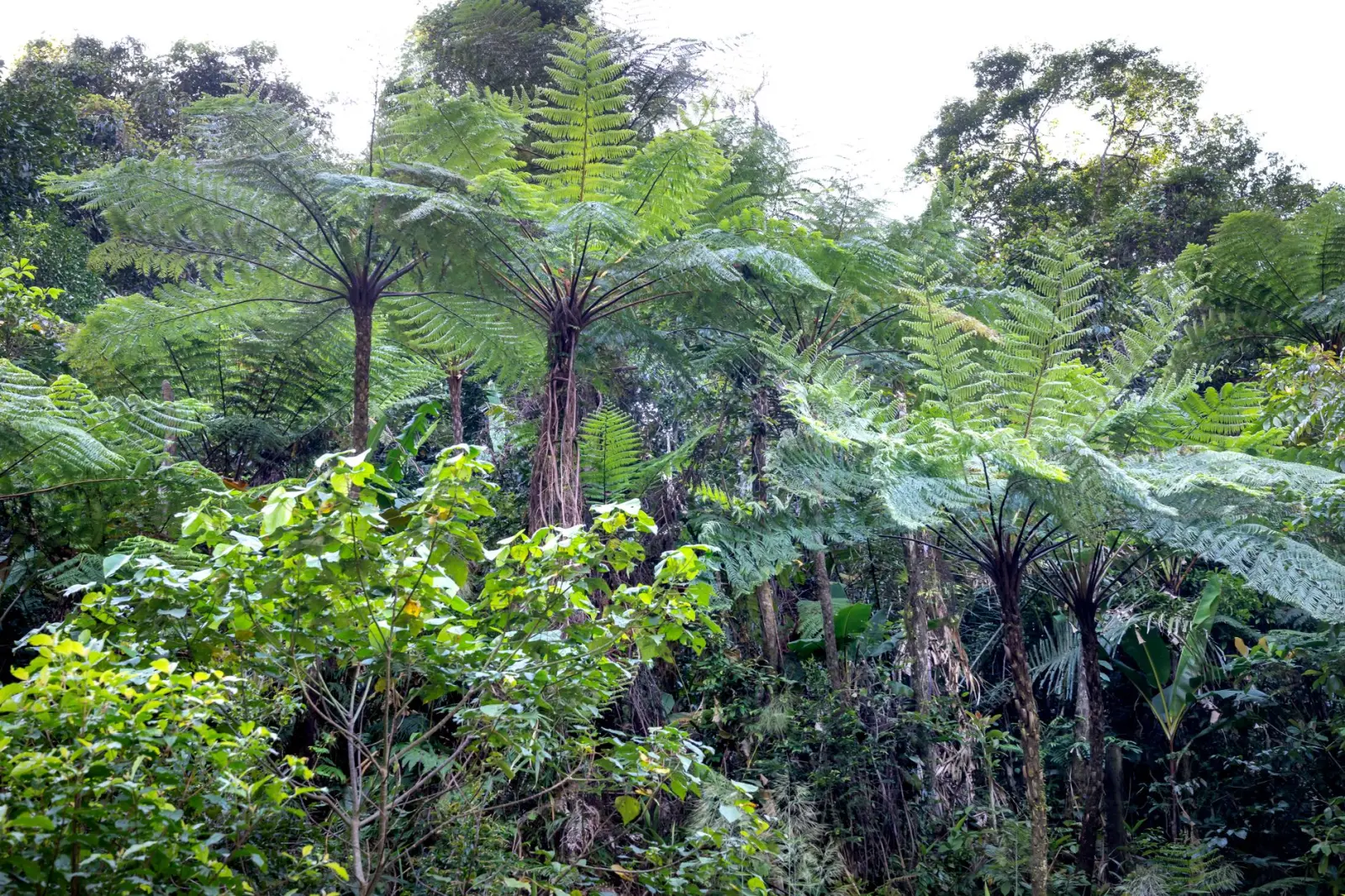
The first time I walked beneath a canopy of tree ferns in a Queensland rainforest, I understood why early European explorers found these places so disorienting. The sheer scale of the fronds overhead – some stretching 15 meters or more – creates a sense of vertical space that photographs rarely capture. What strikes you most is not just the size but the density. These aren’t isolated specimens scattered through open woodland. They grow in clusters, their trunks rising like columns in a cathedral, their fronds overlapping so thickly that midday feels like dusk.
Australian rainforests contain several species of giant tree ferns, but the most commonly encountered are the soft tree fern (Dicksonia antarctica) and the rough tree fern (Cyathea australis). Both can reach heights of 15 to 20 meters, though the rough tree fern tends to grow taller and more aggressively in undisturbed forest. What confuses many visitors is that these aren’t actually trees in the botanical sense. They’re ferns – ancient plants that reproduce through spores rather than seeds. The “trunk” is technically a caudex, a compressed mass of roots and leaf bases that accumulates over decades, sometimes over a century. This is why they grow so slowly and why a fern that appears enormous might be older than the human settlements nearby.
Why They Thrive in Rainforest Conditions
Tree ferns need specific conditions to reach their full size, and Australian rainforests provide them consistently. High humidity is non-negotiable. The ferns absorb moisture through their fronds and through the aerial roots that dangle from their trunks. In drier climates or during extended dry seasons, they struggle. I’ve seen tree ferns in marginal rainforest areas that remain stunted at 3 or 4 meters, their growth clearly limited by seasonal water stress. The difference between a thriving population and a struggling one often comes down to rainfall patterns and how reliably moisture persists through the year.
Shade is equally important. Tree ferns are understory plants. They don’t compete for direct sunlight the way flowering trees do. Instead, they’ve adapted to grow beneath a protective canopy, where light is filtered and diffuse. This is why they’re most abundant in old-growth rainforest where the canopy is intact and layered. When rainforest is cleared or selectively logged, the ferns often disappear not because they’re cut down but because the microclimate changes. The humidity drops, the light intensity increases, and the soil dries out. The remaining ferns may survive but rarely thrive.
The soil itself matters more than many people realize. Tree ferns prefer well-draining, organic-rich soil with a thick layer of leaf litter and decomposing plant matter. The rainforest floor is essentially a sponge – constantly moist but not waterlogged. This combination of moisture retention and aeration suits them perfectly. In poorly drained areas or on compacted soil, tree ferns become stressed and susceptible to fungal infections and root rot.
What You Actually See When Visiting
If you’re planning to visit a rainforest with giant ferns, manage your expectations about what the experience will feel like. The fronds are not delicate or fragile despite their feathery appearance. They’re surprisingly robust and can withstand rain, wind, and the occasional clumsy tourist brushing past them. What’s fragile is the soil around their base. The roots are shallow and spread outward from the caudex rather than deep into the ground. Trampling around the base of a fern can compact the soil and damage these roots. Most established walking tracks through rainforest are deliberately routed to minimize this damage, but the issue persists in less-managed areas.
The fronds themselves change throughout the year. In spring and early summer, new fronds unfurl from the crown – a process that takes several weeks. The emerging fronds are tightly coiled and pale green, gradually uncurling and darkening. By mid-summer, the canopy is at its fullest. By autumn, the oldest fronds begin to yellow and die back. In winter, the canopy becomes noticeably thinner, and more light reaches the forest floor. This seasonal rhythm is less dramatic than in temperate forests, but it’s real and worth timing your visit around if you want to see the ferns at their most impressive.
One thing that surprises visitors is how much life depends on the ferns themselves. The trunks accumulate moss, lichens, and epiphytic plants. Small ferns and orchids grow on the surface of the caudex, creating miniature gardens suspended 10 meters above the ground. Insects, spiders, and small vertebrates shelter in the frond bases. The ferns are not just individual plants but entire ecosystems. This is why damaging or removing a tree fern causes cascading ecological effects that extend far beyond the loss of a single plant.
The Practical Reality of Conservation
Tree ferns face genuine threats in Australia, though the situation varies by region. Habitat loss through clearing remains the primary pressure. Illegal collection for horticulture was once a serious problem, particularly for Dicksonia antarctica, which was harvested for the nursery trade. Regulations now restrict this, but enforcement remains inconsistent in remote areas. Climate change presents a slower but potentially more serious threat. If rainfall patterns shift or dry seasons become longer and more intense, the microclimate that supports these ferns will change. Some populations in marginal rainforest areas are already showing signs of stress.
Disease is another consideration. Phytophthora cinnamomi, a water mold commonly called dieback or root rot, affects tree ferns in wet conditions. It’s naturally present in many rainforests but becomes problematic when soil disturbance and poor drainage create ideal conditions for its spread. Walking tracks that become muddy and compacted can inadvertently facilitate the disease’s spread. This is why some rainforest managers now restrict access to certain areas or require boot cleaning between sites.
What often gets overlooked in conservation discussions is that tree ferns are not endangered across Australia as a whole. Populations in well-protected rainforests remain stable. The issue is more nuanced – certain populations in certain locations are vulnerable, while others are relatively secure. Understanding this distinction matters if you’re reading conservation reports or considering where to visit. A thriving population in a national park tells a different story than a struggling population on private land with uncertain tenure.
Visiting rainforests with giant ferns is worthwhile, but it requires respecting the fragility of the system. Stay on marked tracks, avoid touching or damaging fronds, and don’t remove anything from the forest. The ferns themselves are resilient – they’ve survived for millions of years – but the specific conditions that allow them to grow to their full size are increasingly threatened. Seeing them at their largest and most impressive requires intact rainforest, and that requires deliberate protection.